
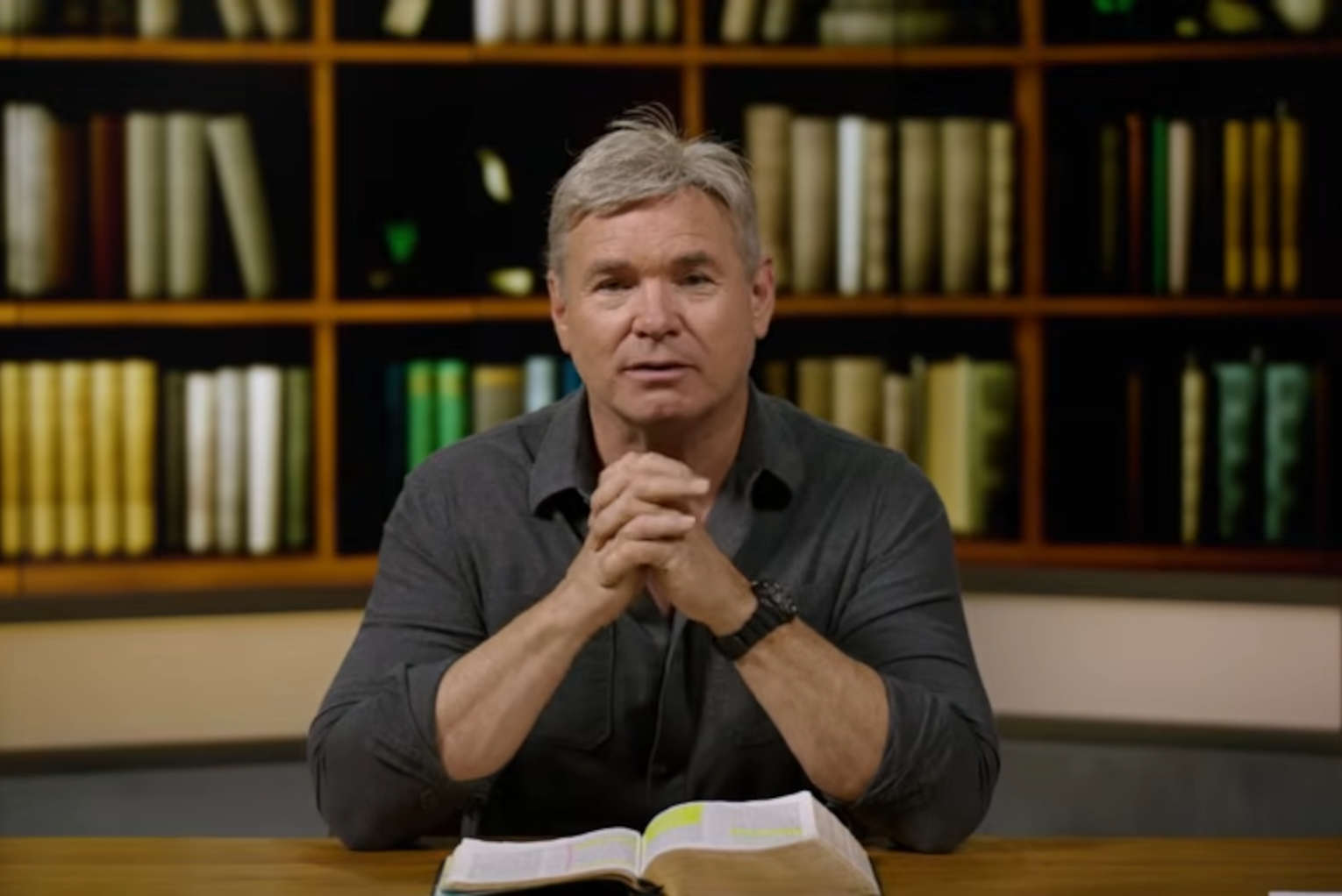
For years, Pastor Jack Hibbs carried a theological burden he believed was a badge of honor.
The journey began long before the pulpit, long before the conferences and Bible prophecy teachings that would make him known to Christians around the world.
It began on a Monday night in June 1977.
Hibbs walked into a church for the first time in his life. He had never attended church. His family did not attend church. He had never even been to a funeral held in a church building.
That night, at Calvary Chapel Costa Mesa, a young evangelist named Greg Laurie preached from Revelation 20.
Hibbs never forgot it.
“I gave my heart to Christ that night,” he said.
The world he had known quickly faded behind him. Old friendships disappeared. New passions took their place.
“I wanted the Bible. I mean, I just blew up for the Bible.”
Like a traveler discovering an ancient map, he immersed himself in Scripture. He sat under the teaching of Chuck Smith. He listened to Bible prophecy studies. He devoured books from respected Bible scholars. The prophetic promises of Scripture seemed clear and compelling.
Then another voice entered the conversation.
Christian musician Keith Green had become one of the most influential voices of the era. As Green increasingly embraced a post-tribulation view of the rapture, Hibbs found himself drawn in.
The argument struck something deep inside him.
“I remember Keith Green saying, ‘Look, if you hold to a pre-rapture view, you’re probably not willing to die for Jesus.’”
The words landed hard.
“I was so hurt by that. I’m willing to die for Jesus.”
Slowly, almost imperceptibly, Hibbs began changing his mind.
What had once seemed obvious became clouded.
What had once brought peace became a struggle.
“A real masculine view of Bible prophecy is embracing a post-tribulational view of the rapture,” he came to believe.
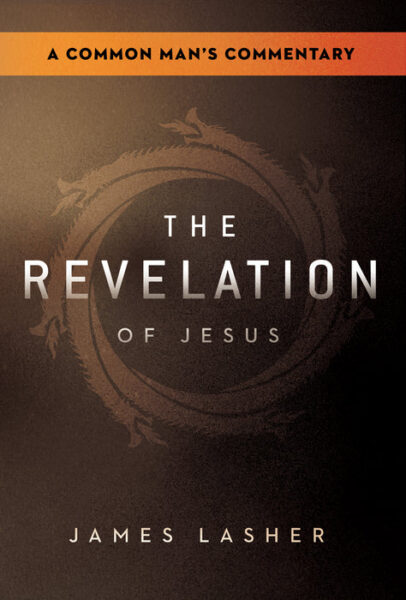
Order James Lasher’s New Book, “The Revelation of Jesus” on Amazon.com!
For nearly three years, he held that position.
Looking back, Hibbs describes those years as carrying a weight he was never meant to bear.
“I wound up struggling with the Scripture rather than having peace about it.”
Passages that once fit together naturally now required explanations. Distinctions between Israel, the church and tribulation believers became increasingly difficult to maintain.
“I began to have to bend the word to hold to a post-tribulational view.”
Yet he pressed on.
After all, he believed suffering was the higher path. Endurance was the stronger path. Readiness for martyrdom was the stronger path.
“After all, you got to be a man. You got to suck it up. You got to be willing to die at any moment to get your head cut off.”
Then, quietly, something changed.
Not through a conference. Not through a debate. Not through a bestselling book.
Through Bible reading.
“I came to this: ‘Let not your heart be troubled. You believe in God, believe also in Me. For in My Father’s house are many mansions.’”
The words of John 14 stopped him in his tracks.
As he read Christ’s promise to prepare a place for His followers and return to receive them, a question emerged that would not go away.
“How do I get there?”
The question haunted him.
If believers meet Christ only at His visible return to Earth and immediately descend with Him into the kingdom, when do they enter the Father’s house Christ promised?
“Jesus was just getting ready to leave the disciples after His resurrection. He would be leaving and going back to heaven.”
Then came the promise.
“‘I go now to prepare a place for you.’ That’s not here. That’s up there.”
The more he read, the more the passage challenged everything he had built.
“John 14 was Jesus’s announcement about the rapture.”
The realization shook him.
“And it completely shook me to the core.”
Hibbs responded by doing something radical.
He walked away from the voices.
The teachers. The conferences. The commentaries. The newsletters.
“Everything out. Everything away from me. I’m going back to the Bible.”
Like a traveler abandoning every map except the one placed in his hands by the King Himself, Hibbs returned to Scripture.
When he did, the pieces began fitting together again.
He returned to the pre-tribulation view he had once abandoned, but this time with a deeper conviction forged through struggle.
“There was this radical, wonderful, liberating epiphany, revelation of peace, joy, excitement, urgency.”
Yet the greatest lesson was not merely about prophecy.
It was about authority.
The journey became a reminder that every belief must ultimately bow before God’s Word.
“I came back with a vengeance in the sense of the Word of God is going to be my truth.”
Today, his testimony remains less a story about changing prophetic camps and more a story about returning to the source.
The destination was important.
The journey mattered.
But the lesson that remained was simple.
“I’m going to submit myself to this and repeat this till the day I die or till the day He returns for the church.”
James Lasher, a seasoned writer and editor at Charisma Media, combines faith and storytelling with a journalism background from Otterbein University and ministry experience in Guatemala and at the LA Dream Center. A Marine Corps and Air Force veteran, he is the author of The Revelation of Jesus: A Common Man’s Commentary and a contributor to Charisma magazine. For interviews and media inquiries, please contact [email protected].

But the Scriptures say it is post-tribulation. Look at Matthew 24:29–31:
“Immediately after the tribulation of those days, the sun will be darkened, and the moon will not give its light; the stars will fall from heaven, and the powers of the heavens will be shaken. Then the sign of the Son of Man will appear in heaven, and all the tribes of the earth will mourn. They will see the Son of Man coming on the clouds of heaven with power and great glory. And He will send His angels with a great sound of a trumpet, and they will gather together His elect from the four winds.”
I emphasize: “Immediately after the tribulation.”
Pre tribulation is the only way. It’s a puzzle piece that fits perfectly. Just follow the Holy Spirit and where he is abiding during each age the Bible takes you through. He abides in Heaven during the old testament and during Christ time on earth. Then (Jesus) he said I must go so the Comforter can come(Holy Spirit) in us he abides. we who have the Holy Spirit are taken out of the way to experience the wedding supper with our groom while the Father deals with Israel his wife( 7 years) Daniel’s 70 th Holy Soirit in Heaven like Old Testament
I made my wife stop listening to hibbs a few years ago because he was pre-trib. So when did he switch to post trib and then go back to pre trib??? Sounds very charlatan like to me.