

The courtroom is full.
For 2,000 years, humanity has wrestled with the same question. Was Jesus of Nazareth who He claimed to be?
Was He the Son of God? Was He the Savior of the world? Did He truly have power over sin, sickness, demons and death? Or was He simply another religious teacher whose followers built a movement around His memory?
According to Alex Seeley, that question is still being asked every day.
Preaching a Pentecost message at The Belonging Co, Seeley pointed to Acts 1:8 and challenged believers to reconsider what Jesus meant when He told His followers they would become His witnesses.
“This particular word witness is the language of a courtroom,” Seeley said. “It’s a witness that testifies in court so that you can bring evidence for or against the person on trial.”
Jesus made extraordinary claims during His ministry. He declared Himself the way, the truth and the life. He claimed authority to forgive sins. He healed the sick, delivered the oppressed and promised abundant life to those who followed Him.
Those claims remain before the world today.
“The world has got Jesus on trial going, ‘Do we really believe he is the son of the living God? Do we really believe he is the Christ? Is he an impostor? Is he a prophet? Is he just some crazy person who claimed to be God?’” Seeley said.
If Jesus is on trial, witnesses are needed.
“Hearsay evidence means that I heard it from a friend of a friend,” Seeley said. “It’s a rumor. It’s somebody who told me their version of the story, but I never saw it with my own eyes and it never happened to me.”
“Hearsay evidence gets thrown out of a court of law because the person was never there.”
Then she turned that thought toward the church.
“Unfortunately, I think we’ve got a lot of hearsay Christians.”
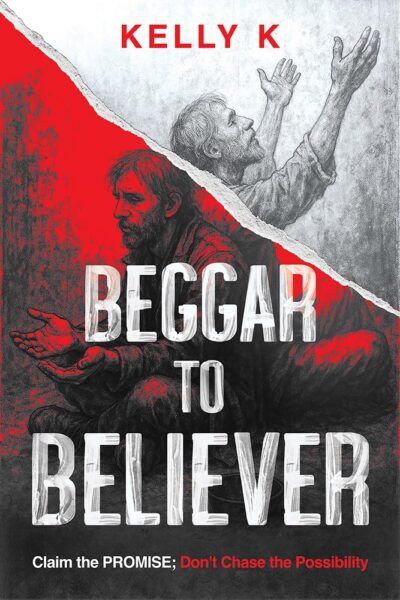
Order Kelly K’s New Book, “Beggar to Believer” on Amazon.com!
Seeley described believers who know stories about revival, healing and transformation but rarely step into those stories themselves. They know what happened through someone else’s ministry, in another church, in another city or another generation.
“Did you hear about that revival that’s happening in Africa? Did you hear about that person that got healed? Did you hear about that person that got delivered?” she asked. “Or did you see it? Did it come under your hand? Was it because of what you said and did?”
Jesus never called His followers to become spectators.
He called them to become witnesses.
The disciples already knew the teachings of Jesus. They had watched miracles. They had heard Him preach. They had spent years at His side.
Yet before they preached a sermon, planted a church or evangelized a city, Jesus told them to wait.
“Do not even evangelize until you’ve been clothed with power from on high,” Seeley said.
Knowledge was not enough. Information was not enough. The disciples needed power.
“I think this is where the church has become impotent and asleep is because we do everything in our strength without his power,” Seeley said.
“We are talking about the very spirit of God that gives you the empowerment to live righteously and live like Christ.”
That power should produce evidence.
Not merely words. Not merely beliefs.
Evidence.
“Can Jesus provide evidence that convicts him of being who he says he is and for doing the things he says he can do through your life?” she asked. “Are you the evidence?”
The challenge was personal.
“I am a walking testimony,” Seeley said. “I am evidence that Jesus is real.”
She described herself as someone whose life should have ended very differently before Christ intervened. The transformation she has experienced is not theory to her. It is testimony.
The same was true of the early church.
“The evidence was all around. The witnesses were all around,” Seeley said. “This is what happens when you get immersed by the power of God. You get set free. You get delivered, your life changes, and it’s never the same again.”
That transformation, she said, is what caused people to take notice. Lives changed. Families changed. Communities changed. People saw evidence that something had happened.
Seeley returned to the question that had echoed throughout the sermon.
“Do you want to be evidence today?” she asked. “In your neighborhood, in your workplace, in your family, are you the evidence?”
Pentecost was never simply about remembering what happened in an upper room long ago. It was about receiving the same power that turned ordinary believers into witnesses and transformed lives into evidence that Jesus is alive.
James Lasher, a seasoned writer and editor at Charisma Media, combines faith and storytelling with a journalism background from Otterbein University and ministry experience in Guatemala and at the LA Dream Center. A Marine Corps and Air Force veteran, he is the author of The Revelation of Jesus: A Common Man’s Commentary and a contributor to Charisma magazine. For interviews and media inquiries, please contact [email protected].
