
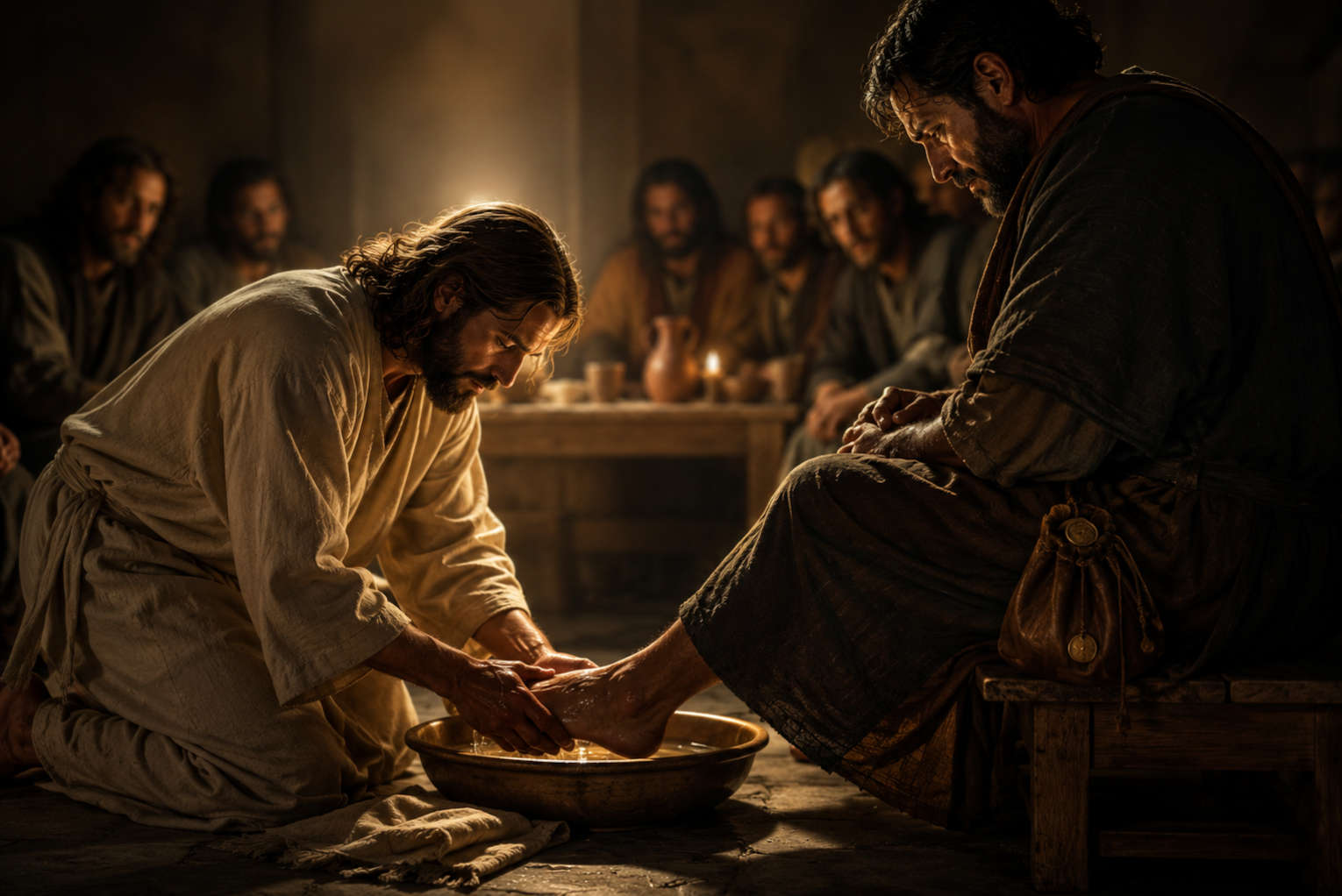
Most of us know the story of Jesus washing His disciples’ feet.
The lesson is usually framed around humility. Jesus, the Son of God, took the position of a servant and instructed His followers to do the same.
Rich Wilkerson Jr. recently pointed to something deeper in John 13. Before Jesus ever picked up the towel, Scripture records that He knew exactly who He was.
“Jesus knew that the Father had put all things under His power and that He had come from God and was returning to God,” John writes.
That detail sits at the center of the story.
Jesus did not move toward the lowest place in the room because He was unsure of Himself. He moved toward it because His identity was completely settled.
“You don’t serve because you’re weak,” Wilkerson said. “You serve because you’re meek. Meekness is bridled strength. It’s strength under control.”
The foot washing was not an act of weakness. It was an act of confidence.
Many of us spend years trying to become significant through service. We serve faithfully, sacrifice generously and pour ourselves into others, yet we often hope those efforts will answer questions about our value and purpose. Jesus served from the opposite direction. His identity was already secure before He ever reached for the towel.
That distinction changes the entire story.
Security Makes Humility Possible
The modern world often treats humility as thinking less of ourselves. The biblical picture is different.
Jesus knew the Father had placed all things under His authority. He knew where He came from. He knew where He was going. Because His identity was secure, He had nothing to prove and no status to protect.
“He knew who he was,” Wilkerson said. “He knew that God had put all power underneath Him. So what did He do? He stripped His garment. He got down low and He started washing disciples’ feet.”
Security produced humility.
The opposite is often true in our own lives. Insecurity can produce self-protection, comparison and a constant need for recognition. When we are unsure of who we are, we spend enormous amounts of energy trying to convince ourselves and others that we matter.
The more secure we become in Christ, the less energy we spend defending our reputation, protecting our position or demanding appreciation from those around us.
Jesus demonstrated that principle in dramatic fashion.
The disciples gathered around that table were not a collection of perfect followers. Peter would deny Him. Thomas would doubt Him. Judas would betray Him.
Yet Jesus washed every set of feet.
“He washed Peter’s feet, future denier. He washed Thomas’ feet, future doubter. He washes Judas’ feet, active betrayer,” Wilkerson said.
The condition of the disciples did not determine Christ’s willingness to serve. His identity did.
“Security always produces humility,” Wilkerson said.
That truth speaks directly to many of the disappointments we experience in ministry and in life. People fail us. Relationships fracture. Expectations go unmet. Yet Jesus shows us that our willingness to love and serve cannot be built upon the behavior of others. It must be rooted in who we are in Him.

Order Abby Trivett’s New Book, “The Power of Suddenly” on Amazon.com!
Why So Many of Us Feel Exhausted
John 13 also reveals a struggle many believers still face today.
When Jesus approached Peter, Peter resisted. The disciple who was willing to follow Jesus struggled to receive from Him.
That tension remains common throughout the church.
Many of us know how to volunteer, lead, organize, give and carry responsibility. We know how to pour ourselves out for others. We know how to stay busy. What we often struggle to do is receive from Christ.
Wilkerson challenged the common understanding of burnout.
“Burnout is not about working too hard,” he said. “Burnout is an inability to let Jesus serve you.”
The statement cuts against much of modern church culture. Activity is often celebrated while intimacy is neglected. Productivity becomes the measure of spiritual health while time spent receiving from God slowly disappears from our schedules.
Yet Jesus washed the disciples’ feet before He told them to wash one another’s.
The order matters.
“You can’t give what you don’t have,” Wilkerson said.
The Christian life was never designed to run on borrowed strength. Ministry flows best when we regularly return to the feet of Jesus and allow Him to refresh what daily life, leadership and responsibility have worn down.
Obey Now, Understand Later
At the center of the passage is a statement that applies far beyond the foot washing itself.
“You do not realize now what I am doing, but later you will understand.”
Wilkerson described those words as the pattern of the Christian life.
“Obey now, understand later. Trust now, clarity later.”
Most of us would prefer the reverse. We want answers before obedience and explanations before surrender. We want certainty before taking a step forward.
Scripture repeatedly presents a different path.
The disciples would not fully understand the basin and towel until they saw the cross. They would not fully understand the cross until they saw the empty tomb. What appeared confusing in the moment became clear only after they walked through it.
The same pattern still unfolds in our lives today. Many of God’s purposes become visible only after seasons of obedience, sacrifice and trust. We often discover what God was doing only after we have followed Him through uncertainty.
The story of John 13 ultimately asks us a question deeper than whether we are willing to serve.
It asks whether we are secure enough in Christ to serve without needing anything in return.
Jesus could wash Judas’ feet because He already knew who He was.
The closer we come to that same confidence, the more freely we can love, serve and endure whatever sits across the table from us.
James Lasher, a seasoned writer and editor at Charisma Media, combines faith and storytelling with a journalism background from Otterbein University and ministry experience in Guatemala and at the LA Dream Center. A Marine Corps and Air Force veteran, he is the author of The Revelation of Jesus: A Common Man’s Commentary and a contributor to Charisma magazine. For interviews and media inquiries, please contact [email protected].
