

Does a hard dome stretch above the earth—and does the Bible require Christians to believe it does? Prophecy Watchers host Mondo Gonzales is challenging that interpretation, urging readers to examine the Hebrew behind one of Scripture’s most debated creation terms.
In the video “The Firmament Explained from the Hebrew,” Gonzales addresses the solid-dome argument during a discussion of flat-earth claims. He affirms the biblical firmament while disputing the assertion that it must be a hard physical structure.
His conclusion is emphatic.
“There is absolutely zero requirement based on the text of the Bible to say that the raqia is a hard dome,” Gonzales says.
The argument centers on raqia, the Hebrew word translated as “firmament.” Gonzales explains that the English term came through Latin and says its wording should not determine how readers understand the original text.
“Let’s skip the Greek. Let’s skip the Latin. Let’s go straight to the Hebrew,” he says.
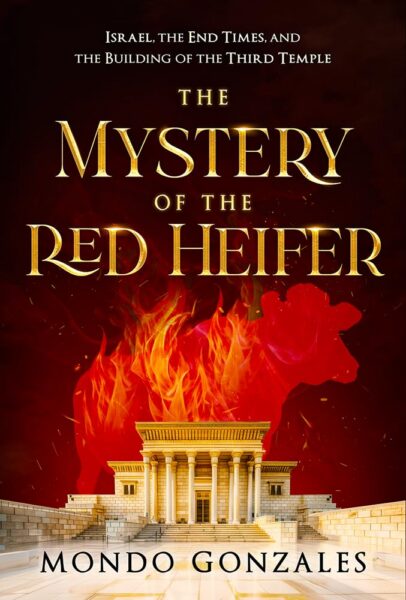
Order Mondo Gonzales’ Book, “The Mystery of the Red Heifer” on Amazon.com!
Gonzales describes assembling all 15 verses containing raqia for a passage-by-passage examination. His challenge is straightforward: If “hard dome” accurately defines the word, that meaning should hold up wherever Scripture uses it.
“If you simply insert hard dome in the various texts, it becomes contradictory,” he says.
That consistency test drives his argument. Gonzales urges examining every relevant passage rather than allowing a preferred interpretation to determine what the word must mean.
He also addresses the connection between raqia and its root, raqa, including the argument involving something being “beaten out.” Gonzales says his written study considers that explanation alongside other perspectives. He maintains that inserting “hard dome” throughout the passages does not work.
The discussion then turns to reliance on English translations, particularly arguments built exclusively around the King James Version. Gonzales challenges using its wording as the final authority for interpreting the physical world without examining the underlying language.
“You’re building your stuff off an English translation. Go to the Hebrew,” he says.
He directs viewers toward his written examination and additional scholarship, encouraging them to investigate the passages themselves. A quick online search, he argues, cannot replace careful study of how biblical language works.
Gonzales closes the argument by pressing two questions that place Scripture and its original context at the center of the debate.
“Do we get our theology from the Bible? And do we get our theology from the original languages of the Bible used in their original context?”
James Lasher, a seasoned writer and editor at Charisma Media, combines faith and storytelling with a journalism background from Otterbein University and ministry experience in Guatemala and at the LA Dream Center. A Marine Corps and Air Force veteran, he is the author of The Revelation of Jesus: A Common Man’s Commentary and a contributor to Charisma magazine. For interviews and media inquiries, please contact [email protected].
