
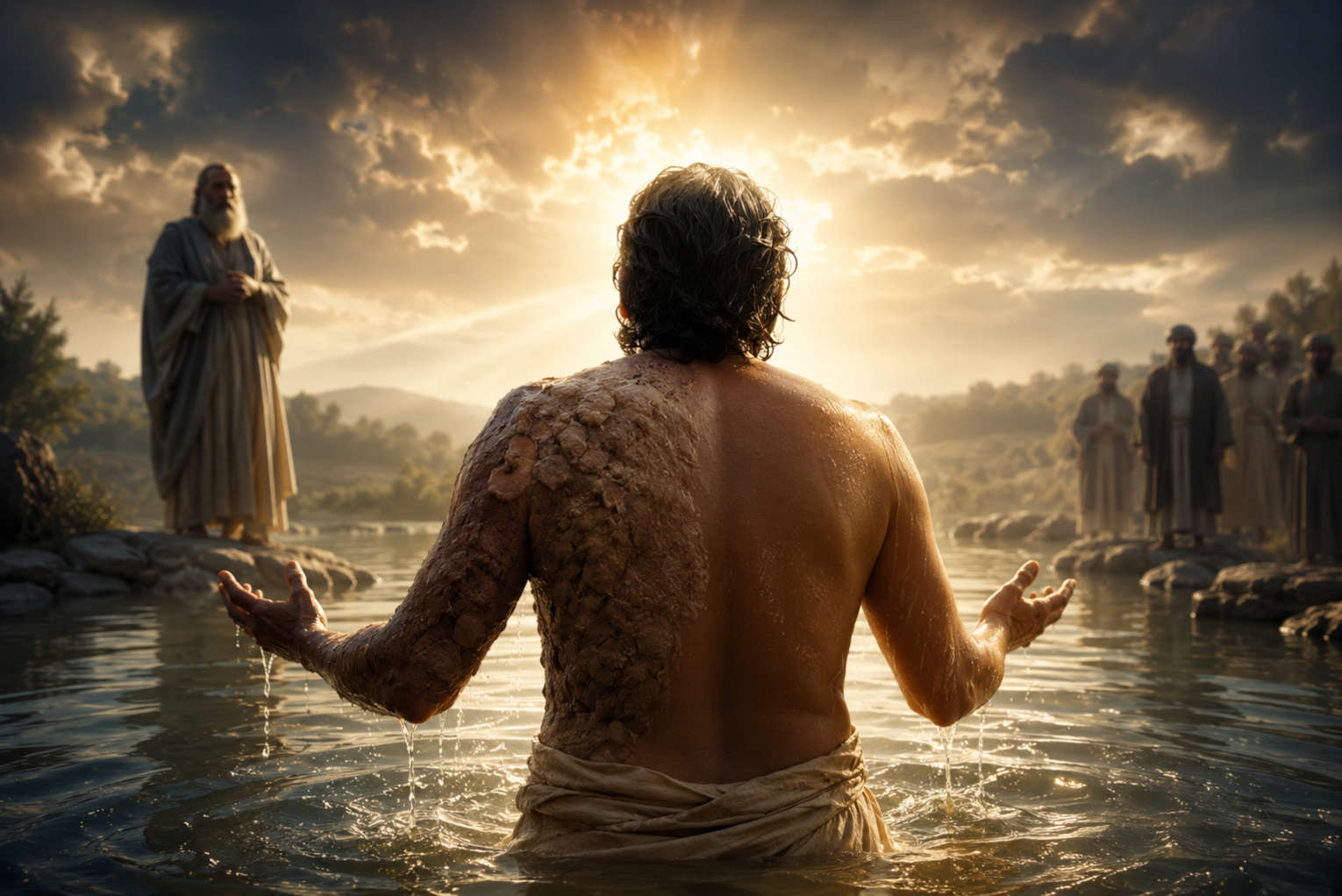
The story of Naaman’s healing in 2 Kings 5 is one of the most familiar miracles in Scripture. A powerful military commander afflicted with leprosy follows the prophet Elisha’s instructions, dips seven times in the Jordan River and emerges completely healed.
But Kelly K says the chapter contains far more than a healing story.
In a recent teaching, Kelly highlighted 10 often-overlooked truths woven throughout the account, arguing that the chapter exposes the dangers of pride, the power of humility and the surprising ways God works through ordinary people and unexpected circumstances.
Here are the 10 hidden gems he found in the story.
1. Naaman’s Real Problem Wasn’t Leprosy
Kelly began by challenging the common assumption that Naaman’s greatest issue was his disease.
“Naaman’s problem wasn’t leprosy. It was success.”
He pointed to the opening verses, which reveal that Naaman was already a victorious commander whom God had used to secure military victories for Aram.
“So many people assume success equals God’s approval,” Kelly said. “Naaman was successful, powerful. He was wealthy, even well-respected, and still dying.”
According to Kelly, failure often drives people to seek God, but success can convince them they don’t need Him.
“The greatest crisis in a person’s life isn’t failure. It’s succeeding while sick.”
2. The Smallest Person Saw the Situation Most Clearly
The breakthrough in Naaman’s story began with a servant girl taken captive from Israel.
Kelly noted that while kings, generals and military leaders had no answers, the young servant immediately knew where healing could be found.
“Everyone with power was confused, and the powerless servant knew exactly what to do.”
He said the contrast reveals an important spiritual principle.
“God will often hide revelation in places that pride refuses to look.”
The servant girl possessed no influence, but she carried insight that changed the course of the entire story.
“Naaman had armies. The little girl had insight. Now, you tell me which is more valuable.”
3. Naaman Arrived Carrying What He Didn’t Need
When Naaman traveled to Israel, he brought silver, gold, clothing and official letters.
Kelly said those items revealed his misunderstanding of how God works.
“Naaman packed for a transaction. God was preparing for a transformation.”
The commander assumed healing would come through payment or negotiation.
“Naaman showed up thinking, ‘Name the price.’ And Elisha responds with, ‘There isn’t one.'”
Kelly said the miracle forced Naaman to confront a truth that still challenges people today.
“The miracle begins when Naaman starts to understand you can’t buy what you need most.”
4. The Servant Girl Had More Faith Than the King
One of the most striking contrasts in the chapter appears when Israel’s king receives Naaman’s request.
Rather than responding with confidence, the king panics.
“A pagan servant girl says, ‘God can handle this.’ But the king of God’s people says, ‘Am I God?'”
Kelly said the moment demonstrates that position and faith are not the same thing.
“Position and faith are not the same thing. Title and trust are not the same thing.”
He added that spiritual expectancy is often found in unexpected places.
“Sometimes, it’s the newest believer in the room who expects more from God than people in the pews the last 30 years.”

Order Kelly K’s New Book, “Beggar to Believer” on Amazon.com!
5. Naaman Wanted a Spectacle, but God Required Humility
Naaman expected Elisha to personally appear, call down power from heaven and perform a dramatic miracle.
Instead, Elisha sent a messenger with simple instructions.
Kelly said the command offended Naaman because it contradicted his expectations.
“He literally says, ‘I thought he would certainly come out to meet me.'”
Those words reveal a common spiritual obstacle.
“The single greatest obstacle to hearing God is often our pre-written script for how God is supposed to act.”
Kelly said Naaman was not upset because God failed to respond.
“Naaman wasn’t angry because God was silent. He was angry because God didn’t follow his script.”
6. The Miracle Was Hidden in What Naaman Despised
Naaman objected to washing in the Jordan River because he viewed the rivers of Damascus as superior.
Kelly argued that the issue wasn’t really water quality.
“He’s talking about identity.”
The Jordan represented Israel, the very thing Naaman’s pride resisted.
“Naaman’s healing was hidden inside the very thing his pride despised.”
Kelly noted that Scripture repeatedly shows God placing solutions in overlooked places.
“Miracle wasn’t hidden in what he admired, it was hidden in what he dismissed.”
7. Don’t Stop on Six
Kelly called this one of the most powerful lessons in the entire chapter.
Although Naaman dipped seven times, Scripture never says his healing came gradually.
“The text never says he got a little better each dip. It simply says, ‘After the seventh, he was restored.'”
Kelly encouraged viewers to imagine the frustration of climbing out of the river after six unsuccessful attempts.
“Can you even imagine what dip number six must have felt like? Leprosy still there, still waiting, still wondering, still looking foolish to everybody else.”
The lesson, he said, is one of perseverance.
“The breakthrough normally shows up after a long season of nothing happening.”
Then came the statement that anchored the entire point.
“Do not stop on six.”
Kelly added that what appears to be failure may actually be progress.
“The first six dips look like failure. The seventh just revealed they were all progress.”
8. Naaman Didn’t Just Get Healed—He Was Restored
After the seventh dip, Naaman’s skin became like that of a young child.
Kelly said the miracle went far beyond the removal of disease.
“Naaman didn’t just get healed. He got restored.”
The imagery points toward something deeper than physical healing.
“Leprosy had made him old. Healing made him young.”
Kelly connected the transformation to the broader biblical theme of becoming like a child before God.
“A miracle wasn’t just cleansing. It was a picture of being born again.”
9. The Real Leprosy Changed Owners
By the end of the chapter, Naaman was healed, but Elisha’s servant Gehazi became afflicted with leprosy after acting out of greed.
Kelly described the conclusion as a dramatic reversal.
“At the start of the story, Naaman had leprosy. At the end, however, Gehazi has leprosy.”
The contrast highlights the difference between humility and selfish ambition.
“One man lost it through humility and another receives it through greed.”
Kelly said the chapter repeatedly overturns expectations.
“Naaman starts dirty and becomes clean. Gehazi starts clean and becomes dirty.”
10. The Story Begins and Ends With Servants
Kelly observed that the chapter is framed by two servants who take radically different paths.
The servant girl directs someone toward healing. Gehazi directs himself toward judgment.
“Same position, different heart.”
The contrast serves as the final challenge of the chapter.
“One serves selflessly. One serves selfishly. One becomes part of a miracle and one becomes the warning.”
Kelly said the Holy Spirit intentionally structured the story this way.
“The Holy Spirit bookends this entire story with two servants and then asks, ‘Which one is you?'”
A Final Thought
Kelly closed with an additional observation that ties the entire chapter together.
“Naaman’s healing was waiting in Israel the entire time.”
The prophet was already there. The Jordan River was already there. The power of God was already there.
“The only thing that had to move was Naaman.”
Taken together, the lessons of 2 Kings 5 reveal a consistent pattern. God opposes pride but responds to humility. He hides answers in places people overlook. He works through unlikely individuals. He calls people to obedience before they see results.
Most importantly, the story reminds believers not to quit before the seventh dip. What appears to be a season of silence may actually be preparation for a breakthrough that is closer than it seems.
James Lasher, a seasoned writer and editor at Charisma Media, combines faith and storytelling with a journalism background from Otterbein University and ministry experience in Guatemala and at the LA Dream Center. A Marine Corps and Air Force veteran, he is the author of The Revelation of Jesus: A Common Man’s Commentary and a contributor to Charisma magazine. For interviews and media inquiries, please contact [email protected].
