
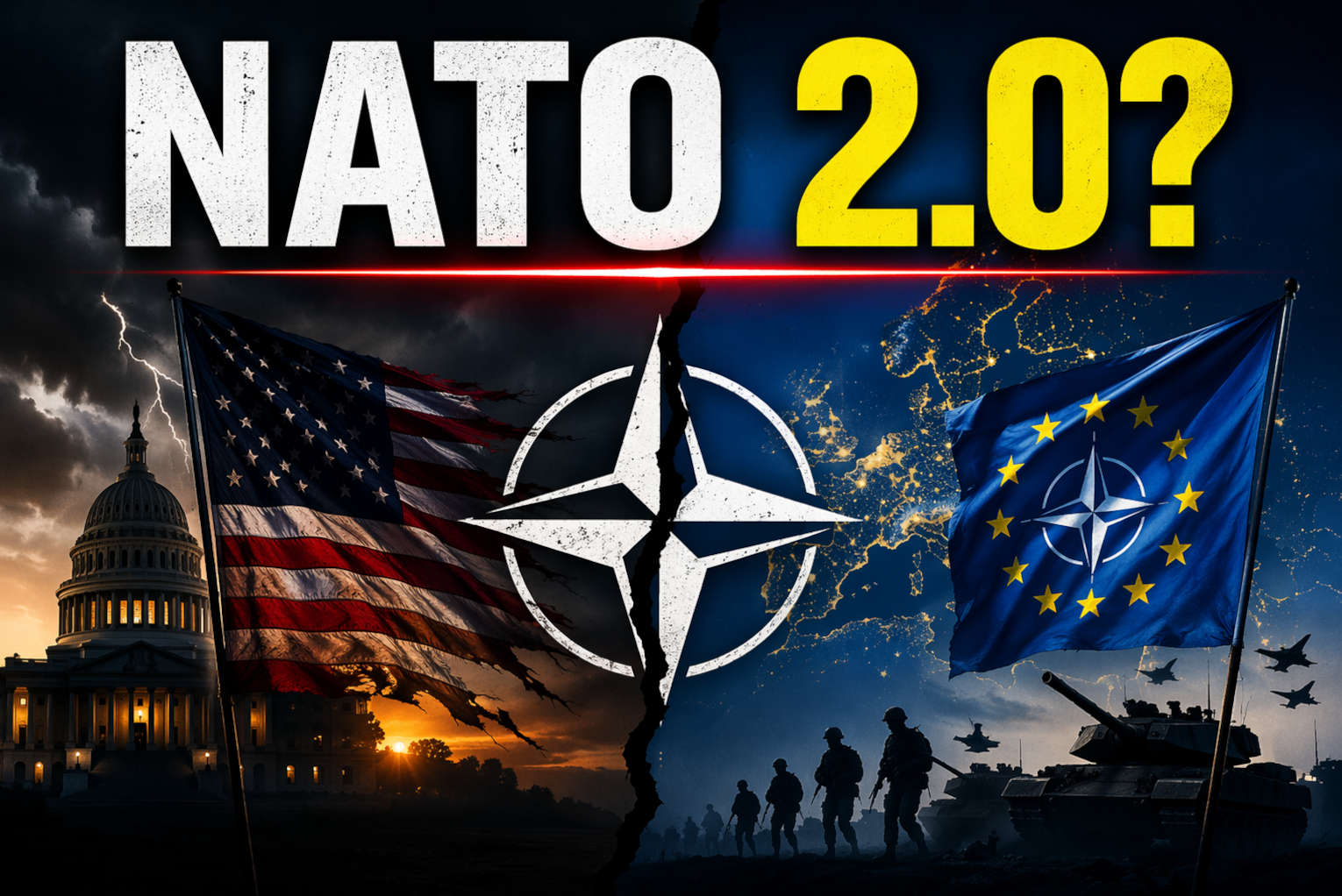
Europe is quietly preparing for a future without the United States at the center of its defense, marking a dramatic shift in the global order that has defined the West for decades. Behind the scenes, officials are advancing plans for a more independent NATO structure, one capable of functioning even if Washington steps back or pulls out entirely.
At the heart of the move is a growing divide between the U.S. and its European allies. Recent tensions surrounding Iran, the Strait of Hormuz and burden-sharing within NATO have exposed cracks that can no longer be ignored. President Donald Trump’s repeated warnings about withdrawing from the alliance and relocating American troops have forced Europe to confront a reality it long avoided. The security umbrella it depended on may not always be there.
In a recent Daily Mail report, it states that European nations are accelerating efforts to stand on their own. Discussions are underway to shift command structures away from U.S. leadership, expand defense production and even reintroduce military conscription in some countries. Leaders across Germany, France, the United Kingdom and Eastern Europe are aligning around a shared goal of strategic independence.
This is more than a policy adjustment. It is the unraveling of a system.
For decades, NATO functioned as a unified extension of American power, holding together a relatively stable Western bloc. Now, that cohesion is breaking apart. What is emerging in its place is a world defined by regional power centers rather than a single dominant alliance. Europe is consolidating its own military identity, while Russia, China and Middle Eastern powers continue to operate along their own strategic paths.

Order Mark Biltz’s New Book, “The Final Tyrant” on Amazon.com!
History shows that global systems do not evolve without disruption. They fracture first.
That pattern aligns with the framework laid out in Scripture. In the book of Daniel, kingdoms are depicted as divided, fragile and shifting, unable to hold together in their existing form. Revelation expands on this, describing a world that ultimately consolidates power into a centralized authority after a period of instability and upheaval.
The current moment reflects that transition point. The fragmentation of alliances like NATO is not the end state. It is the necessary step before something new takes shape.
As nations pull back from long-standing partnerships, they are simultaneously building the structures that could support a different kind of global order. Europe’s push to replace U.S. intelligence, logistics and military coordination is one example. Efforts to secure energy routes like the Strait of Hormuz reveal how economic pressure points are becoming tools of influence. Increased defense spending and technological development are laying the groundwork for more integrated, far-reaching systems of control.
Individually, these developments may appear disconnected. Together, they form a pattern.
The world is moving away from a single, stable alliance toward a fragmented landscape of competing powers. But fragmentation does not lead to lasting disorder. It creates the conditions for consolidation. As instability grows, so does the demand for coordination, security and control on a global scale.
That is the trajectory taking shape.
The breakdown of NATO unity, the rise of regional military blocs and the reordering of global priorities are not isolated events. They are early indicators of a larger transformation. The existing system is giving way, piece by piece, making room for a new structure that is broader, more centralized and ultimately global in scope.
The stage is not fully set, but the framework is forming before our very eyes.
James Lasher, a seasoned writer and editor at Charisma Media, combines faith and storytelling with a journalism background from Otterbein University and ministry experience in Guatemala and at the LA Dream Center. A Marine Corps and Air Force veteran, he is the author of The Revelation of Jesus: A Common Man’s Commentary and a contributor to Charisma magazine. For interviews and media inquiries, please contact [email protected].
