
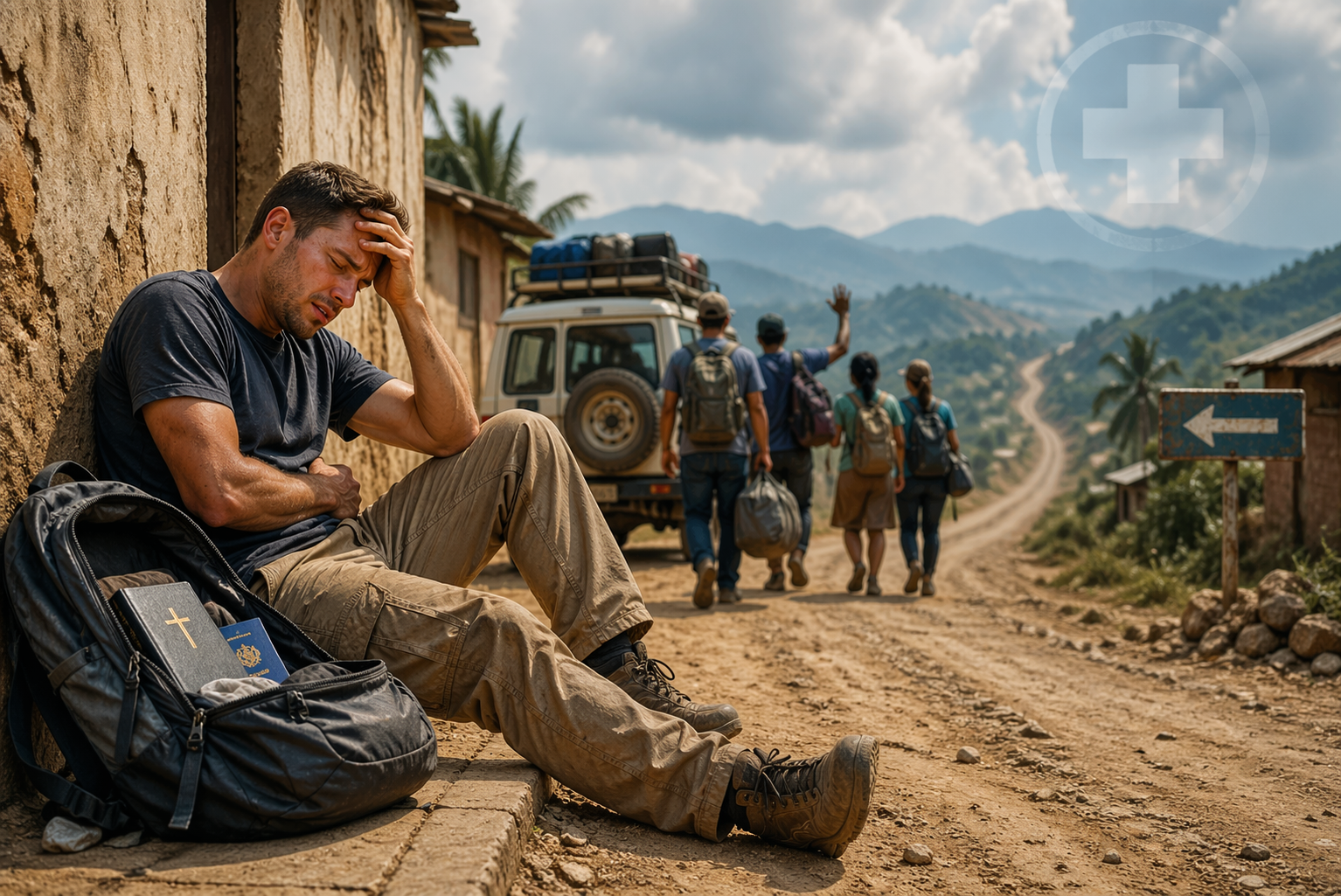
Mission work carries significant risks for travelers. From illness to onsite injuries to vehicle accidents, there are many ways a medical emergency can quickly compromise a mission trip.
“You can prepare as much as you want for a trip, but you never know when something is going to go wrong. And something almost always goes wrong,” said Tyler Ward, a missions and ministry manager with Brotherhood Works and Faith Ventures, who works closely with mission organizations supporting both international and domestic travel.
As a short-term mission worker himself, Ward has seen firsthand the challenges faced in the field. Now, he spends much of his time helping organizations and individual travelers prepare for the unexpected—offering peace of mind and practical support when it is needed most.
“I find that many short-term mission workers and volunteers are unaware of the physical dangers and financial risks they face, especially if it’s their first trip,” said Ward. “I really want them to understand how important it is to have a safety net in place before they even pack their bags.”
Ward offers this scenario to think about: It’s the last day of a trip, and a mission worker becomes ill with an infectious disease and, due to government restrictions, is not permitted to leave the country. The rest of the team has no choice but to return home. This person is now alone – 150 miles from the nearest medical facility capable of providing appropriate care – without transportation. Meanwhile, the worker’s U.S.-based sponsor struggles to coordinate care from overseas.
“This is where mission travel insurance really comes into play,” said Ward. It’s not just about reimbursing lost luggage or canceled flights. “Emergency medical coverage becomes critical when an injury or illness forces you to seek immediate treatment, like in the scenario we just talked about.”
That added protection is key. “Most U.S. health insurance plans generally provide little to no coverage outside the United States,” Ward explained. “For some people, their coverage doesn’t even extend out of state.” Without international coverage, finding skilled medical care, medications, and emergency transportation often requires local connections that are not readily available.
“Travel insurance is protection for the things you can’t imagine happening, but do,” said Ward. When medical emergencies occur in the mission field, time, distance, and cost can all become barriers to care. Without preparation, short-term mission workers may find themselves in dangerous and expensive situations, relying on unfamiliar systems and individuals.
“Let’s say you break your leg,” Ward said. “A friend of a friend of a friend offers to drive you 300 miles to the nearest hospital, but only if you can pay in cash. A lot of cash. And that’s assuming locals are willing and able to help.”
The cost of emergency transportation, ambulance services, or medical airlifts can far exceed a mission worker’s budget. “Medical and security evacuations aren’t cheap,” Ward added. “Without coverage, the traveler may be responsible for arranging and paying for emergency transportation, hospital stays, and care on their own.”
Despite these risks, Ward says some mission leaders overlook travel coverage as an option assuming it is unnecessary or too expensive – an assumption that can leave travelers vulnerable. When something goes wrong, the impact often extends beyond the individual. “Word spreads quickly when an organization doesn’t protect its people,” Ward cautioned. Reputational damage can affect relationships with families, future participation, and long-term ministry sustainability.
Many travelers also assume their sending organization will automatically cover them. Ward says responsibility for medical preparedness is often left to the individual and addressed late in the planning process, if at all. As organizations think more intentionally about caring for their travelers, Ward encourages mission leaders to address medical preparedness early in trip planning.
For anyone getting ready to take part in mission travel, whether you’re an individual traveler or part of a group, Faith Ventures offers travel insurance designed for faith-based trips, with individual plans starting at $30. Visit www.faithventures.com/compare-plans, the travel card might just be the most important item you pack along with your passport and Bible.
Karen Belcher is a senior risk management writer for Brotherhood Mutual Insurance Company. She works closely with the company’s risk control, underwriting, claims, and legal staff, and with outside experts to research ways ministries can protect and care for their people, property, and programs.
