
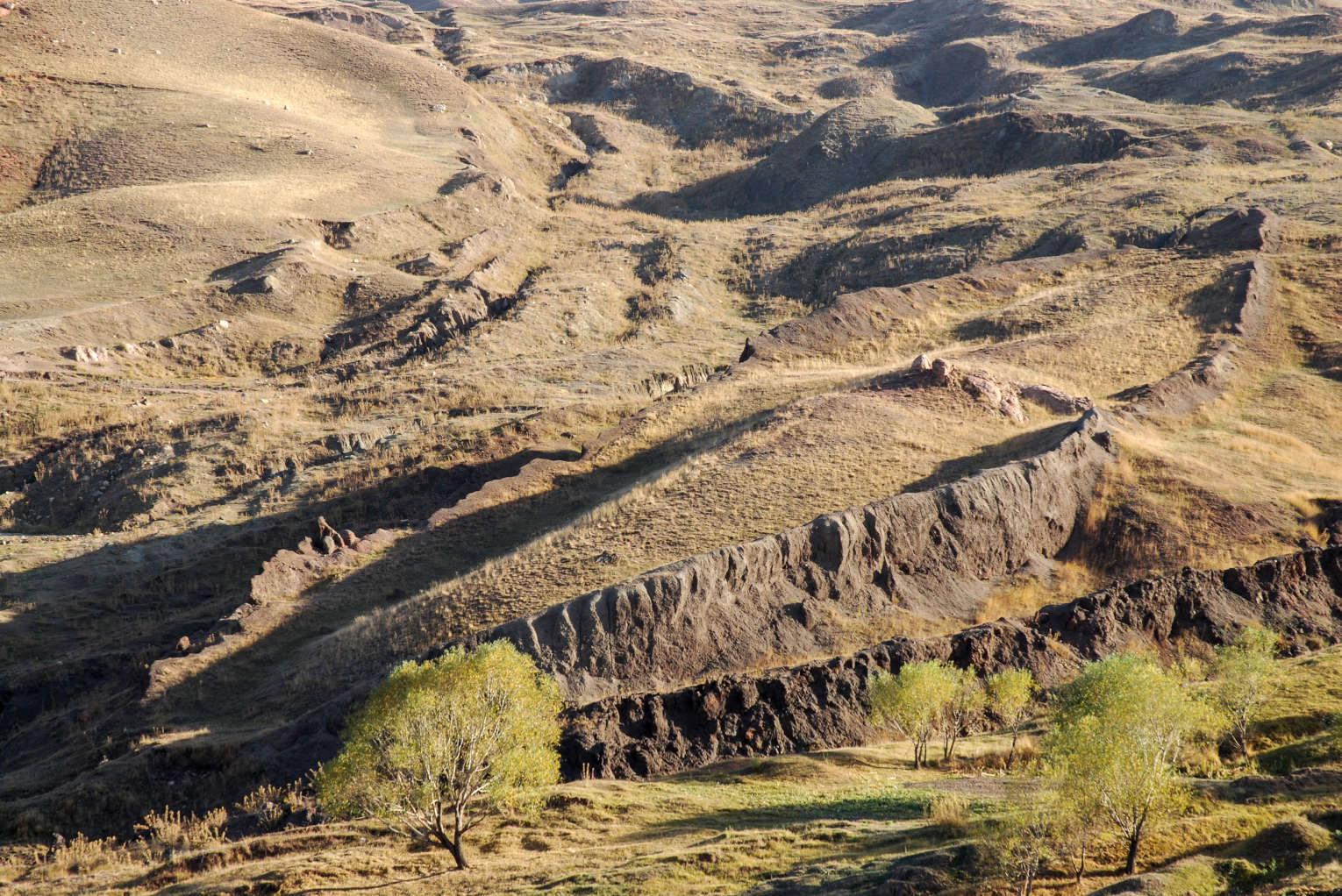
A decades-long mystery in the mountains of eastern Turkey is entering a new chapter.
Researchers who believe they have found the remains of Noah’s Ark have received official approval from Turkish authorities to conduct what they describe as the most extensive scientific investigation ever performed at the Durupinar Formation, a boat-shaped site located near Mount Ararat.
The announcement marks a historic milestone in a search that has captivated Bible believers, archaeologists and skeptics for generations.
According to the team behind Noah’s Ark Scans, the newly approved expedition will include:
- Non-destructive core drilling to examine what lies beneath the surface without damaging the site.
- Advanced remote-sensing technology to map underground features.
- Next-generation imaging systems capable of providing more detailed scans than ever before.
- An underground drone called “Gopher” designed to explore and map hidden spaces beneath the formation.
- Expanded analysis of previously identified tunnels, voids and chambers detected through ground-penetrating radar.
“This historic authorization marks the first time in modern history that a dedicated international team has been officially cleared to perform extensive, non-destructive investigations at the site using revolutionary new scanning and imaging technologies never before applied to this site,” the group said in a statement.

Order Dinesh D’Souza’s New Book, “The Stones Cry Out” on Amazon.com!
Researchers hope the new investigation will answer one of history’s most enduring questions. The team said it is seeking “irrefutable proof” that the formation is the authentic resting place of Noah’s Ark.
The Durupinar Formation sits about 18 miles south of Mount Ararat and has been the focus of intense interest since its discovery in 1948. Previous scans reportedly revealed what researchers describe as angular structures, tunnels and large underground voids that they believe are inconsistent with a natural geological formation.
Andrew Jones, one of the researchers involved in the project, pointed to what he believes are unusual characteristics of the site.
“Naturally, an object would not form this way with the pointed end uphill,” Jones told the Daily Mail.
Jones also said researchers have identified underground features that warrant further investigation.
“We have uncovered a tunnel that is not filled in, which leads to a big central void, a room that goes much further down that is square-shaped,” he said.
Among the most intriguing findings are soil samples collected from within the formation. According to Jones, the soil contains less alkalinity, more organic matter and elevated potassium levels compared to surrounding areas.
“Tests show these soil differences (pH, organic matter and potassium) are real, with less than a five percent chance they’re random, giving 95 percent confidence that something like a decayed wooden ship is causing them,” he said.
The formation’s dimensions have also drawn attention because they closely resemble the measurements given for Noah’s Ark in Genesis.
While many scientists continue to argue the site is a natural geological feature, the upcoming investigation could provide the clearest answers yet.
The significance of this extends far beyond archaeology. The account of Noah’s Ark is foundational to the biblical narrative and to Jesus’ own teachings about the days of Noah. As the evidence continues to point toward the historicity of the Ark, it would serve as another powerful example that God’s Word remains true and trustworthy in an increasingly secular age.
The expedition is expected to begin later this year, with preliminary findings to be released as researchers process and verify the data.
James Lasher, a seasoned writer and editor at Charisma Media, combines faith and storytelling with a journalism background from Otterbein University and ministry experience in Guatemala and at the LA Dream Center. A Marine Corps and Air Force veteran, he is the author of The Revelation of Jesus: A Common Man’s Commentary and a contributor to Charisma magazine. For interviews and media inquiries, please contact [email protected].
