
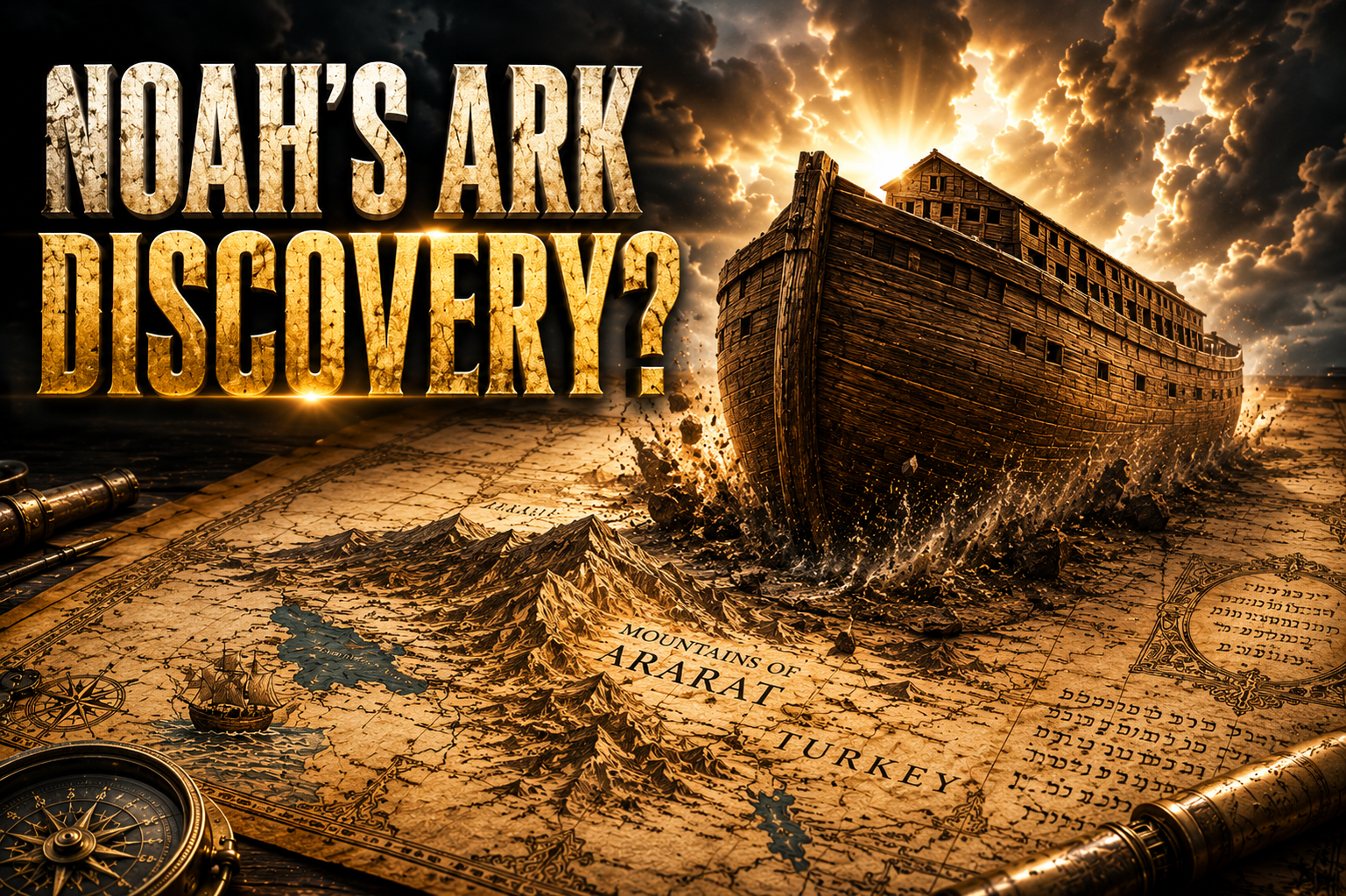
A renewed wave of interest surrounding Noah’s Ark is capturing global attention after researchers pointed to a 16th-century map that appears to depict the biblical vessel resting in the mountains of eastern Turkey.
According to a recent New York Post report, investigators studying a 1587 world map known as the “Planisphere” believe the ancient illustration may correspond with the controversial Durupinar formation near Mount Ararat — a boat-shaped geological site long associated with theories about Noah’s Ark.
The map was made by Italian cartographer Urbano Monte and is currently located at Stanford University’s David Rumsey Map Center. Researchers noted that the illustration appears to place Noah’s Ark in the same region as the Durupinar formation today.
The Durupinar site, first identified in 1959, has remained at the center of debate for decades because of its unusual shape and dimensions. The structure measures approximately 515 feet long, closely matching the dimensions for Noah’s Ark described in Genesis 6.

To order Dinesh D’Souza’s new book, The End of Time, visit Amazon.com.
In recent years, independent researchers associated with the Noah’s Ark Scans project have conducted ground-penetrating radar scans and soil analyses at the site. According to reports from the New York Post and The Sun, researchers say they discovered underground voids, corridor-like formations and a central cavity beneath the surface.
Researchers also reported elevated levels of organic matter and potassium in soil samples taken from within the formation, compared with those from surrounding areas. Marine fossils and shell-like materials allegedly found in the region have further fueled speculation that the area may once have experienced catastrophic flooding.
Genesis 8:4 states that the ark came to rest “upon the mountains of Ararat” after the floodwaters receded. For many believers, the ongoing search represents more than archaeology. It serves as a reminder of the biblical account of judgment, salvation and humanity’s need for repentance.
Jesus Himself referenced Noah’s generation as a prophetic warning about the last days.
“But as the days of Noah were, so shall also the coming of the Son of man be,” Jesus said in Matthew 24:37.
As technology continues to probe some of the world’s oldest mysteries, this renewed interest in Noah’s Ark reflects a growing hunger to understand the truth of Scripture — and serves as a reminder that biblical prophecy still speaks powerfully into the modern age.
Abby Trivett is a writer and editor for Charisma Media and has a passion for sharing the gospel through the written word. She holds two degrees from Regent University, a B.A. in Communication with a concentration in Journalism and a Master of Arts in Journalism. She is the author of the upcoming book, The Power of Suddenly: Discover How God Can Change Everything in a Moment. For interviews and media inquiries, please contact [email protected].
