
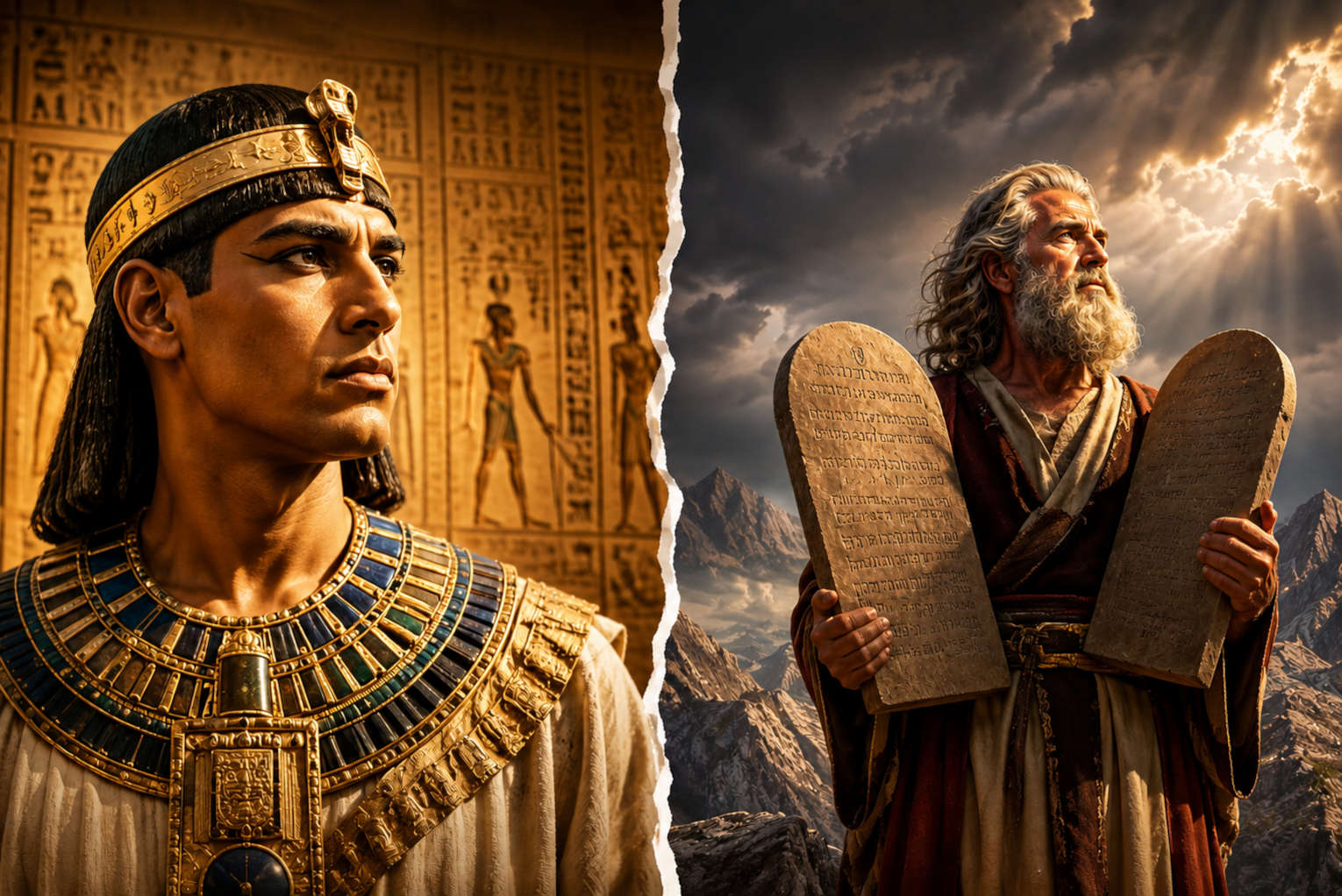
A fascinating theory emerging from Egypt is offering another reason to take the Bible seriously as a historical source, with researchers examining whether one of ancient Egypt’s most mysterious officials could have been Moses.
According to reporting from the Daily Mail, a report from the Armstrong Institute of Biblical Archaeology examines striking parallels between Moses and Senenmut, a powerful Egyptian courtier who served during the reign of Hatshepsut.
Using biblical chronology, the report places Moses’ birth around 1526 BC and identifies Hatshepsut as a possible candidate for the pharaoh’s daughter who rescued Moses from the Nile and raised him within Egypt’s royal household.
That possibility becomes particularly intriguing when compared with Senenmut’s remarkable rise.
Born outside the royal family, Senenmut accumulated nearly 90 titles and became Hatshepsut’s chief steward, architect and trusted adviser. His access to royalty was extraordinary, including depictions of him embracing Hatshepsut’s daughter Neferure.

Order Dinesh D’Souza’s New Book, “The Stones Cry Out” on Amazon.com!
Investigative journalist Scott Alan Roberts went even further in his 2014 book, “The Exodus Reality.”
“Let’s cut to the quick. Senenmut, favored courtier to Pharaoh Hatshepsut, is the very same man we know as Moses,” Roberts wrote.
One of the strongest parallels involves Senenmut’s disappearance.
His last securely dated appearance came around 1486 BC under the chronology used by the report — approximately when Moses would have turned 40. Acts 7:23 places Moses at 40 when he went out among the Israelites, shortly before killing an Egyptian and fleeing Pharaoh.
Senenmut likewise suddenly disappears from Egyptian history. His two tombs were left unfinished, his sarcophagus was shattered and some of his monuments were deliberately damaged.
Egyptologist Alan Schulman described Senenmut as apparently becoming “the victim of someone’s implacable hatred.”
Another surviving inscription reportedly describes Senenmut as having “come forth from the flood” and receiving authority over “even the Nile” — language that immediately stands out alongside the biblical account of Moses being drawn from the Nile.
Now, none of this actually proves Senenmut was Moses. No inscription has yet been discovered explicitly connecting the two men.
But the parallels demonstrate why biblical history should not be dismissed as historically inaccurate. Scripture provides names, places, rulers, cultures and chronological clues that researchers can compare against the ancient world — and sometimes what emerges from beneath the sands of history looks remarkably familiar.
James Lasher, a seasoned writer and editor at Charisma Media, combines faith and storytelling with a journalism background from Otterbein University and ministry experience in Guatemala and at the LA Dream Center. A Marine Corps and Air Force veteran, he is the author of The Revelation of Jesus: A Common Man’s Commentary and a contributor to Charisma magazine. For interviews and media inquiries, please contact [email protected].
