
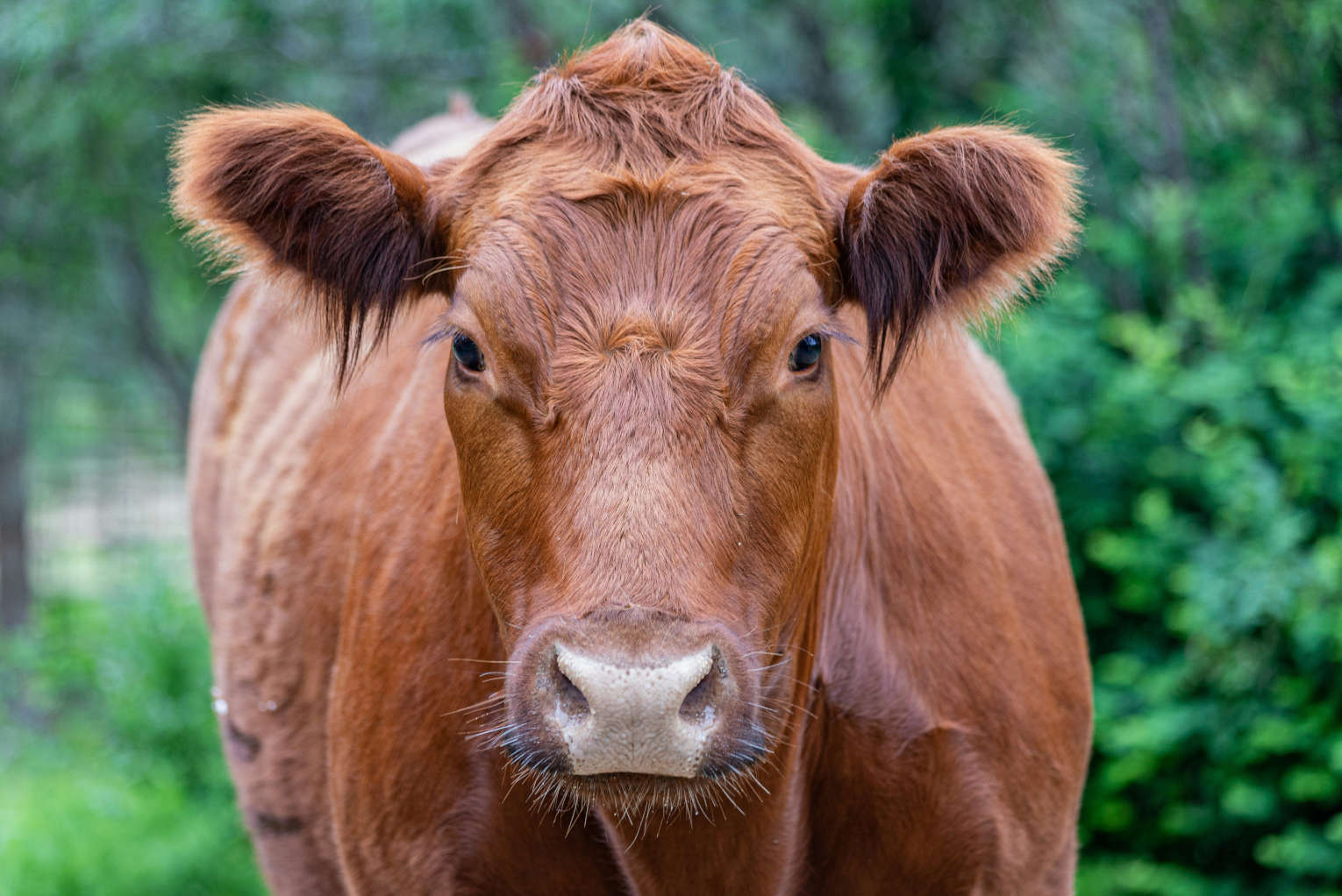
A newly born red heifer in Israel is doing more than capturing headlines. It is fueling what organizers describe as a nationwide movement to prepare for the restoration of biblical Temple worship, adding fresh momentum to developments that continue to draw global attention to the prophetic significance of events unfolding in Jerusalem.
The announcement follows several major milestones over the past year. Support for rebuilding the Holy Temple has reached a majority among Israeli Jews. Tens of thousands of men are now reportedly training for Temple service. Now, a red heifer born in the Galilee has become the centerpiece of what leaders say is a coordinated national effort to restore the biblical laws of ritual purity.
Israel365 News reported the calf was conceived using imported American semen and born to a black-coated Angus cow in northern Israel. Organizers believe its birth represents far more than a rare agricultural event.
“This is not a private event or private issue,” Yehuda Ben Tzvi, head of programming at the Mikdash Educational Center, said during an interview with Joseph Good of Hatikva Ministries. “The calf,” he said, “is only one piece of a six-point national strategy” that “must become ‘a national historical event'” rather than the work of a small group.
For Christians, these developments carry enormous prophetic weight. Scripture reveals that a functioning Temple will once again stand in Jerusalem before the return of Jesus Christ. Every new step toward restoring Temple worship reminds us that the stage continues to be set for the fulfillment of biblical prophecy.
Six pieces organizers say are needed
Ben Tzvi said the red heifer alone is not enough. The organization has spent the past year building what he described as six essential components needed to restore the purification ritual.
1. A qualified red heifer
The centerpiece of the effort is a calf named Tamima.
“Fascinatingly enough, a beautiful red heifer was born around a month ago, and she was, funnily enough, discovered by one of our team members from the National Red Heifer Institute,” Ben Tzvi said.
He added, “A red heifer born from a black Angus, but she was tip to toe 100 percent pure.”
The calf must now remain free from disqualifying blemishes while keeping an entirely red coat until it reaches the required age.
“We named her Tamima in a prayer that she will remain Tamim, whole, both in body and in redness of her coat,” Ben Tzvi said.
One immediate concern involved the calf’s identification tags.
“I said to Shahi, immediately get those tags out of there,” Ben Tzvi recalled. “The next day… she already didn’t have any tags, and we are now waiting to see if the blemish will heal 100 percent.”
Another challenge lies ahead.
“He has to keep it 100 percent red coat until it’s two years of age,” Ben Tzvi said.
2. A ritually pure priest
Ben Tzvi described this requirement as even more difficult than producing a qualified red heifer.
“Any kohen today, at least the people in the synagogue, is considered a kohen,” he said, “but a pure kohen is nearly unheard of, because he has to be born outside the hospital.”
He explained that contact with death or locations associated with death renders a priest ritually impure, requiring extraordinary care throughout life.
Despite those challenges, Ben Tzvi said the institute has identified one candidate.
“Thank God, there is a pure Cohen who we definitely keep in secret,” he said.
Order Mondo Gonzales’ New Book, “The Mystery of the Red Heifer” on Amazon.com!
3. The correct location for the ceremony
The ritual cannot be performed just anywhere.
“The Cohen stands facing this point, where his eye can see clearly the place of the temple,” Ben Tzvi said, “and there he sprinkles seven times in the blood of the heifer, and only there can the ritual be done.”
Because of that requirement, organizers have focused on the Mount of Olives and have even proposed constructing a platform overlooking the Temple Mount if necessary.
4. National rabbinic consensus
Organizers have assembled 20 rabbis to answer practical questions surrounding the restoration of the ritual.
“They are taking 10 or more important selected dilemmas, which we need to reach conclusions to give practical guidance to the program, and they are step by step reaching conclusions by democratic resolution,” Ben Tzvi said.
One of those conclusions addresses whether a restored Sanhedrin must exist before the ceremony can proceed.
“Although until the Sanhedrin are reestablished in Israel, it is not obligatory to have their presence recreating the red heifer ritual,” Ben Tzvi said, “but a great effort must be done to make it a national event.”
5. Public awareness
Ben Tzvi said education has become a major part of the campaign through media outreach, public interviews and an expanding educational center.
“It was 100 percent far from being anything up to standard,” he said while dismissing reports of an alleged rehearsal that circulated last year. “It was far away from Jerusalem, nowhere close.”
He emphasized the importance of accurately informing both Israelis and those following developments around the world.
6. National funding
The final piece is financial support.
“We are not asking for funding from any non-Jewish pocket,” Ben Tzvi said, “because we believe that first and foremost the Temple and our covenant with God stems from the relationship between the Jewish people and God.”
He said the effort begins with Israel before ultimately extending blessing outward.
“Once its temple is built, the circles can resound. Once we’ve made the inner circle, it can stand to the outer circle, all creating God’s presence within the Jewish people, bringing blessing to the nations… around the world.”
Growing momentum
The birth of Tamima comes as enthusiasm surrounding Temple preparations continues to grow.
Israel365 News recently reported that 150,000 men have enrolled in Temple service training as part of a broader goal of preparing 200,000 participants. Another recent survey found that 55% of Israeli Jews now support rebuilding the Holy Temple on the Temple Mount.
Viewed together, the developments paint a picture of increasing national momentum surrounding preparations that, for generations, remained largely on the fringe.
The birth of another potentially qualified red heifer is more than a headline—it is another marker along the prophetic timeline laid out in Scripture.
God’s Word has already revealed what lies ahead, and these developments remind us that His promises are unfolding exactly as He said they would. Rather than fueling speculation, they should stir us to examine our own hearts. Jesus warned us not to be like the five foolish virgins whose lamps had no oil when the bridegroom arrived. We are called to remain filled with the Holy Spirit, faithful to His Word and ready for the return of our King, because the day is drawing ever closer.
James Lasher, a seasoned writer and editor at Charisma Media, combines faith and storytelling with a journalism background from Otterbein University and ministry experience in Guatemala and at the LA Dream Center. A Marine Corps and Air Force veteran, he is the author of The Revelation of Jesus: A Common Man’s Commentary and a contributor to Charisma magazine. For interviews and media inquiries, please contact [email protected].
