
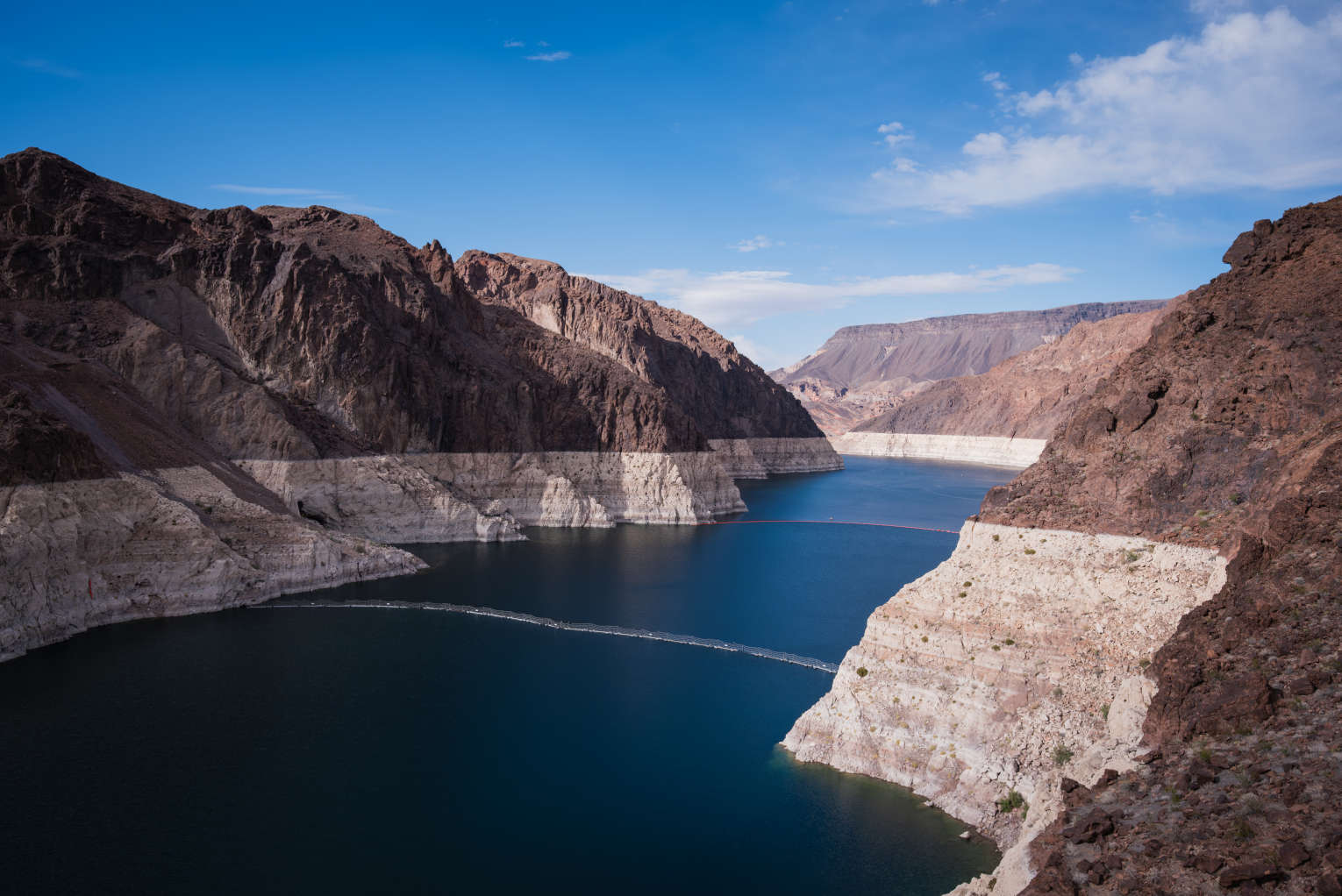
Lake Mead has fallen to its lowest water level on record, placing millions of Americans at risk of water shortages, higher electricity costs and possible power outages.
The reservoir, formed by Hoover Dam on the Colorado River between Nevada and Arizona, stood just below 1,040 feet above sea level Tuesday, according to the Daily Mail. Lake Mead is considered full at 1,220 feet and is now operating at less than 27% capacity.
Current water levels sit about 5 feet above the point where Hoover Dam’s older hydroelectric turbines must shut down to prevent damage. Newer turbines can continue operating at lower levels, but with sharply reduced power output.
If Lake Mead falls below 950 feet, Hoover Dam would lose its ability to generate electricity. The facility produces approximately 4 billion kilowatt-hours each year and supplies power to more than 1 million people in Arizona, California and Nevada.

Order Jonathan Cahn’s New Book, “The Altar of Pergamon” on Amazon.com!
Lake Powell, formed by Glen Canyon Dam, is also approaching critical levels. Its turbines could shut down if water levels fall another 30 feet, affecting approximately 300,000 electricity customers.
“It’s extremely significant and extremely concerning,” JB Hamby, chairman of the Colorado River Board of California, said. “You have three-quarters of the population of the Colorado River Basin, some 30 million people, who are directly impacted by risks to Lake Mead.”
Between 30 million and 40 million people depend on the Colorado River for drinking water, household use and agriculture. Las Vegas, Phoenix and Los Angeles receive significant portions of their water from the river system.
The Bureau of Reclamation projects Lake Mead could fall another 33 feet over the next two years. Federal officials have proposed mandatory water reductions of up to 40% for Arizona, California and Nevada.
“The Colorado River no longer reliably produces enough water to support all the uses and expectations built around it,” Hamby said.
James Lasher, a seasoned writer and editor at Charisma Media, combines faith and storytelling with a journalism background from Otterbein University and ministry experience in Guatemala and at the LA Dream Center. A Marine Corps and Air Force veteran, he is the author of The Revelation of Jesus: A Common Man’s Commentary and a contributor to Charisma magazine. For interviews and media inquiries, please contact [email protected].
