
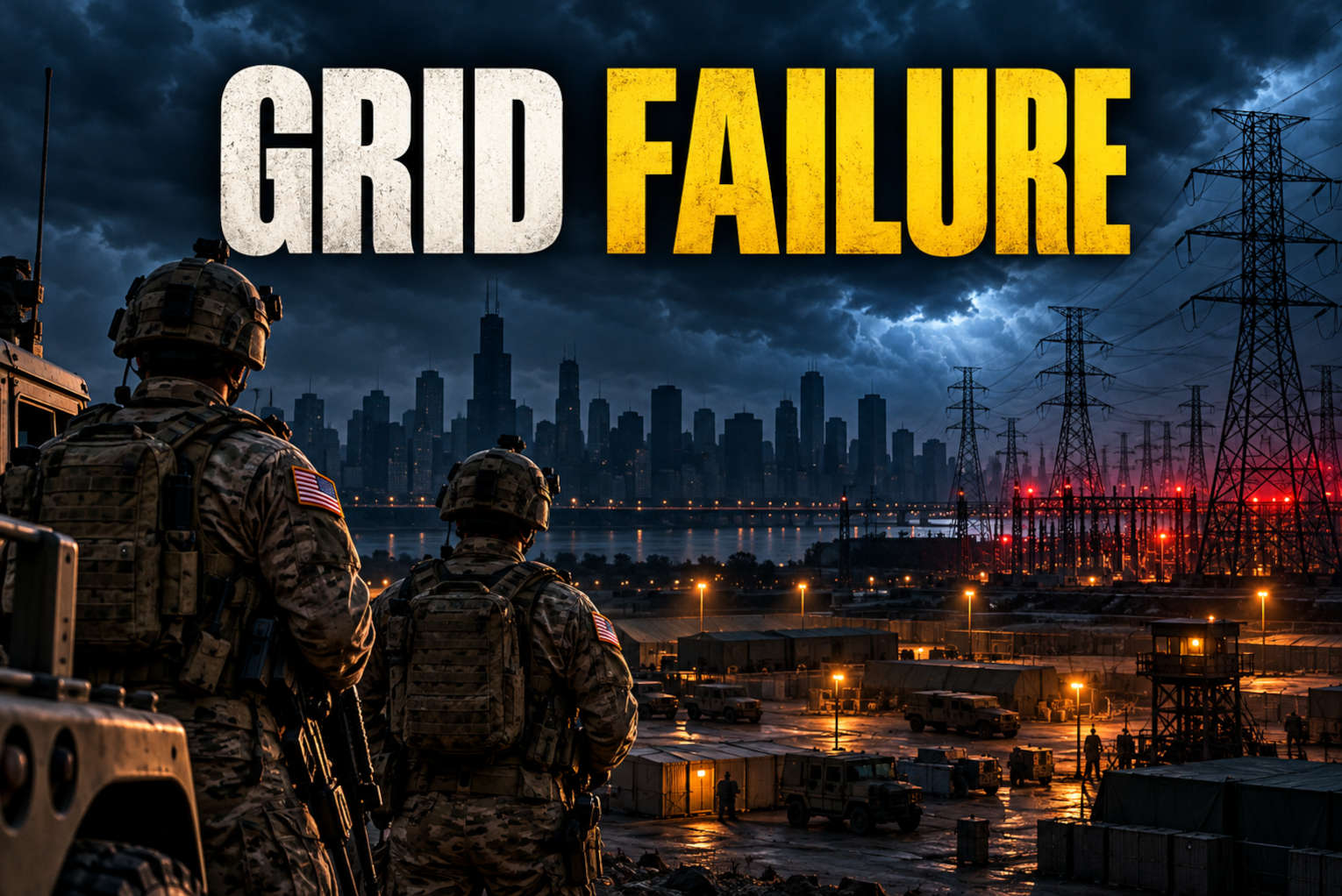
Ninety days without dependable electricity. Disrupted supplies. Families wondering when help will arrive.
That is the civilian nightmare behind a military planning effort to keep America’s forces operating if the infrastructure around them fails.
The Pentagon is preparing major military bases in the continental United States to sustain essential operations independently for at least 90 days, according to the Daily Mail, citing documents reviewed by Fox News.
Electricity. Water. Fuel. Communications. The necessities Americans expect to work when they flip a switch or turn a faucet would need independent support on military installations.
“We don’t want to rely on standard civilian municipal infrastructure to run our national defense. We just simply can’t. It’s an intolerable risk,” Pentagon chief spokesperson Sean Parnell told Fox News, according to the Daily Mail.
An intolerable risk.
That assessment carries consequences far beyond military gates. The same infrastructure Pentagon planners consider too vulnerable to depend on supports American homes, businesses and churches.

Order Jonathan Cahn’s New Book, “The Altar of Pergamon” on Amazon.com!
Under FORTRESS America, proposed measures include portable nuclear reactors, large battery systems and independent local power grids. The initiative also envisions stockpiles of ammunition, fuel, medical supplies and critical materials.
Civilian factories would prepare to shift into defense production. Backup suppliers would help prevent the loss of one manufacturer from crippling military operations. Satellite links and navigation systems would receive protection against disruption.
“Power is combat now. Without electricity, you lose communications, water, logistics, assembly lines and just basic military command structures,” Parnell told Fox News.
The public founding memorandum establishes the program’s structure and priorities. Fox’s reporting supplies the specific 90-day requirement, the Daily Mail noted.
Now consider the household outside the base.
A refrigerator warms. A phone battery dies. Food runs low. Another day passes without reliable information about when services will return.
If a disruption stretched into weeks, the strain could reach far beyond physical discomfort. Fear could enter every conversation. Uncertainty could wear down even people who thought they were prepared.
And the test of faith could become painfully personal.
Would we share food while wondering how long our own supply would last? Would we help a neighbor when protecting our own household consumed our thoughts? Would we trust God when we could see no answer coming?
Habakkuk confronted devastation in terms his people understood: failed crops, empty fields and the loss of livestock. Yet in Habakkuk 3:17-18, he resolved to rejoice in the Lord.
His circumstances offered no visible security. His faith still rested in God.
We need that depth of trust before a crisis strips away the routines that make life feel secure. A stocked pantry can help a household. It cannot sustain a soul.
Churches should also consider what obedience would require under pressure. Who would check on elderly members? How would congregations reach families without working phones? What could Christians share when deliveries stopped?
Those decisions deserve attention while the lights are still on.
The reporting identifies no specific impending attack or undisclosed intelligence warning. Military planners prepare for disasters that never happen. But Americans deserve a clear explanation of the threats driving preparations this extensive.
“You don’t want to be making these decisions in the middle of a global multi-front conflict. We have to have a plan,” Parnell told Fox News.
What led planners to the 90-day benchmark? Is there something those in charge know that the public has not been told? Is that knowledge driving preparations for the worst?
And if the day comes when the lights stay off and the answers stop coming, how firmly will our faith stand?
James Lasher, a seasoned writer and editor at Charisma Media, combines faith and storytelling with a journalism background from Otterbein University and ministry experience in Guatemala and at the LA Dream Center. A Marine Corps and Air Force veteran, he is the author of The Revelation of Jesus: A Common Man’s Commentary and a contributor to Charisma magazine. For interviews and media inquiries, please contact [email protected].
