
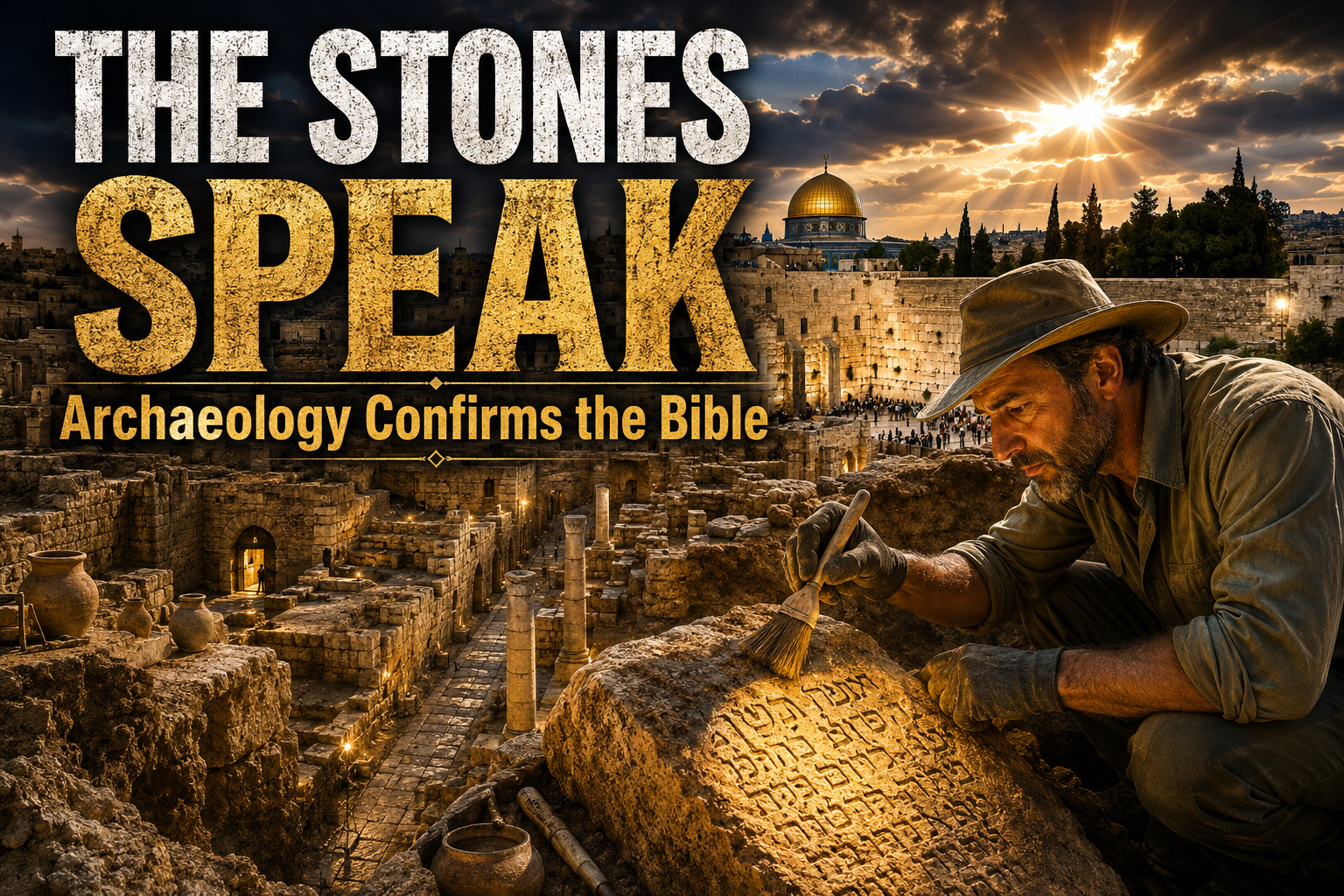
For centuries, skeptics have questioned whether archaeology would ultimately contradict the Bible. Yet according to several of Israel’s leading archaeologists featured on TBN and hosted by Mati Shoshani and Samuel Smadja, new discoveries beneath Jerusalem and across Israel continue to reinforce—not undermine—the historical backdrop of Scripture.
Throughout the program, Shoshani takes viewers beneath the streets of Jerusalem, where archaeologists are uncovering thousands of years of history layered beneath the modern city. Excavations reveal evidence spanning from the First Temple period through the Roman, Byzantine and Islamic eras.
Israeli archaeologist Barak Monnickendam-Givon of the Israel Antiquities Authority explains that Jerusalem functions like an archaeological “layer cake,” with each civilization literally built atop the previous one.
“People living here in Jerusalem, they heard the prophets, they saw the kings of Judea,” he says. “From this time on, we have people living here pretty much till now till the 20th century… We’re trying to reconstruct how the city was built to the end state as we see it today.”
Those excavations have uncovered administrative buildings dating back roughly 2,700 years, ancient weights tied to the biblical shekel system and clay bullae bearing names that correspond with individuals mentioned in Scripture. Monnickendam-Givon says these discoveries provide valuable historical context for understanding the biblical world.
“We do have large evidence. So, we know that Jerusalem was the capital of Judea 2600 years ago,” he says. “We did found here, weights which are part of the shekel system.”
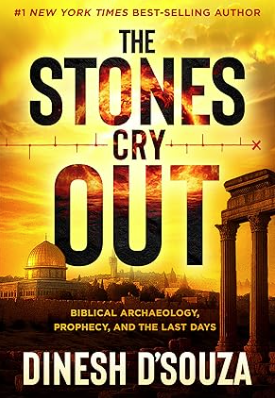
To order Dinesh D’Souza’s new book, The Stones Cry Out, visit Amazon.com.
The video also highlights how catastrophic events often become an archaeologist’s greatest source of information. Because ancient cities were frequently destroyed suddenly, many homes and everyday possessions were left untouched, preserving remarkable snapshots of life from centuries ago.
“When we have conquest, destructions, earthquake, fires, it’s all very good for us,” Monnickendam-Givon says. “I know it’s not good for the people living in the past, but for us, it’s perfect.”
Another featured archaeologist, Dr. Yaakov Billig of the Israel Antiquities Authority, points to discoveries around Robinson’s Arch and the Temple Mount that he believes provide compelling historical evidence of Jerusalem’s Jewish past.
“We found 350 coins with inscriptions on them. They say year two for the liberation of Jerusalem, year three, year four from the revolt against the Romans. That’s hard evidence,” Billig says. “We found part of our history.”
Billig also reflected personally on excavating the ancient streets beneath today’s Western Wall.
“I excavated the street, and I believed that about 60 generations ago, my ancestors walked on that street and did their shopping,” he says. “There’s no doubt. This is our story from generations ago. So that’s what makes it personal.”
The documentary later shifts to Tell es-Safi, widely identified as biblical Gath, where Prof. Aren Maeir of Bar-Ilan University has spent decades directing excavations.
“When we started excavating here, one of the first things we found here was this enormous destruction of the site, which we now attribute to Kazahel, who, around 830 BC, destroyed the sites mentioned in 2 Kings,” Maeir says. “It’s the earliest known siege system in the world.”
Maeir says archaeology and Scripture often complement one another, even while scholars continue to study difficult historical questions.
“The Bible is one of the most complex texts that we have,” Maeir says. “…there are several examples of where it fits in perfectly.”
Every excavation offers another glimpse into the people, cities and kingdoms that fill the pages of the Bible, reminding believers that God’s redemptive story unfolded in real places throughout history.
As the video concludes, Smadja points viewers back to Jesus’ words in the New Testament.
“Remember the New Testament tells you that if you’re not going to speak, if you’re not going to proclaim the good news, the stones are going to speak,” Smadja says. “And we heard how much the stones can speak. How much the stones can testify about the love of God and the purpose of God to the Jewish people.”
Abby Trivett is a writer and editor for Charisma Media and has a passion for sharing the gospel through the written word. She holds two degrees from Regent University, a B.A. in Communication with a concentration in Journalism and a Master of Arts in Journalism. She is the author of the newly released book, The Power of Suddenly: Discover How God Can Change Everything in a Moment. For interviews and media inquiries, please contact [email protected].
