
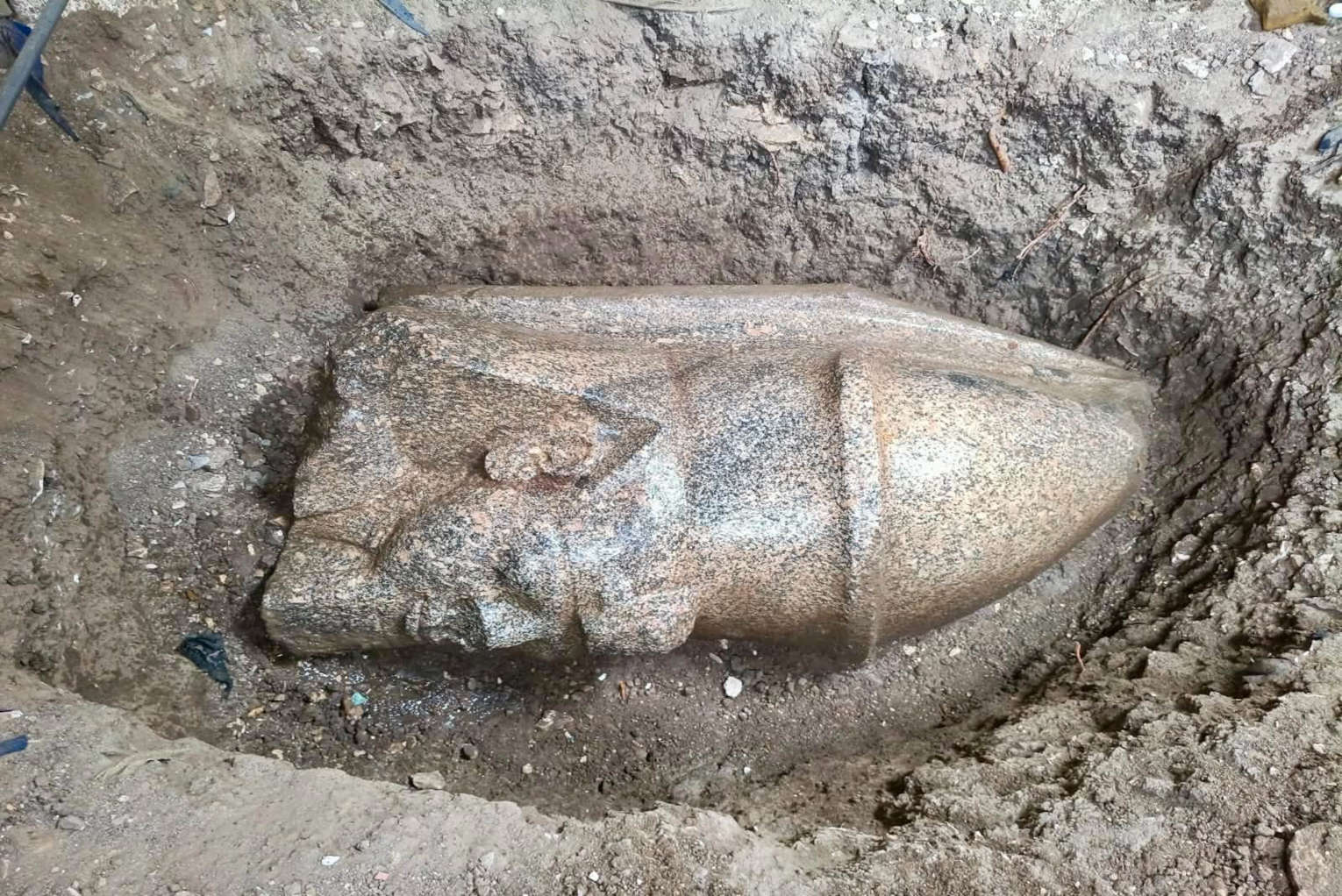
An inscribed stone outside an Egyptian farmer’s home led archaeologists to the remains of a colossal Ramses II statue that may once have towered 28 feet above the ground.
The unexpected discovery also uncovered a second royal statue believed to depict the same ruler, bringing fresh attention to the ancient pharaoh popularly associated with the biblical Exodus.
The farmer alerted authorities after finding the stone in Behebat al-Hijara, a village in Egypt’s Nile Delta about 60 miles north of Cairo. Excavations by Egypt’s Supreme Council of Antiquities subsequently revealed the statue remains and a pink granite block bearing hieroglyphic inscriptions, Breitbart reported.
One recovered head alone measures approximately 5 feet, 3 inches tall and depicts Ramses II wearing the double crown symbolizing Upper and Lower Egypt. Hisham El-Lithi, secretary-general of the council, estimated the original statue’s height, including its base, at approximately 28 feet, People reported.
Researchers are continuing excavations to determine how the monuments fit into the surrounding site, known for its ancient temple dedicated to Isis.
Ramses II ruled more than 3,000 years ago. Scripture does not name the pharaoh who confronted Moses, and Ramses II’s identification as that ruler remains debated.
The discovery comes as author and filmmaker Dinesh D’Souza emphasizes archaeology’s role in corroborating biblical history through his new book, “The Stones Cry Out: Biblical Archaeology, Prophecy and the Last Days.”
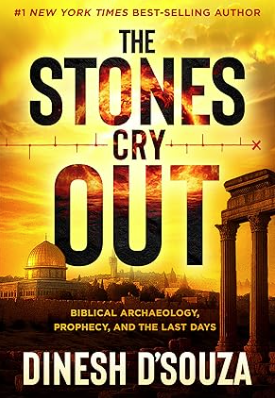
Order Dinesh D’Souza’s New Book, “The Stones Cry Out” on Amazon.com!
“If the historicity of the Bible can be confirmed, well, that makes it more likely that the whole narrative is true,” D’Souza said during an interview with PragerU CEO Marissa Streit, reported by Charisma.
In a separate interview with Daniel Adams at Charisma Media studios, D’Souza highlighted discoveries with direct connections to biblical names and locations: the Tel Dan inscription referencing David’s dynasty, an inscription naming Pontius Pilate, and Jerusalem’s pools of Bethesda and Siloam.
Such findings, he argued, give Christians tangible historical evidence to share when answering challenges to Scripture.
“Obviously, stones don’t speak, but God speaks through the stones,” D’Souza said.
In Egypt, the excavation continues. Researchers are examining how the statues and inscribed granite block relate to one another and to the surrounding site, known for the remains of a temple dedicated to Isis. A stone found outside a village home has opened a new investigation into the worship and royal power of ancient Egypt.
James Lasher, a seasoned writer and editor at Charisma Media, combines faith and storytelling with a journalism background from Otterbein University and ministry experience in Guatemala and at the LA Dream Center. A Marine Corps and Air Force veteran, he is the author of The Revelation of Jesus: A Common Man’s Commentary and a contributor to Charisma magazine. For interviews and media inquiries, please contact [email protected].
