
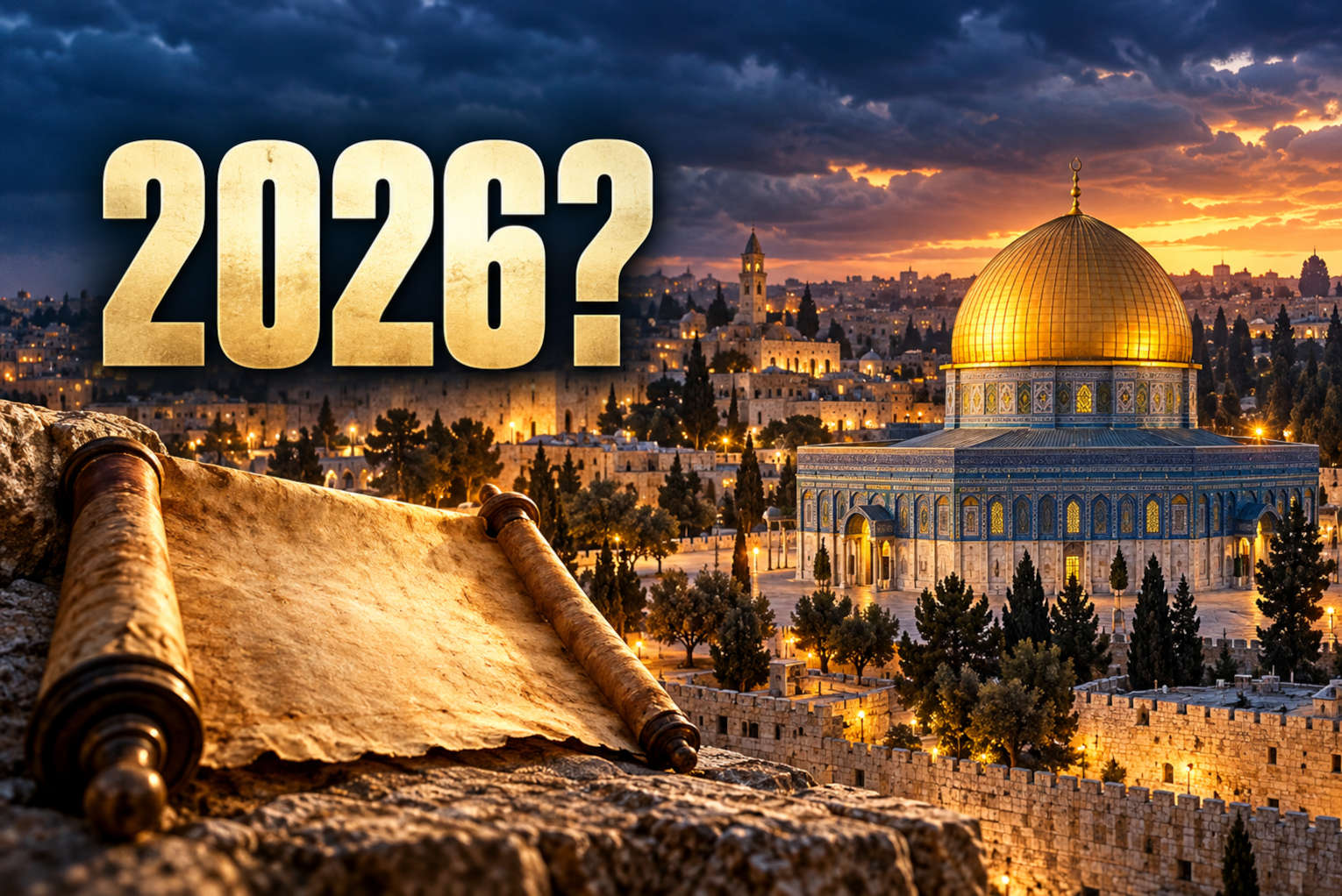
Rabbi Tovia Singer says a countdown in Daniel reaches its endpoint in 2026, linking the prophet’s ancient words to the Dome of the Rock. His claim comes amid renewed Temple Mount activity and openly expressed hopes for redemption, developments that deserve Christians’ attention — and discernment.
According to an Oct. 9 report from Israel365 News, Singer presented his interpretation during an interview on the Parsha Inspired podcast. He reads Daniel’s 1,335 days as years, beginning with A.D. 691.
“691, using a secular dating. Add that 1,335. You’re in the year 2026,” Singer said, as quoted by Israel365 News.
Singer identifies the Dome of the Rock as the “abomination that maketh desolate,” arguing that its placement over what he identifies as the Holy of Holies establishes the starting point.
“We’re living in such a time. And it’s happening now,” he said.
He also urged viewers to examine his interpretation.
“I plead with you, the viewer, to please look it up. Don’t trust me,” Singer said.

Order Jonathan Cahn’s New Book, “The Altar of Pergamon” on Amazon.com!
His timetable warrants scrutiny. Daniel 12 specifies days and connects the count to both the removal of the daily sacrifice and the establishment of the abomination. Converting those days into years and selecting the Dome as the starting point are interpretive choices. The Metropolitan Museum of Art dates the structure’s completion to 691-692. Another discrepancy concerns the shorter countdown: Adding 1,290 years to 691 produces 1981, while Israel’s law declaring Jerusalem complete and united as its capital passed July 30, 1980.
The broader developments surrounding the Temple Mount, however, extend beyond one proposed date.
Israel National News reported that Beyadenu, an organization advocating Jewish access to the site, counted 68,944 Jewish visits during the Hebrew year 5786, approximately 500 more than the previous year.
Beyadenu said “the connection to the Temple Mount is continuing to deepen,” according to the report.
The Temple Institute also reports ongoing preparations for producing red heifer ashes used in ritual purification. Its statement says “the process also includes a number of practical experiments and exercises.” The institute clarified that a practice exercise produced ashes unsuitable for the required purification.
These preparations and Singer’s remarks offer visible expressions of messianic expectation among those pursuing redemption and restored Temple worship. Rising visits demonstrate increased engagement with the site. Christians watching Israel recognize the prophetic significance of activity surrounding a future Temple.
That attention rests on God’s enduring faithfulness to Israel.
Singer said, “Both Christianity and Islam believe they’ve replaced us,” according to Israel365 News. Christians who affirm Israel’s continuing covenant calling reject that characterization.
In Romans 11, Paul rejects the suggestion that God has abandoned His people, warns Gentile Christians against arrogance and describes Israel’s future salvation.
“For the gifts and calling of God are irrevocable,” Paul writes in Romans 11:29.
The Temple’s prophetic relevance also comes into focus through the New Testament. Daniel 9:27 describes the cessation of sacrifice midway through the final seven-year period. Second Thessalonians 2 describes the man of sin exalting himself in the temple of God before the Lord destroys him at His coming. These passages inform our expectation of a future Temple and the Antichrist’s desecration.
Our hope centers on Jesus Christ. We await His gathering of the church before the seven-year Great Tribulation and His subsequent return to defeat evil and establish His reign.
First Thessalonians 4:16-18 describes the Lord descending with the trumpet call of God, the dead in Christ rising and living Christians being caught up to meet Him. Paul presents that promise as a source of comfort.
Such expectation requires humility about timing.
“It is not for you to know the times or the dates,” Jesus told His disciples in Acts 1:7, placing their determination under the Father’s authority. Paul likewise joins openness to the Holy Spirit with examining prophetic claims in 1 Thessalonians 5:19-21.
Jesus’ parable of the 10 virgins brings that responsibility home. All awaited the bridegroom, and all slept during his delay. The five wise virgins had prepared beforehand. When he arrived, those who were ready entered the wedding banquet.
Our most immediate response should be repentance: turning from sin, placing our faith in Jesus and yielding our lives to the Holy Spirit. Genuine faith should bear fruit in obedience, prayer and urgency to share the gospel.
As attention returns to the Temple Mount, we must examine our own hearts. When the trumpet sounds, may we already be surrendered to the Savior who is coming for His people.
James Lasher, a seasoned writer and editor at Charisma Media, combines faith and storytelling with a journalism background from Otterbein University and ministry experience in Guatemala and at the LA Dream Center. A Marine Corps and Air Force veteran, he is the author of The Revelation of Jesus: A Common Man’s Commentary and a contributor to Charisma magazine. For interviews and media inquiries, please contact [email protected].
