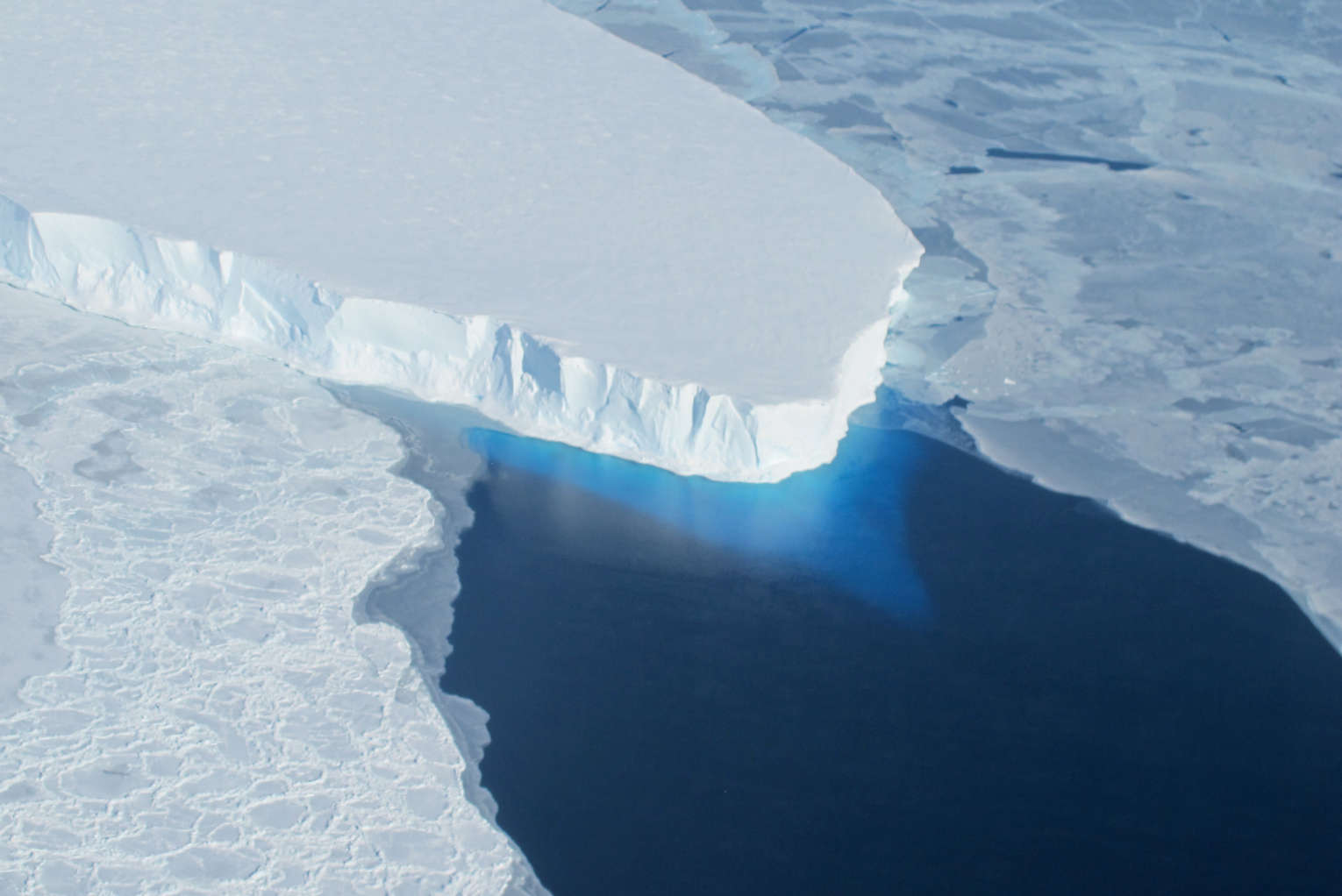
The headlines coming out of Antarctica sound like something lifted from the pages of a science fiction novel.
Scientists studying Antarctica’s massive Thwaites Glacier, often called the “Doomsday Glacier,” warn that its eastern ice shelf is on the verge of collapse. Researchers at the British Antarctic Survey say the floating ice shelf that has helped restrain the glacier’s movement is “poised to disintegrate,” with some expecting the breakup to occur this year.
The glacier itself contains enough ice to contribute roughly 26 inches of global sea-level rise if it were to collapse entirely.
The reports are dramatic, and the media response is predictable.
Climate activists immediately seize on every environmental headline as proof that humanity’s greatest problem is carbon emissions. Governments use the fear to justify more regulations, more control and more centralized authority. The same voices that insist humanity can save the planet if only enough power is handed to political institutions continue preaching their gospel of climate alarmism.
Christians should reject that narrative.
Scripture teaches that God remains sovereign over creation. “The earth is the Lord’s, and the fullness thereof” (Ps. 24:1). The future is not dictated by politicians, bureaucrats or international climate summits.
At the same time, believers cannot ignore what is happening around us.
Jesus commanded us to watch. Not watch for climate change. Watch for prophetic convergence. That brings us to an uncomfortable question.
What if reports like those coming from Antarctica are not evidence of humanity destroying the planet, but reminders that creation itself is moving toward the prophetic future God revealed thousands of years ago?
Jesus spoke directly about conditions that would characterize the period leading to His return.
“There will be signs in the sun, moon, and stars, and on the earth distress of nations in perplexity because of the roaring of the sea and waves” (Luke 21:25).
For centuries, readers puzzled over that statement. Today, oceans dominate international conversations. Rising seas, changing coastlines, extreme storms, marine disruptions and environmental uncertainty fill news cycles across the globe. The sea has become a source of growing concern for governments and populations alike.
Then there is the book of Revelation.
Order James Lasher’s New Book, “The Revelation of Jesus” on Amazon.com!
The trumpet judgments and bowl judgments contain repeated references to catastrophic impacts on Earth’s waters.
“The second angel sounded, and something like a great mountain burning with fire was thrown into the sea, and a third of the sea became blood. A third of the living creatures in the sea died, and a third of the ships were destroyed” (Rev. 8:8-9).
Later, the judgments intensify.
“The second angel poured out his bowl on the sea, and it became like the blood of a dead man, and every living creature in the sea died” (Rev. 16:3).
Fresh water systems are also struck.
“The third angel poured out his bowl on the rivers and springs of water, and they became blood” (Rev. 16:4).
No one is claiming a glacier in Antarctica fulfills those prophecies.
The question is whether humanity is entering a season that prepares the world to understand them.
The generation that eventually witnesses Revelation’s judgments will not suddenly wake up one morning to a completely different world. Conditions develop. Expectations shift. Foundations are laid.
The world is already becoming accustomed to discussions about ocean instability, water crises and environmental upheaval.
That reality should capture the attention of every student of biblical prophecy.
A third prophetic connection appears in Romans 8.
Paul writes that creation itself groans under the weight of a fallen world.
“For we know that the whole creation groans and travails in pain together until now” (Rom. 8:22).
That groaning appears throughout Scripture.
Jesus warned of “famines, pestilences, and earthquakes in various places” and called them “the beginning of sorrows” (Matt. 24:7-8).
Environmental disturbances command global attention. Nations fear instability. Populations demand solutions. Governments seek more power.
The Antarctica story fits into that larger picture.
Not because it validates climate alarmism. Not because it proves any particular scientific model. Not because it establishes a prophetic timetable.
It matters because it reminds us that the world is not moving toward human utopia.
The Bible never predicts a golden age created by technology, political cooperation or environmental management. Scripture points toward increasing instability before Christ establishes His kingdom.
The reports surrounding Thwaites Glacier raise important questions. Scientists continue debating how rapidly events will unfold and what the ultimate consequences may be. Yet the broader lesson remains unchanged.
Christians should pay attention.
We should observe world events through the lens of Scripture.
We should remember Christ’s command to watch.
“And what I say to you, I say to all: Watch!” (Mark 13:37).
Every headline pointing to upheaval in creation serves as another reminder that this present world is temporary, and that the King is coming.
James Lasher, a seasoned writer and editor at Charisma Media, combines faith and storytelling with a journalism background from Otterbein University and ministry experience in Guatemala and at the LA Dream Center. A Marine Corps and Air Force veteran, he is the author of The Revelation of Jesus: A Common Man’s Commentary and a contributor to Charisma magazine. For interviews and media inquiries, please contact [email protected].