
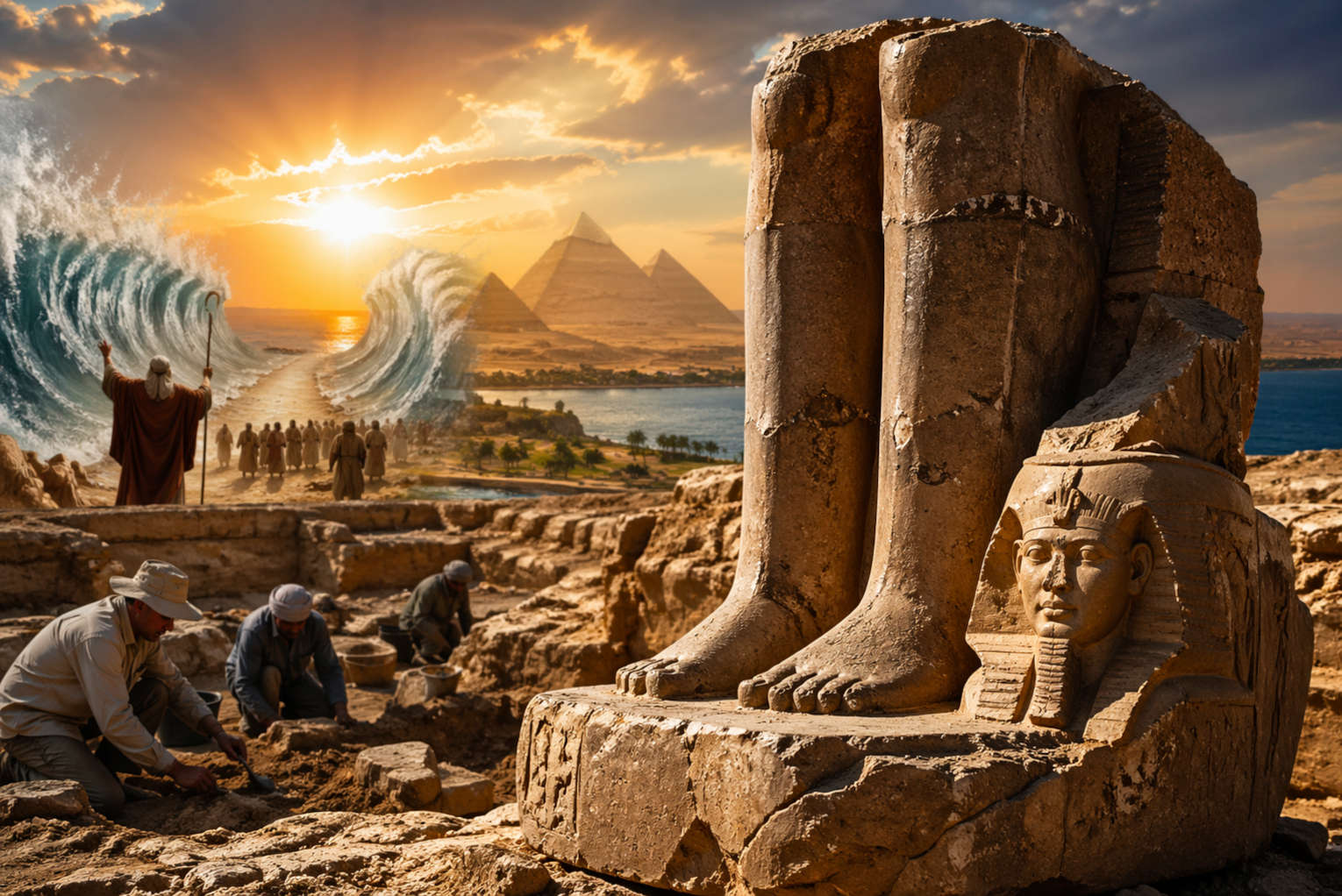
A major archaeological discovery in Egypt is drawing fresh attention to one of the most debated figures in biblical history.
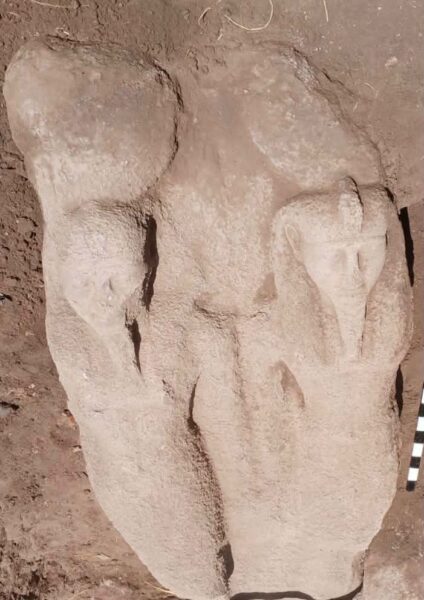
Archaeologists have uncovered part of a massive ancient statue in the eastern Nile Delta near the Red Sea, a region closely tied to the biblical Exodus narrative. The fragment, which includes the legs and base, stands about seven feet tall and weighs between five and six tons. It was found at Tel Faraoun during ongoing excavations led by Egypt’s Supreme Council of Antiquities.
Early analysis points to Ramesses II, one of Egypt’s most powerful rulers, as the figure depicted. The discovery immediately connects to a long-standing historical discussion surrounding the identity of the pharaoh in the Book of Exodus. As the report states, the fragment is “thought to depict Ramesses II, one of ancient Egypt’s most powerful rulers and a figure many historians associate with the pharaoh described in the Book of Exodus.”
The Bible describes Moses confronting a ruler who refused to release the Israelites from slavery, setting in motion the dramatic events of the Exodus. A key detail continues to anchor Ramesses II to that narrative. “People often identify Ramesses II as the biblical Pharaoh primarily due to Exodus 1:1, which mentions Hebrew slaves building the city of ‘Raamses’ (or Pi-Ramesses), a city famously built by Ramesses II in the 13th century BCE.”
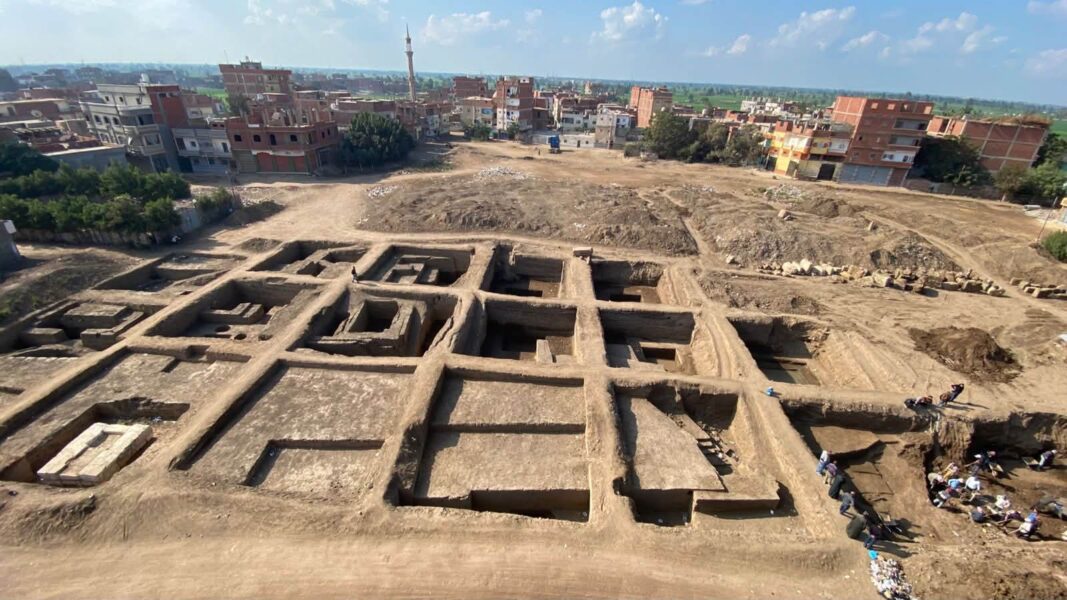
That geographic overlap carries weight. The ancient city of Pi-Ramesses is believed to have been located in the same region where the statue fragment was discovered, reinforcing the connection between the ruler and the biblical setting. The statue itself also aligns with the period, as archaeologists noted it matches royal sculptures from Egypt’s New Kingdom.
At the same time, the discovery does not close the case. The biblical text does not name the pharaoh, and no direct archaeological evidence confirms his identity. As noted in the report, “while the Bible does not explicitly name the Pharaoh, this geographical link, combined with his long, dominant reign and the timing of the 19th Dynasty, makes him a popular historical candidate.”
Order Dinesh D’Souza’s New Book, “The End of Time” on Amazon.com!
Even so, finds like this continue to sharpen the focus. Each new piece adds weight to the argument, placing Ramesses II firmly at the center of the conversation while leaving the final answer just out of reach.
James Lasher, a seasoned writer and editor at Charisma Media, combines faith and storytelling with a journalism background from Otterbein University and ministry experience in Guatemala and at the LA Dream Center. A Marine Corps and Air Force veteran, he is the author of The Revelation of Jesus: A Common Man’s Commentary and a contributor to Charisma magazine. For interviews and media inquiries, please contact [email protected].
