
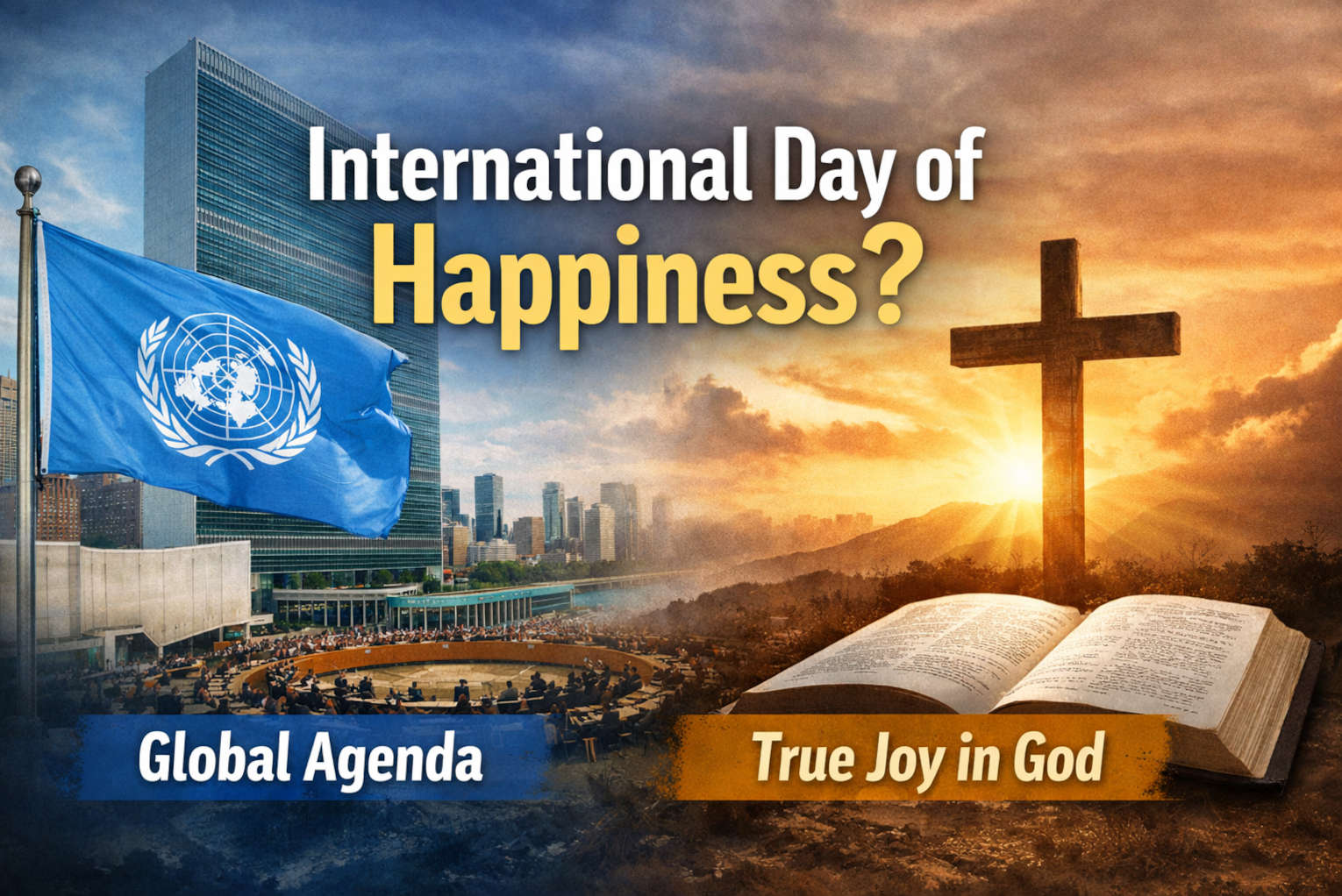
March 20 marks the International Day of Happiness, a global observance established by the United Nations to highlight the importance of well-being and life satisfaction. On the surface, it is hard to argue with the idea. Who does not want a world where people are genuinely fulfilled, at peace and thriving?
The United Nations has pushed this initiative since 2012, encouraging nations to look beyond economic growth and consider factors like emotional health, social support and quality of life. Each year, the conversation is reinforced through the World Happiness Report, which ranks countries based on data tied to income, life expectancy, freedom and social trust.
There is something appealing about that message. It sounds thoughtful. It sounds balanced. It even sounds necessary in a world that often measures success purely in dollars.
But it is also worth slowing down and asking a deeper question. What kind of happiness is actually being promoted?
A Good Idea With a Missing Piece
There is nothing wrong with encouraging people to pursue a better quality of life. Strong communities matter. Mental health matters. Stability matters.
The concern is not the idea of happiness itself. The concern is who is defining it and what is being left out.
The United Nations frames happiness as something that can be built through systems, policies and social conditions. It presents a vision where fulfillment can be achieved through the right combination of external factors. Yet in all of this, one glaring omission remains. Faith is nowhere in the equation.
That absence stands out.
For an initiative that claims to measure and promote human flourishing, it leaves out the very foundation that has defined meaning and purpose for billions of people throughout history. It raises a fair question. Is this simply an effort to improve lives, or is it subtly reshaping how people understand fulfillment itself?
That does not mean the day should be rejected outright. It does mean it should be approached with discernment.

Order Your Copy of the Spiritual Warfare Bible on Amazon.com Today!
Happiness Fades. Joy Remains
Scripture draws a line that modern culture often blurs.
Happiness is tied to circumstances. It rises when things go well and fades when they do not. Joy is something entirely different.
James 1:2-3 calls believers to “count it all joy when you fall into diverse temptations, knowing that the trying of your faith develops patience.” That kind of joy does not depend on comfort. It exists even in pressure.
Galatians 5:22 identifies joy as a fruit of the Spirit. It is not manufactured by environment or policy. It is produced by a relationship with God.
Psalm 16:11 makes it even clearer. “In Your presence is fullness of joy, and at Your right hand are pleasures forevermore.”
This is where the global conversation falls short. It tries to define happiness without addressing the condition of the soul.
The Source That Cannot Be Replaced
There is a reason why people can have wealth, comfort and stability and still feel empty. External conditions were never designed to carry the weight of eternal fulfillment.
Jesus said in John 15:11, “These things I have spoken to you, that My joy may remain in you, and that your joy may be full.” That is not a temporary emotional high. That is lasting, rooted joy.
So as March 20 comes and conversations about happiness take center stage, there is nothing wrong with appreciating the good behind it. Encouraging people to care about well-being is not the problem.
The deeper issue is making sure the foundation is not lost.
Because when faith is removed, happiness becomes fragile. When God is at the center, joy becomes unshakable.
And that is the difference that changes everything.
James Lasher, a seasoned writer and editor at Charisma Media, combines faith and storytelling with a background in journalism from Otterbein University and ministry experience in Guatemala and the LA Dream Center. A Marine Corps and Air Force veteran, he is the author of The Revelation of Jesus: A Common Man’s Commentary and a contributor to Charisma magazine. For interviews and media inquiries, please contact [email protected].