
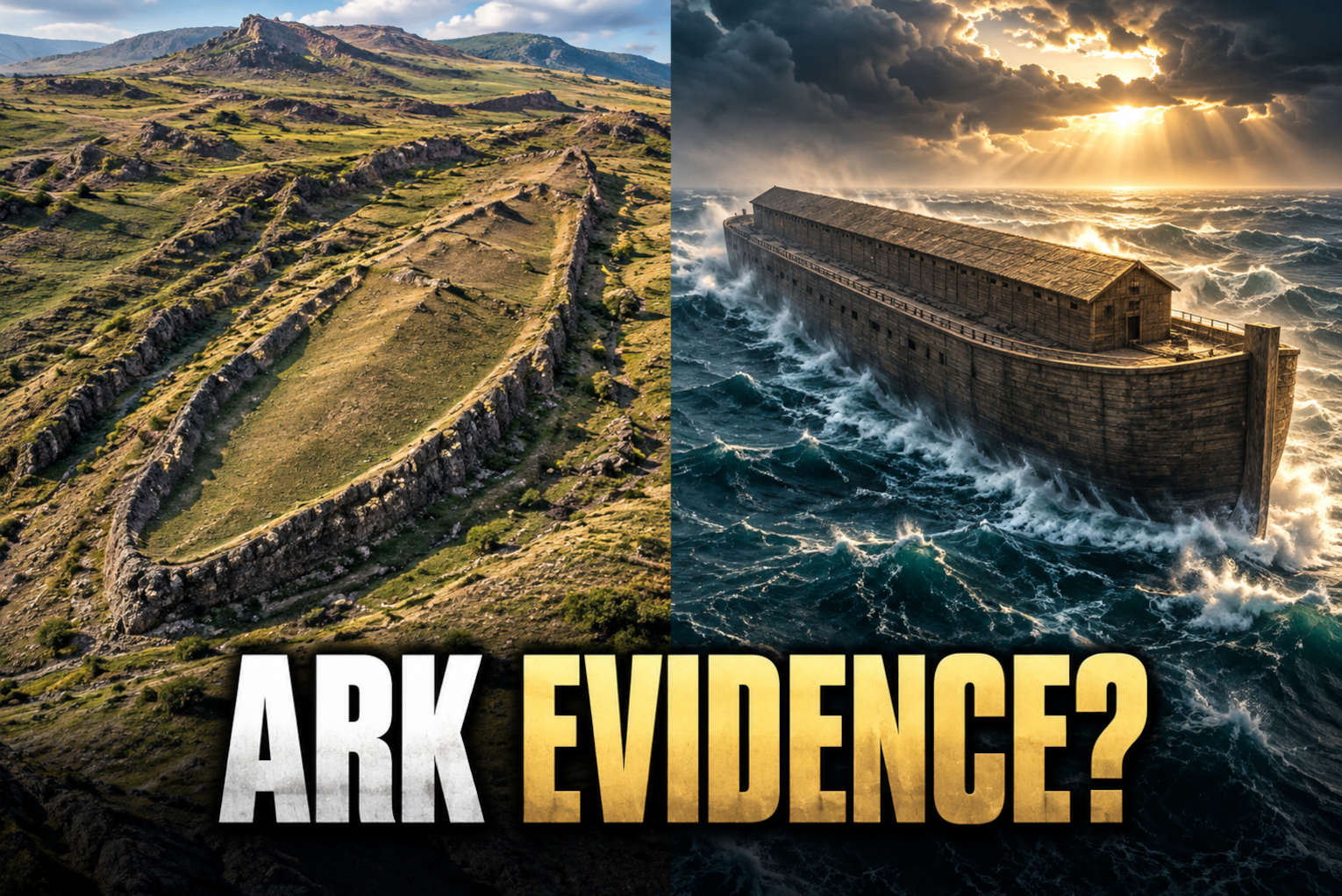
Andrew Jones described threats at his apartment door and a later break-in while sharing another startling development: drilling beneath a suspected Noah’s Ark site encountered soil where competing explanations predicted solid rock.
In a recent interview with Charisma Media, the Noah’s Ark Scans researcher recounted people banging on his door around 1 a.m.
“Open the door. We want to hurt you,” Jones recalled them saying.
After a second encounter, he left with his newer laptop, main backup drives and drone. A friend later discovered his office ransacked. Cameras, recording equipment, an older laptop and other backup drives were stolen. Jones said the perpetrators and their motive remain unknown.
At Turkey’s boat-shaped Durupinar formation, his team’s drilling was raising questions of its own.
“We’re not hitting solid rock,” Jones said.
Researchers drilled 12 holes inside the formation and four outside, reaching approximately 20 meters, or 66 feet, in the deepest locations. Jones said they encountered isolated boulders but continued into soil after drilling through or moving around them.
Jones said competing geological explanations describe the formation as a displaced limestone block, folded rock layers or a shallow bedrock ridge. He believes the drilling results challenge those interpretations.

Order Dinesh D’Souza’s New Book, “The Stones Cry Out” on Amazon.com!
New radar work reportedly reached much deeper. Jones said preliminary readings extended approximately 95 meters, or 312 feet, below the surface in some locations.
He described repeating underground features, including groups stacked one beneath another. Some corresponded with earlier scans, he said, and their appearance surprised the researcher conducting the radar survey.
“Andrew, in my 40-year career, I’ve not seen something like this,” Jones recalled the researcher telling him.
What those features represent remains under investigation.
Nearly 400 soil samples collected from different locations and depths are awaiting further analysis. Jones said earlier testing found roughly three times as much organic matter inside the formation as in surrounding soil. He suggested a decaying wooden structure could explain the difference.
“I personally believe it’s the best candidate,” Jones said.
He also identified findings that would challenge that belief: continuous shallow bedrock across the site or two research seasons yielding no evidence of human activity.
Genesis records that the Ark rested on the mountains of Ararat. Identifying its remains at Durupinar requires examining what lies beneath the formation.
That examination may eventually move from drilling and scans to excavation.
Jones said growing international interest has helped generate government willingness to consider excavation. Approval and timing remain pending, but he believes exposing the underground features could resolve questions that have fueled decades of debate.
“That will tell us everything we need to know, I think, about the site,” Jones said.
James Lasher, a seasoned writer and editor at Charisma Media, combines faith and storytelling with a journalism background from Otterbein University and ministry experience in Guatemala and at the LA Dream Center. A Marine Corps and Air Force veteran, he is the author of The Revelation of Jesus: A Common Man’s Commentary and a contributor to Charisma magazine. For interviews and media inquiries, please contact [email protected].
