
Artificial intelligence has become one of the defining technologies of the modern era, reshaping everything from business to medicine. Now, researchers say it has reached another remarkable milestone—one that could someday help fight deadly infections while also raising difficult ethical and security questions.
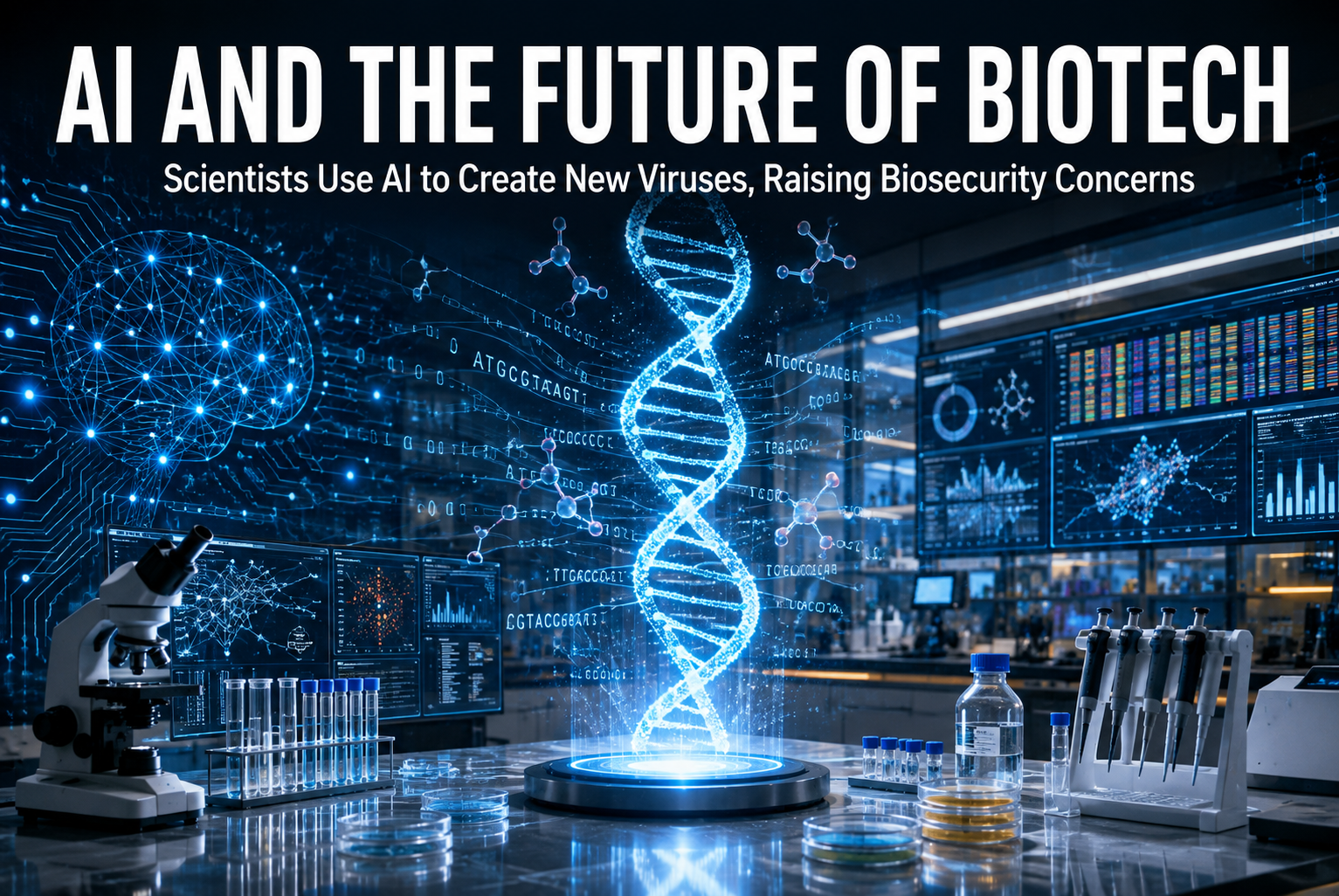
Scientists at Stanford University have successfully used artificial intelligence to design 16 new functional viruses that do not exist in nature, according to the Daily Mail. The viruses are bacteriophages—viruses that infect bacteria—and researchers believe the breakthrough could eventually aid in the fight against antibiotic-resistant infections.
The AI generated thousands of potential viral genomes. Researchers synthesized 302 of those designs in the laboratory and tested them against bacteria. Sixteen of the AI-designed viruses successfully destroyed E. coli, demonstrating that artificial intelligence can generate viable viral genomes capable of functioning in the real world.
The Stanford researchers say the work could eventually “massively improve human health,” according to the Daily Mail, by opening new possibilities for developing therapies against dangerous bacterial infections.
At the same time, experts caution that the technology’s broader implications deserve careful attention.
To order Don Colbert’s new book, Live Long and Strong, visit Amazon.com.
“The study poses no direct threat to human health because it only involves viruses that only target bacteria, though creating novel synthetic life forms which don’t exist in nature raises broader ethical concerns,” Dr. Simon Clarke, associate professor in cellular microbiology at the University of Reading, told the Daily Mail.
Clarke stressed that the current research does not involve viruses capable of infecting people. However, he said the study demonstrates that artificial intelligence can successfully design viable viruses that have never existed naturally.
“This underlying capability means the technology could potentially be used to create dangerous pathogens with potential to be a bioweapon, though safeguards within the AI model, which are in place in this study, can help mitigate the risk,” Clarke told the Daily Mail.
The possibility of future misuse naturally raises questions about whether AI could someday contribute to a pandemic. Clarke said the technology, by itself, cannot do that.
Dr. Carl Mayers, senior adviser in biosecurity policy at the Centre for Long-Term Resilience, agreed that the technology could theoretically be misused but emphasized that doing so remains exceptionally difficult.
Speaking to the Daily Mail, Mayers noted that scientists had to synthesize and test 302 AI-designed genomes before identifying just 16 that functioned successfully. Producing viruses capable of infecting humans or animals, he said, would be substantially slower, more complex and far more expensive.
Rather than fearing artificial intelligence itself, Mayers argued that attention should focus on responsible oversight.
“We should worry more about who has access to these powerful biological AI tools,” he told the Daily Mail. “In the right hands, they will bring us new drugs and new ways to beat antibiotic-resistant bacteria. In the wrong hands they could cause damage.”
As artificial intelligence continues advancing into areas once reserved solely for human researchers, the Stanford findings highlight both the extraordinary promise and the profound responsibility that accompany scientific discovery. Breakthroughs like these serve as another reminder that while knowledge continues to increase, wisdom, discernment and ethical stewardship remain just as essential as innovation itself.
Abby Trivett is a writer and editor for Charisma Media and has a passion for sharing the gospel through the written word. She holds two degrees from Regent University, a B.A. in Communication with a concentration in Journalism and a Master of Arts in Journalism. She is the author of the newly released book, The Power of Suddenly: Discover How God Can Change Everything in a Moment. For interviews and media inquiries, please contact [email protected].
