
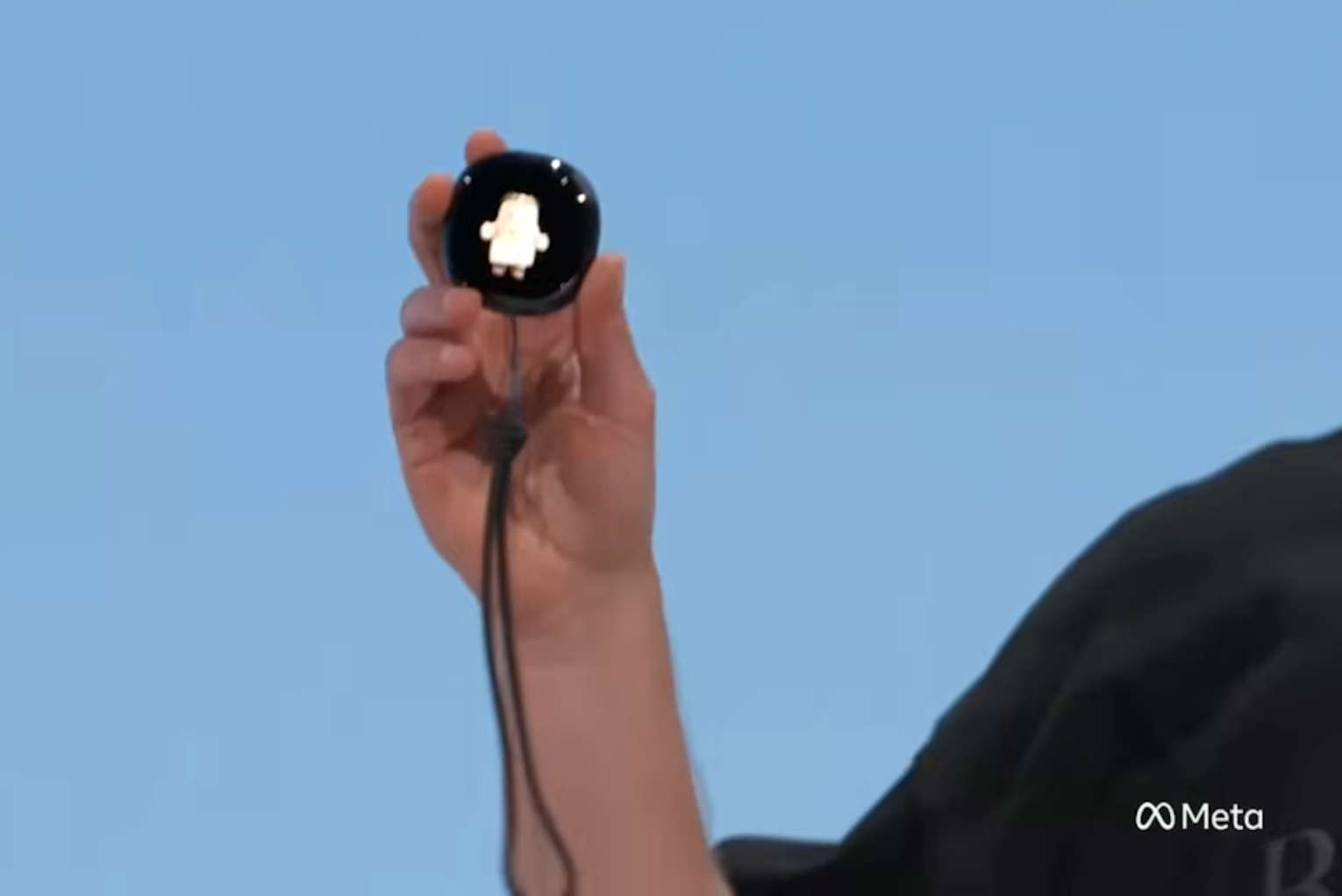
Meta has unveiled an artificial intelligence device designed to remain within reach, listen to its owner and provide guidance throughout the day. Its name alone should make Christians stop and exercise spiritual discernment.
The device is called the Muse Charm.
Announced by Meta CEO Mark Zuckerberg during the Meta Connect event, the keychain-sized gadget allows users to consult Meta’s Muse AI without opening a phone or computer.
“[It] fits on a keychain, and is always available to talk to,” Zuckerberg said, according to the Daily Mail. “You just go ahead and tap here on the fingerprint sensor in the corner and you can start talking without having to unlock a phone or open an app.”
Meta is marketing the device as a convenient AI companion. Spiritually, however, it points toward something far more dangerous: digital divination.

Order Jenny Weaver’s Book, “The Wicked World of Witchcraft” on Amazon.com!
An Oracle in Your Pocket
Words carry meaning. In ancient Greek religion, a muse was a supernatural source of knowledge and inspiration. Charms have historically been carried to obtain protection, fortune, guidance or spiritual power.
Now, Meta has combined those concepts in an artificial personality that users can carry, consult and permit to observe the world around them.
“If you’re not wearing glasses, this is going to be by far the fastest way to talk to your Muse and to show it what’s going on around you,” Zuckerberg said.
Muse can offer workout and nutrition guidance, assist with purchases, locate products, check flight prices and book appointments. Meta says users can summon it by name, issue a request and allow it to work in the background.
One social media user called it a “surveillance state tamagotchi.” Another offered an even sharper description: “Evil tamagotchi is genuinely the best description of this thing I’ve seen.”
Meta Has Not Earned Our Trust
This invitation comes from a company repeatedly held accountable over privacy violations and the exploitation of personal information.
Facebook agreed to a record $5 billion Federal Trade Commission penalty over allegations that it deceived users about their ability to control their data. Meta later reached a $1.4 billion settlement with Texas over the unauthorized capture and use of biometric information. Regulators have also penalized the company over children’s data, misleading disclosures and other privacy violations.
Now that same corporation wants access to what users see, say, desire and ask throughout the day.
God Forbids Counterfeit Guidance
Deuteronomy 18:10-12 condemns divination, sorcery, omens and other forbidden attempts to obtain spiritual knowledge. Isaiah 8:19 delivers the defining question: “Should not a people seek their God?”
Digital divination packages the ancient hunger for forbidden guidance inside an attractive technological companion. Instead of seeking God through prayer, Scripture and the Holy Spirit, users are conditioned to consult an artificial voice for continual direction.
As cultures around the world spiral deeper into anti-God behavior, we should not be surprised to witness the rise of AI-centered religions. A society that rejects its Creator will inevitably search for another source of knowledge, power and direction. Artificial intelligence could quickly become more than a tool, with people treating it as an all-knowing authority, worshipping the creation of human hands as a false god.
We must not dismiss the Muse Charm as an innocent toy. When a surveillance company places an artificial counselor in people’s pockets and names it after supernatural inspiration and spiritual objects, we must recognize the warning—and refuse to surrender God’s place to an algorithm.
James Lasher, a seasoned writer and editor at Charisma Media, combines faith and storytelling with a journalism background from Otterbein University and ministry experience in Guatemala and at the LA Dream Center. A Marine Corps and Air Force veteran, he is the author of The Revelation of Jesus: A Common Man’s Commentary and a contributor to Charisma magazine. For interviews and media inquiries, please contact [email protected].

I’ve been watching AI grow over the years. I’m a Christian who builds with it, explores with it, and treats it with caution where appropriate. The privacy portion of this article is strong enough to be its own piece, but the Scripture references feel grasping. Deuteronomy is not cautioning anyone against getting workout advice apart from prayer. The naming matters, but the “charm” and “muse” here are pretty distinctly different from the ancient counterparts that actually *did* look a lot like divination.
I want to see Christians understand AI as part of the world we’re meant to witness to, not to be afraid of it because it’s an “evil tamagotchi”.