
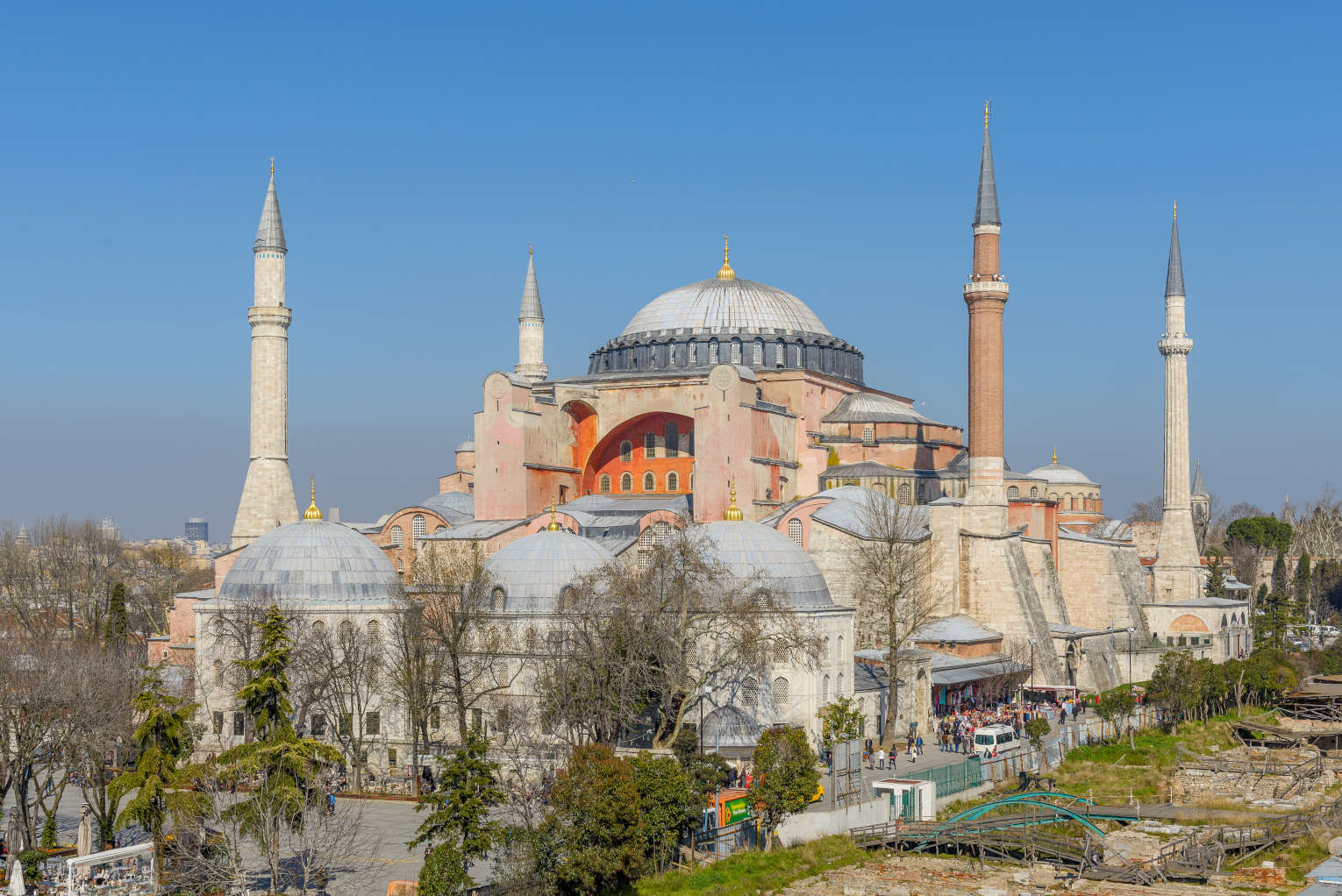
Roughly 3,000 tons of mud and debris concealed passages beneath one of Christianity’s most storied churches. Now archaeologists are pulling back that buried curtain.
Excavations beneath Hagia Sophia in Istanbul have opened access to Roman tunnels roughly 1,600 years old, exposing an underground world that partly predates the church standing above it.
Fox News described the work as “revealing previously inaccessible passages beneath one of the world’s most historic religious landmarks.”
Archaeologist Hasan Fırat Diker detailed the discoveries during an Oct. 16 presentation in Istanbul, according to Türkiye Today, as cited by Fox News.
Order Dinesh D’Souza’s New Book, “The Stones Cry Out” on Amazon.com!
A church seized by conquerors
Above the tunnels stands a sanctuary with a history scarred by conquest.
Completed in AD 537 under Byzantine Emperor Justinian I, the current Hagia Sophia is the third building erected at the site. Its name means “Holy Wisdom” in Greek.
For nearly 1,000 years, it stood as a major center of Eastern Christianity. Then, in 1453, invading Muslim Ottoman forces conquered Constantinople and converted the church into a mosque.
The building became a museum in 1935. Its conversion back into a mosque in 2020 again placed Islamic worship inside a sanctuary built for the worship of Jesus Christ.
What lay beneath the mud
Below that contested landmark, researchers are tracing the engineering of an earlier age.
Diker said the Romans built the tunnels to distribute water and carry rainwater from surrounding streets into the sea. The network also offered protected underground space.
Fox News described its original function as “part of the city’s water distribution and drainage network.”
Clearing began in February 2025. Researchers have since opened nearly 558 feet of a route connected to a fifth-century Roman street extending from Sarayburnu toward Little Hagia Sophia.
They also cleared two levels of an ancient burial complex discovered in 1946, removing accumulated mud and digging another five feet beneath it. The burial chambers predate the current church.
Researchers hope to open more of the underground passages to visitors and create an exhibition displaying the archaeological remains.
James Lasher, a seasoned writer and editor at Charisma Media, combines faith and storytelling with a journalism background from Otterbein University and ministry experience in Guatemala and at the LA Dream Center. A Marine Corps and Air Force veteran, he is the author of The Revelation of Jesus: A Common Man’s Commentary and a contributor to Charisma magazine. For interviews and media inquiries, please contact [email protected].
