
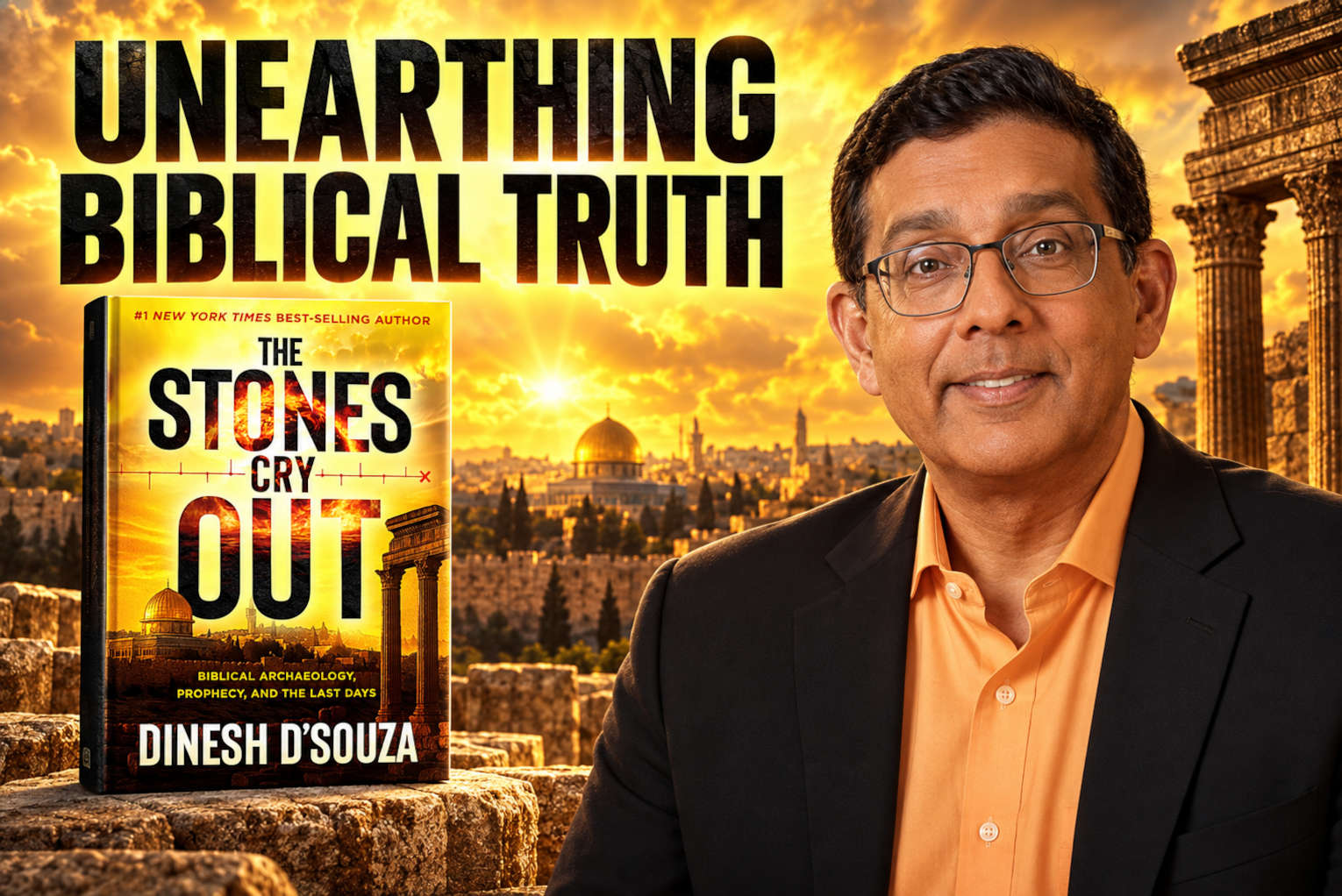
Nearly 2,700 years after King Hezekiah ruled Judah, a small clay seal impression bearing his name and that of his father, Ahaz, emerged from the soil of Jerusalem. The kingdom had fallen. The inscription had endured.
Across the centuries, other names would surface: officials from Jeremiah’s embattled Jerusalem, a Roman governor remembered in the Gospels. Each discovery narrowed the distance between the biblical text and the physical world it describes.
In “The Stones Cry Out,” bestselling author and filmmaker Dinesh D’Souza follows those witnesses through the rise of empires, the ruin of Jerusalem and the streets of the city where Jesus walked.
Now reaching No. 20 on the Publishers Weekly bestseller list, “The Stones Cry Out: Biblical Archaeology, Prophecy, and the Last Days,” released Oct. 13 by Frontline, a Charisma Media imprint, brings that investigation to a national readership. D’Souza’s travels to Israel and three years of research anchor a journey through the people, places and events recorded in Scripture.
“Scientific analysis has strengthened my confidence that the Bible deserves to be taken seriously as historical record,” D’Souza said in a July announcement of the book.
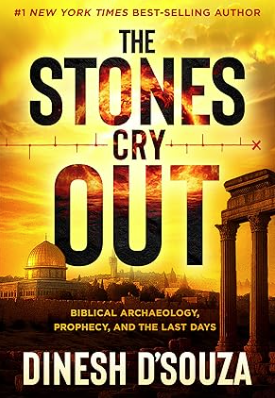
Order Dinesh D’Souza’s Bestselling Book, “The Stones Cry Out” on Amazon.com!
The journey reaches into the eighth century BC, when Assyria’s military power threatened Judah and Hezekiah reigned in Jerusalem. Scripture preserves the clash between royal ambition and prophetic warning. Archaeology supplies objects from that world, including the king’s seal impression. A ruler encountered in the pages of 2 Kings and Isaiah also left his name in clay.
More than a century later, Jerusalem faced Babylon. Jeremiah warned of judgment as the kingdom lurched toward catastrophe. Among his opponents were Jehucal son of Shelemiah and Gedaliah son of Pashur, officials named in Jeremiah 38:1.
Then, in 2005 and 2008, archaeologist Eilat Mazar’s excavations in the City of David uncovered seal impressions bearing those names. The biblical account had preserved the identities of men far removed from the fame of David or Solomon. Their names survived in the earth as well.
D’Souza presses the significance of that correspondence. Historical credibility accumulates in particulars: a name, a father’s name, an office, a place. The small details become especially compelling when independent discoveries bring them back into view.
The journey moves forward to first-century Jerusalem and the Pool of Siloam, where John 9 recounts Jesus sending a blind man to wash. In 2004, repairs to a damaged pipe exposed ancient steps, leading archaeologists to uncover the pool. Nearby, the Pilgrimage Road climbs toward the Temple Mount, its broad paving stones recovering the route of ancient worshippers.
Here, Jerusalem’s sacred geography becomes tangible. The pool and the ascending street recover the physical setting of pilgrimage, worship and the Gospel accounts. Beneath the modern city, the ancient world retains its contours.
Along the Mediterranean coast at Caesarea, another discovery carries the investigation into Roman power. A limestone inscription found in 1961 names Pontius Pilate and identifies him as prefect of Judea. The governor who sentenced Jesus to crucifixion left an inscription in the province he governed.
“It can authenticate the historicity of the Bible. Not the theology, not the miracles, but the historicity of it,” D’Souza said of archaeology in the book’s October release announcement.
Readers can follow the evidence beyond the printed page. Videos accessible through the book’s chapters open onto excavation sites and ancient ruins, extending the investigation into the landscapes where these discoveries emerged.
The argument ultimately reaches beyond antiquity. D’Souza contends that Scripture’s demonstrated reliability about the past demands serious attention to its declarations about the future. Archaeology becomes the starting point for examining prophecy, Israel’s restoration and the last days.
A royal name pressed into clay and a Roman governor’s title cut into limestone have outlasted the powers they once represented. D’Souza brings their testimony into a demanding encounter with Scripture: what we can establish about its past and what we must reckon with about the future.
Prepared by Charisma Media Staff.
