
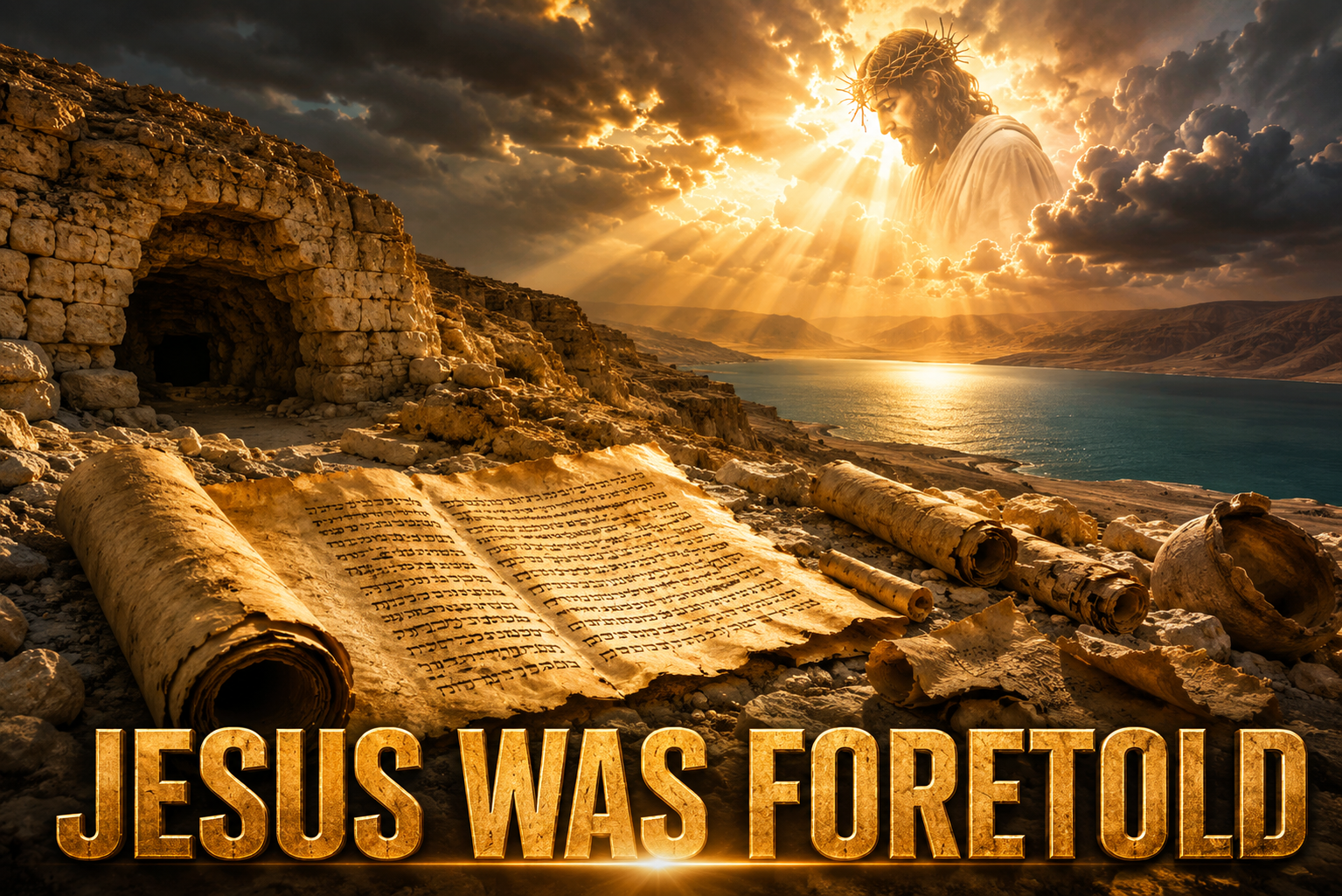
Few archaeological discoveries have reshaped conversations about the Bible quite like the Dead Sea Scrolls.
Nearly 80 years after their discovery near Qumran along the shores of the Dead Sea, the ancient manuscripts continue to provide some of the strongest historical evidence that the Old Testament we read today has been faithfully preserved—and that one of its most remarkable prophecies about the coming Messiah existed long before Jesus of Nazareth walked the earth.
In a recent teaching filmed at Qumran, Christian apologist Frank Turek stood beside Cave 4, where approximately 75% of the Dead Sea Scrolls fragments were uncovered, explaining why the discovery remains so significant.
Among the roughly 900 manuscripts recovered from the area, one stands above the rest: the Great Isaiah Scroll.
Dating to approximately 125 B.C.—more than a century before Christ’s birth—the scroll contains the complete book of Isaiah, including the famous 53rd chapter describing a suffering servant who would bear the sins of many.
Reading Isaiah 53 aloud at the site, a gentleman by the name of “Pastor Vince” highlighted familiar passages that Christians have long connected to Jesus Christ: “He was pierced for our transgressions. He was crushed for our iniquities…, and by His wounds we are healed.”
For Turek, the timing of the manuscript is impossible to ignore.
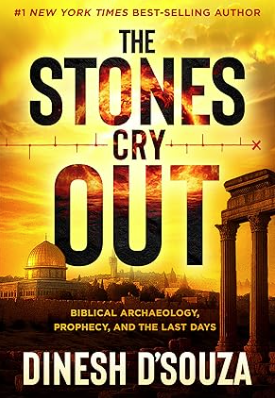
To order Dinesh D’Souza’s new book, The Stones Cry Out, visit Amazon.com.
“When you see what Vince just read written prior to Jesus, you have to ask yourself, how could they have done this?” he said. “There has to be some sort of divine insight, divine prediction.”
Just as compelling, he argued, is what happened when scholars compared the Great Isaiah Scroll with the much later Masoretic Text.
Separated by roughly 1,000 years, the two manuscripts were found to be approximately 95% identical. The remaining differences consisted primarily of spelling variations and minor word-order changes, reinforcing the remarkable care ancient Jewish scribes exercised in preserving Scripture through the centuries.
At the site, one question Turek was asked was why many Jewish people still do not recognize Isaiah 53 as referring to Jesus.
Turek responded that while early Jewish interpretation commonly viewed the chapter as messianic, later interpretations increasingly identified Israel itself as the suffering servant. He argued that interpretation ultimately falls short because Isaiah 53 describes a servant who is sinless and who bears the sins of others—characteristics that do not fit the nation of Israel, which the Old Testament repeatedly portrays as needing redemption itself.
The discussion concluded by connecting Isaiah’s prophecy to the broader message of the gospel. God’s justice, Turek said, required that sin be dealt with, while His love provided the sacrifice through Christ.
The ancient manuscripts do more than preserve Scripture—they testify that God’s redemptive plan was being written centuries before the events of the New Testament unfolded, offering yet another reason to trust the Bible’s reliability.
Abby Trivett is a writer and editor for Charisma Media and has a passion for sharing the gospel through the written word. She holds two degrees from Regent University, a B.A. in Communication with a concentration in Journalism and a Master of Arts in Journalism. She is the author of the newly released book, The Power of Suddenly: Discover How God Can Change Everything in a Moment. For interviews and media inquiries, please contact [email protected].
