

As cryptocurrency gains traction among some Christians, the conversation has quickly centered on opportunity, independence and wealth-building.
An NBC News report highlighted a growing “Christian crypto” movement, from churches accepting digital tithes to influencers promoting bitcoin as a path to financial freedom and even spiritual alignment.
Scripture approaches money from a completely different direction.
The Bible treats wealth as a matter of stewardship. It is something entrusted by God, tested over time and ultimately accounted for before Him.
That standard reshapes how believers should think about investing, risk and financial ambition.
The Parable of the Talents: Stewardship Requires Action
Jesus’ parable of the talents lays down a foundational principle. What God entrusts must be handled faithfully and multiplied.
In Matthew 25:14–30, a master gives three servants different amounts before leaving on a journey. Two invest what they are given and produce a return. One buries his portion out of fear.
The outcome is decisive. The servants who multiplied what they were given are commended. The one who did nothing is rebuked and stripped of what he had.
The lesson is unmistakable. Passivity is not faithfulness. Fear is not wisdom. Resources entrusted by God carry an expectation of responsible increase.
This does not endorse reckless behavior or blind risk. It establishes accountability. Every decision involving money falls under that responsibility.
Solomon’s Wisdom: Invest With Discernment, Not Impulse
Long before modern markets existed, Solomon addressed the principles that govern wise investing.
Ecclesiastes 11:2 gives clear direction: “Invest in seven ventures, yes, in eight, for you do not know what disaster may come upon the land.”
Diversification is not a modern invention. It is biblical wisdom rooted in uncertainty about the future.
Proverbs reinforces the same idea from another angle. “Wealth gained hastily will dwindle, but whoever gathers little by little will increase it” (Prov. 13:11).
Quick gains carry danger. Steady growth reflects discipline.
Proverbs 22:3 adds another layer. “A prudent man foresees evil and hides himself, but the simple pass on and are punished.”
Wisdom anticipates risk. It does not ignore it or chase it.
Taken together, these passages form a clear standard. Financial decisions should be measured, informed and restrained. Impulse and hype have no place in biblical stewardship.
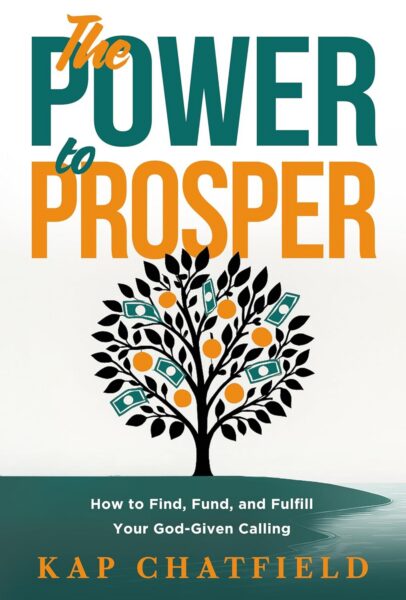
Order Kap Chatfield’s New Book, “The Power to Prosper” on Amazon.com!
When Faith Language Meets Financial Hype
The rise of faith-based investment conversations has introduced a new tension.
The NBC News report noted that some Christian influencers frame cryptocurrency as a pathway to wealth, while others tie it to deeper spiritual themes, including end-times beliefs and financial independence from traditional systems.
Spiritual language is often attached to financial strategies, creating the impression that success is a sign of divine approval. That approach carries serious danger.
Scripture repeatedly warns about the pull of money. “Those who want to be rich fall into temptation and a trap and into many foolish and harmful lusts” (1 Tim. 6:9).
Jesus speaks even more directly. “You cannot serve God and money” (Matt. 6:24).
Money is a tool. It becomes a problem when it takes the place of trust, identity or security.
When financial ambition is wrapped in spiritual language, the line between stewardship and idolatry begins to blur.
Biblical Prosperity Is Not Defined by Wealth
The modern conversation often assumes that financial success reflects blessing.
The Bible defines prosperity differently.
Joshua 1:8 connects prosperity to obedience. A life aligned with God’s Word leads to stability and purpose, not necessarily financial abundance.
Provision is promised. Excess is not.
Contentment, peace and faithfulness carry greater weight than accumulation. Wealth can be part of a believer’s life, but it is never presented as the goal.
A Biblical Framework for Investing
Scripture does not forbid investing. It establishes boundaries and priorities that govern it.
Stewardship requires responsibility.
Wisdom requires patience.
Discernment requires caution.
Faithfulness requires accountability.
At the same time, Scripture consistently warns against greed, haste and the desire to gain wealth quickly.
Any financial strategy that feeds those impulses moves outside the guardrails God has set.
The Question That Matters
The NBC News report pointed to both enthusiasm and concern, including warnings about fraud and financial exploitation within religious communities.
Those risks only reinforce what Scripture has already made clear.
Every resource belongs to God. Every decision will be weighed. Every opportunity carries responsibility.
The defining issue is not the platform, the asset or the potential return.
It is whether what has been entrusted is handled with wisdom, restraint and faithfulness before God.
James Lasher, a seasoned writer and editor at Charisma Media, combines faith and storytelling with a background in journalism from Otterbein University and ministry experience in Guatemala and the LA Dream Center. A Marine Corps and Air Force veteran, he is the author of The Revelation of Jesus: A Common Man’s Commentary and a contributor to Charisma magazine. For interviews and media inquiries, please contact [email protected].