
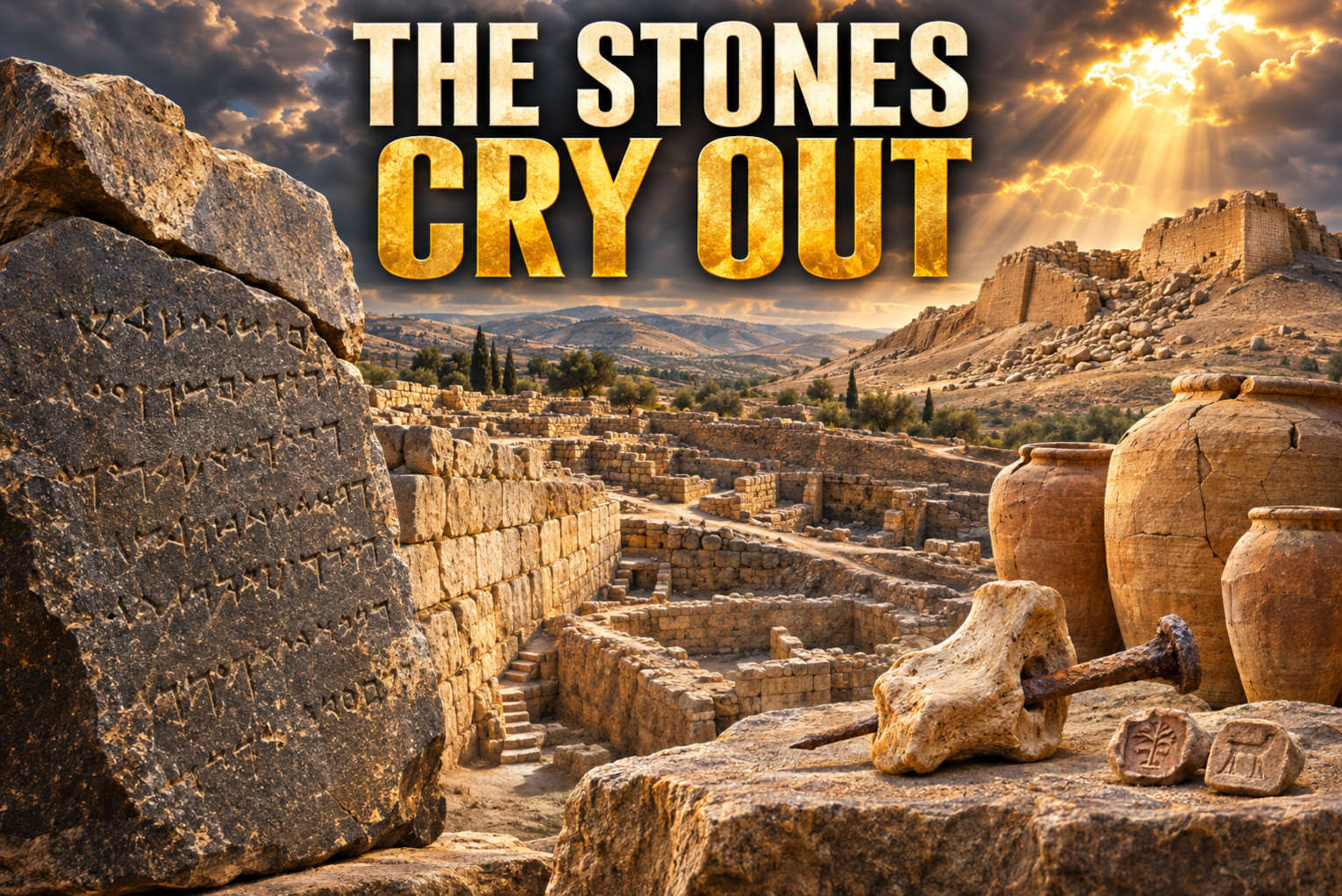
An ancient enemy of Israel carved a boast into stone. Centuries later, that inscription would help challenge claims that King David belonged in the realm of legend.
In an interview on “The 700 Club Israel,” Dinesh D’Souza highlighted the discovery as part of a growing body of archaeological evidence corroborating biblical history. His new book and New York Times bestseller, “The Stones Cry Out: Biblical Archaeology, Prophecy, and the Last Days,” explores those connections.
D’Souza recalled how skeptics once treated David as “a mythical figure somewhat akin to say King Arthur.” Then excavators uncovered the Tel Dan Stele in northern Israel, a Syrian king’s victory monument referring to the “house of David.”
An enemy celebrating his conquests had preserved evidence of the dynasty skeptics questioned.
“So, there’s a house of David, there obviously was a David,” D’Souza said. “And this validates David’s existence.”
His fascination with such discoveries began during his first visit to Israel four years earlier. The artifacts revealed connections that reached into the smallest details of Scripture.
“Some of the tiniest details of the Bible were being confirmed by artifacts coming out of the ground,” he said.
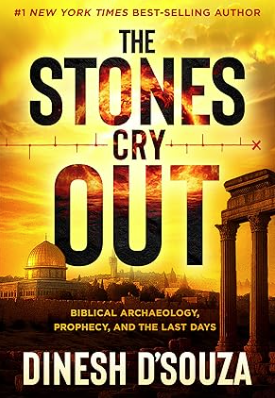
Order Dinesh D’Souza’s New Book, “The Stones Cry Out” on Amazon.com!
At Jericho, those details include fallen walls, stored grain and burned ruins. D’Souza connected each to Joshua’s account of the city’s destruction.
He suggested an earthquake could explain the walls’ collapse. The extraordinary element, he argued, would be its timing as Joshua’s army encircled the city.
“The walls of Jericho did come crashing down just as the Bible said,” D’Souza said.
He acknowledged disagreement over the destruction’s date, a key issue in connecting the ruins to Joshua.
Another discovery brings the brutality of Roman crucifixion into sharp focus: a nail still lodged in a man’s heel bone.
The interview highlighted the remains of Yohanan, discovered in 1968. The find provides physical evidence of the execution practice Jesus endured.
“You have here a corroboration of the way that Romans put people to death,” D’Souza said.
D’Souza also stressed the importance of identifying the limits of archaeological conclusions.
“I’m kind of careful to say when things can be proved, when they are probable, when you can’t be certain,” he said.
For D’Souza, the discoveries carry immense spiritual significance. He drew the book’s title from Jesus’ words about stones crying out and described ancient artifacts as a challenge to modern skepticism.
“It strikes me as very interesting that in our time, in our secular age, God is choosing the quiet language of the dirt to make a point.”
James Lasher, a seasoned writer and editor at Charisma Media, combines faith and storytelling with a journalism background from Otterbein University and ministry experience in Guatemala and at the LA Dream Center. A Marine Corps and Air Force veteran, he is the author of The Revelation of Jesus: A Common Man’s Commentary and a contributor to Charisma magazine. For interviews and media inquiries, please contact [email protected].
