
The pounding came in the middle of the night.
For Andrew Jones, the researcher behind Noah’s Ark Scans, what began as an investigation into one of biblical archaeology’s greatest mysteries had suddenly become something far more personal.
Jones says strangers began showing up at his apartment near Mount Ararat in Turkey, pounding on his door around 1 a.m. and shouting threats in broken English.
“Open the door. We want to hurt you,” Jones recalled during an interview with Charisma Media.
At first, he wondered whether someone was causing trouble. Then it happened again.
“I don’t feel safe,” Jones remembered telling a friend.
Eventually, Jones left the apartment. Then came another disturbing call. While Jones was traveling with a tour group, a friend checked his residence and discovered someone had broken in.
The apartment had been disturbed, but Jones said his office bore the brunt. The thieves took backup drives, a laptop, cameras and audio equipment. Jones contacted police, but said he received no definitive answer about who was responsible or why.
And Jones is careful not to claim a conspiracy where he cannot prove one.
“It could just be thugs,” he said.
But the unnerving incidents unfolded as Jones and other researchers were pursuing a question that has fascinated Christians, archaeologists and skeptics for decades: Could the mysterious boat-shaped formation at Durupinar actually contain the remains of Noah’s Ark?
Beneath the Surface
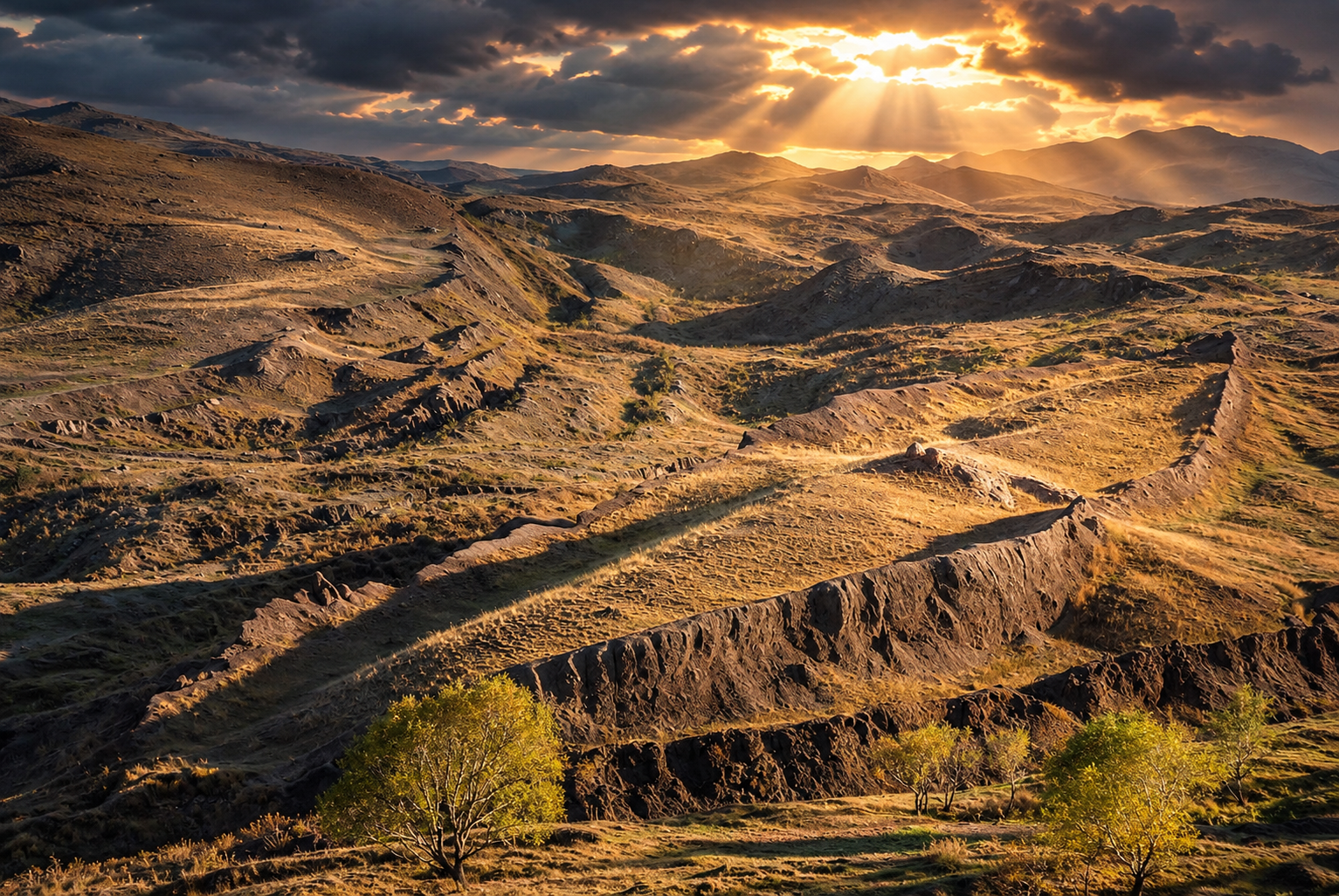
The Durupinar formation in eastern Turkey has fueled controversy for generations.
Its unusual shape has inevitably attracted attention from those searching for the vessel described in Genesis. Jones points to several characteristics he believes make the site particularly compelling, including its location in the mountains of Araratand its ship-like appearance and dimensions, which he says correspond to the biblical description of the Ark.
But none of those observations prove what lies beneath the ground.
And that is exactly where Jones believes the investigation must go next.
Rather than simply debating photographs, shapes and geological theories, Jones and his researchers have been trying to determine what lies beneath the formation.
This year, that meant two major undertakings: core drilling and a new round of radar work.
Jones said the radar investigation was conducted by Dr. Khosrow Bakhtar, whose technology can penetrate materials and reach depths that conventional ground-penetrating radar cannot.
According to Jones, some of the preliminary scans reached approximately 95 meters below the surface.
What researchers saw caught their attention.
Jones described anomalies beneath the site at similar depths, with some apparently aligned vertically. He said some of those findings also correspond with features detected during previous electrical resistivity tomography scans.
Then, Bakhtar reportedly told him something Jones did not expect to hear.
“Andrew, in my 40-year career, I’ve not seen something like this,” Jones recalled.
According to Jones, Bakhtar had filtered out background material and soil from the radar results, leaving patterned anomalies.
“What you’re seeing is not natural,” Jones recalled Bakhtar telling him.
That statement is significant—but it is not the same thing as declaring Noah’s Ark has been found.
And Jones repeatedly stresses the difference.
‘We’re Not Hitting Solid Rock’
For years, critics of the Durupinar hypothesis have offered geological explanations for the formation.
Jones outlined several theories during his Charisma interview. One theory proposes that the formation is a large limestone mass. Another attributes its appearance to folded rock layers. Another suggests an underlying ridge of bedrockhelped create the distinctive shape as surrounding material accumulated or eroded.
Those explanations have one major thing in common: rock.
So researchers drilled.
Their permit allowed drilling to 75 meters, but Jones said budget and time limits kept them from reaching that depth. Researchers drilled 12 holes within the formation and four outside it, with some reaching approximately 20 meters deep.
The project produced nearly 400 soil samples from different depths and locations.
Yet before laboratory analysis was even completed, Jones says something stood out.
“We’re not hitting solid rock,” he said.
Occasionally, researchers encountered a boulder. But Jones said they could either move the drill or drill through the obstruction and continue into the soil.
For Jones, that matters because some critics have argued that rock should appear relatively close to the surface.
“The critics have just hammered everyone saying, ‘No, this is rock. This is rock,’” he said. “And now we drill into it and we don’t see rock.”

To order Dinesh D’Souza’s new book, The Stones Cry Out, visit Amazon.com.
The radar, he added, likewise did not reveal the rock mass he expected if some of the longstanding explanations were correct.
That does not automatically make the formation Noah’s Ark.
It does, however, raise another question: If Durupinar is not what some geological explanations have proposed, then what exactly is it?
Something Strange in the Soil
The latest drilling is not the only evidence keeping Jones interested.
He points to earlier soil testing conducted in 2024.
According to Jones, samples collected inside the boat-shaped formation showed approximately three times more organic matter than soil outside it, along with 38% more potassium and an eightfold difference in pH.
He believes one possible explanation is the decomposition of a large wooden structure.
If a massive wooden vessel had deteriorated in one location over thousands of years, Jones argues, traces of that process could potentially remain in the chemistry of the soil.
The newest drilling has given researchers considerably more material to investigate.
Jones described encountering layers of unusually dark, rich organic soil beneath the formation—material he compared visually to the rich soil someone might purchase for gardening.
Samples were carefully collected for additional laboratory analysis.
But here again, Jones refuses to declare victory.
He has seen the headlines claiming the site is “100%” geological—or, conversely, that researchers have proven it is “100%” man-made.
He rejects the certainty.
“In none of my interviews I say it’s 100%,” Jones told Charisma.
Jones believes Durupinar is the best candidate for Noah’s Ark, but he says they must approach the evidence almost like a court case. Researchers have a theory. Their job is to gather evidence capable of supporting—or destroying—it.
“The data now is leading to 100%, but it’s not at 100,” he said.
That distinction is crucial.
Faith does not require Christians to manufacture certainty where evidence remains incomplete.
Genesis does not say believers must find Noah’s Ark to validate the flood account. Scripture stands or falls on God’s truth, not on whether researchers uncover an ancient vessel beneath Turkish soil.
Jones himself says his Christian faith did not begin with Durupinar.
“I grew up as a Christian and I believed the story,” he said.
For him, the investigation became more like a mystery.
And that means accepting the possibility that the evidence could lead somewhere he does not expect.
What Would Change His Mind?
Perhaps one of the most important questions Jones faced during the interview was not what would convince skeptics.
It was what would convince him that Durupinar is not Noah’s Ark.
Jones acknowledged that researchers take a risk each time they test their theories.
Had drilling repeatedly encountered shallow bedrock throughout the formation, for example, Jones said researchers would have been forced to confront serious questions about the Ark hypothesis.
Future testing could do the same.
“If we don’t find man-made activity after two seasons, then that’s something you have to reevaluate,” Jones said.
That willingness to test the theory may become increasingly important as the project moves toward what could be its most consequential stage yet.
Could They Finally Dig?
For decades, much of the Durupinar debate has happened without the one thing that could potentially provide the clearest answers: excavation.
That could be changing.
Jones says that increased worldwide attention on the site appears to be generating renewed interest in Turkey.
“There is political willpower now to actually pursue this site and finally figure out what’s there,” he said.
Jones stressed his confidence in the integrity of the Turkish archaeologists and laboratories involved. What has particularly surprised him, however, is the apparent change in attitude toward excavation.
Where the answer once seemed to be no, he says conversations are increasingly shifting toward when digging might occur.
“I really think there will be excavation permits sooner than later,” Jones said.
He floated the possibility of excavation beginning as early as next summer, or perhaps within the next couple of summers, though no firm timeline has been established.
Meanwhile, more results are coming.
Jones says researchers are awaiting extensive laboratory analysis of this season’s soil samples, with a broader release of findings expected after the winter research period. He also hinted at another development unrelated to the soil testing that researchers are currently investigating but are not yet prepared to reveal.
Ultimately, however, Jones believes excavation could settle questions that radar scans, soil chemistry and geological arguments cannot.
Instead of debating endlessly over what might lie beneath the earth, researchers could finally expose it.
For Christians watching from thousands of miles away, the implications are fascinating—but they also require discernment.
No archaeological discovery can replace faith, and no radar anomaly can substitute for Scripture. Yet archaeology has repeatedly provided remarkable windows into the people, places and civilizations described throughout the biblical world.
Durupinar may eventually prove to be another geological formation with an extraordinary resemblance to a ship.
Or something beneath that Turkish soil may force researchers to rethink what they thought they knew.
For now, the mystery remains.
But after decades of arguments over photographs, dimensions, rocks and radar scans, researchers may finally be approaching the moment when the ground itself gets the final word.
Prepared by Charisma Media Staff.
