

Before the beast demands allegiance, the heart can already begin to surrender.
That is the danger Nelson Walters confronts in a Bible prophecy teaching connecting the mark of the beast with a chilling scene in Ezekiel: judgment approaching Jerusalem while a heavenly messenger marks certain people for protection.
Walters directs attention to the condition those people shared. They grieved over the sin surrounding them.
“So, the one condition in Ezekiel wasn’t some outward display of religion,” Walters said in the video, “Avoid the Beast’s Mark: What Ezekiel Says You Must Have to Survive It.”
“Instead, it was a position and the posture of their heart towards sin.”
The People God Marked
In Ezekiel 9, God commands a man clothed in linen to mark the foreheads of those who mourn Jerusalem’s abominations. The executioners who follow must spare everyone carrying that mark.
Walters connects that distinction with the test of allegiance described in Revelation 13-14, where worship of the beast accompanies receiving its mark.
His warning reaches beyond speculation about microchips, biometric scans and digital identification. He argues that resisting the beast requires a heart firmly committed to God before persecution and economic pressure arrive.
“God doesn’t decide just on what you do, but on the posture of your heart, what’s happening inside you,” Walters said.
Religious familiarity can coexist with spiritual indifference. Walters warns against allowing constant exposure to evil to dull our response to it.
“You see, there’s a difference between not participating in sin and becoming numb to sin. Being around it so long that it just seems natural and just the way things are.”
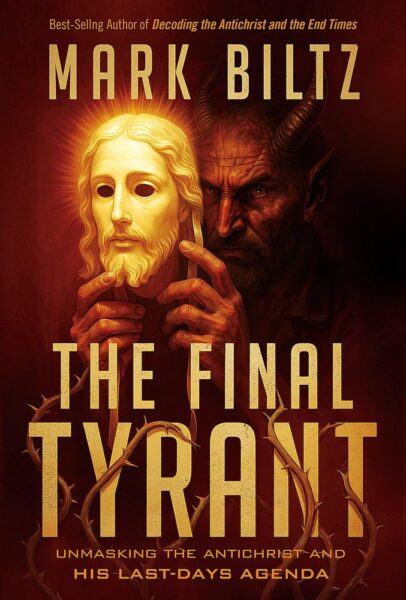
Order Mark Biltz’s New Book, “The Final Tyrant” on Amazon.com!
When Compromise Captures the Heart
Ezekiel 8 supplies the disturbing backdrop.
An idolatrous image stands near the temple entrance. Seventy elders secretly practice false worship. Women mourn for Tammuz. Finally, men turn their backs on God’s temple to worship the sun.
Walters interprets those scenes as a progression toward apostasy, with hidden compromise eventually becoming open rebellion.
“People can retain the appearance of belonging to God while their true allegiance has shifted,” he said.
He argues that deception can gradually redirect people’s hopes and affections until a counterfeit occupies the place that belongs to God.
“Sometimes, allegiance changes gradually. And gradually, it captures the heart.”
That makes repentance an immediate concern. The habits we tolerate and the loyalties we cultivate shape how we respond when faithfulness becomes costly.
The Allegiance Behind the Mark
Revelation describes a system that restricts buying and selling to those carrying the beast’s mark. Walters emphasizes the worship driving that coercion.
“The mark of the beast therefore identifies whose authority the person has accepted. Who he has pledged allegiance to,” he said.
He contrasts that allegiance with the people who bear God’s name. In his interpretation, God’s seal ultimately means deliverance from His wrath and entrance into His presence.
Ezekiel’s vision also contains a sobering command: Judgment begins at God’s sanctuary. Walters connects it with 1 Peter 4:17 and the accountability of those within God’s house.
The response begins with our own hearts. We must repent of compromise, ask the Holy Spirit to expose what we have grown comfortable with and remain faithful to Jesus when obedience carries a cost.
James Lasher, a seasoned writer and editor at Charisma Media, combines faith and storytelling with a journalism background from Otterbein University and ministry experience in Guatemala and at the LA Dream Center. A Marine Corps and Air Force veteran, he is the author of The Revelation of Jesus: A Common Man’s Commentary and a contributor to Charisma magazine. For interviews and media inquiries, please contact [email protected].
