
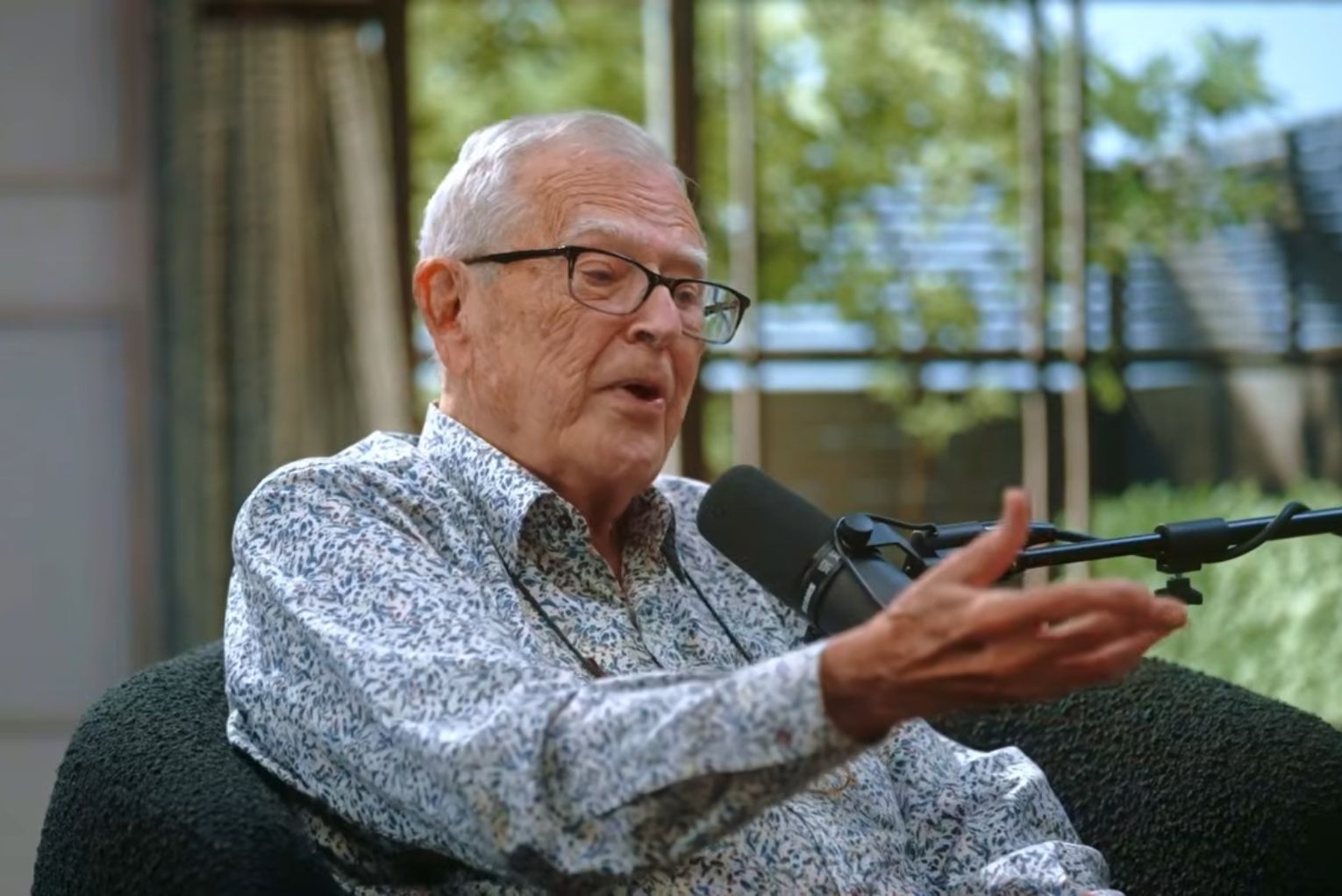
Deception is everywhere in our world today. According to longtime Bible teacher R.T. Kendall, some of the most dangerous deception isn’t coming from secular culture. It’s rooted inside the church.
During a recent conversation with John and Lisa Bevere, Kendall, who served as senior minister of Westminster Chapel in London for 25 years, addressed several teachings he believes are leading Christians away from biblical truth.
And his warnings are ones the church cannot afford to ignore.
1. Open theism
Kendall first warned about open theism, which he said has made significant inroads among charismatics and evangelicals.
At its core, Kendall described open theism as diminishing God’s sovereignty by teaching that God does not completely know the future and instead looks to humanity for input as events unfold.
Kendall contrasted that with the biblical declaration in Isaiah that God knows the end from the beginning.
He even recalled a leading advocate of open theism being asked whether, under this theology, God could ultimately lose. According to Kendall, the man acknowledged that God could lose, although he did not believe He would.
“Do you want a God like that?” Kendall asked.
For Kendall, the issue comes down to God’s sovereignty. The God of Scripture is not waiting to discover how history ends. He already knows.
2. Gifting over character
This may be one of Kendall’s most important warnings for the charismatic church.
He pointed to the moral failures that continue to shake Christian ministry, including within prophetic circles, and warned that supernatural gifting should never be confused with godly character.
Kendall described knowing a remarkably gifted prophetic minister whose gift seemed to flourish even as he lived secretly in sin.
“The Apostle Paul makes it very clear that a man of God should be moral and upright,” Kendall said. “So character is more important, in my opinion, than gifting.”
Bevere added that a spiritual gift is given for the people. It is not God’s validation of a minister’s private life, which is a distinction the church desperately needs to recover.
3. Cessationism
Kendall then aimed cessationism, the belief that the supernatural gifts of the Holy Spirit ceased with the apostolic age.
He called cessationism a “doctrine of the devil,” arguing that Scripture never teaches that prophecy, healing, miracles, tongues and the other gifts of the Spirit disappeared when the apostles died.
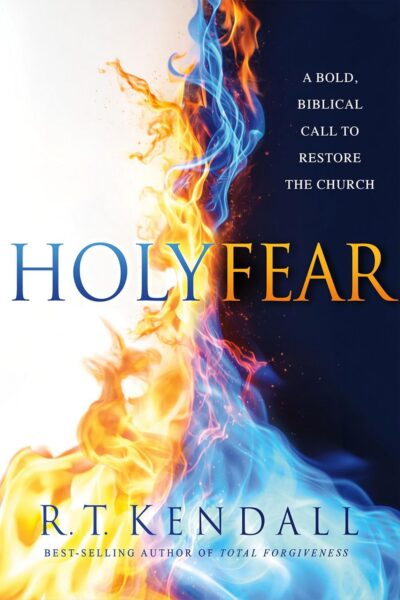
To order R.T. Kendall’s new book, Holy Fear, visit Amazon.com.
Kendall’s concern is simple: If Christians have already decided God doesn’t move supernaturally today, they can quench the Spirit before He ever has an opportunity to move.
The Holy Spirit did not retire at the end of the first century.
4. Universalism and annihilationism
Kendall also rejected universalism, the belief that everyone will ultimately be saved, and annihilationism, the belief that the lost eventually cease to exist rather than face eternal conscious punishment.
Kendall stressed that hell isn’t a doctrine Christians invented. Jesus Himself repeatedly warned about judgment and eternity.
He said annihilationism can offer unbelievers exactly what many already hope is true: that there ultimately is no eternal judgment to fear.
This isn’t merely a theological argument. What Christians believe about eternity affects how seriously we take sin, salvation, repentance and the Great Commission.
5. The feel-good gospel
Kendall’s fifth warning hits directly at much of modern Christianity.
He warned that some ministers have become more like motivational speakers than preachers of the gospel.
Kendall recalled neighbors who preferred watching a television preacher because the message made them feel good. Yet, Kendall said, there was virtually nothing about “the blood of Jesus, repentance, heaven, hell.”
Bevere pointed to Paul’s charge to Timothy to preach the Word—to “reprove, correct, and exhort.”
Biblical preaching encourages people, but it also confronts sin. A gospel that never calls anyone to repentance isn’t the whole gospel.
6. Hyper-grace
Finally, Kendall warned about hyper-grace teaching that suggests Christians no longer need to confess their sins because everything has already been forgiven.
“God wants his people to be holy people,” Kendall said.
His concern is that hyper-grace can strip away the call to repentance, confession and the pursuit of holiness.
Grace doesn’t permit Christians to remain in sin. True grace transforms us and draws us closer to God.
Yet Kendall’s warnings ultimately raised an even bigger question: How can Christians protect themselves from deception?
This fascinating discussion between Kendall and the Beveres eventually turned to artificial intelligence.
Bevere described uploading some of his own material to an AI for organizational help, only to discover the system had inserted theological ideas he did not believe in.
“AI is not a theologian and it has no Holy Spirit,” Bevere warned.
Kendall then recalled meeting a woman in Seoul, South Korea, who worked with AI. She asked whether AI could imitate the Holy Spirit’s voice.
“I hear the voice of the Holy Spirit in proportion to how little I have grieved him,” Kendall responded.
Technology can imitate words. It can reproduce sermons. It can generate something that sounds spiritual. But it cannot replace intimacy with the Holy Spirit.
So what is Kendall’s prescription for a church surrounded by deception?
“Know your Bible and pray a lot.”
It isn’t complicated, but it is desperately needed.
In an age of false teaching, prophetic confusion, moral compromise and artificial intelligence, Christians must know the Word of God for themselves.
Gifts are no substitute for character. Inspiration is no substitute for truth. Technology will never replace the voice of the Holy Spirit.
Abby Trivett is a writer and editor for Charisma Media and has a passion for sharing the gospel through the written word. She holds two degrees from Regent University, a B.A. in Communication with a concentration in Journalism and a Master of Arts in Journalism. She is the author of the newly released book, The Power of Suddenly: Discover How God Can Change Everything in a Moment. For interviews and media inquiries, please contact [email protected]. Learn more about Abby at abbytrivett.com.
