
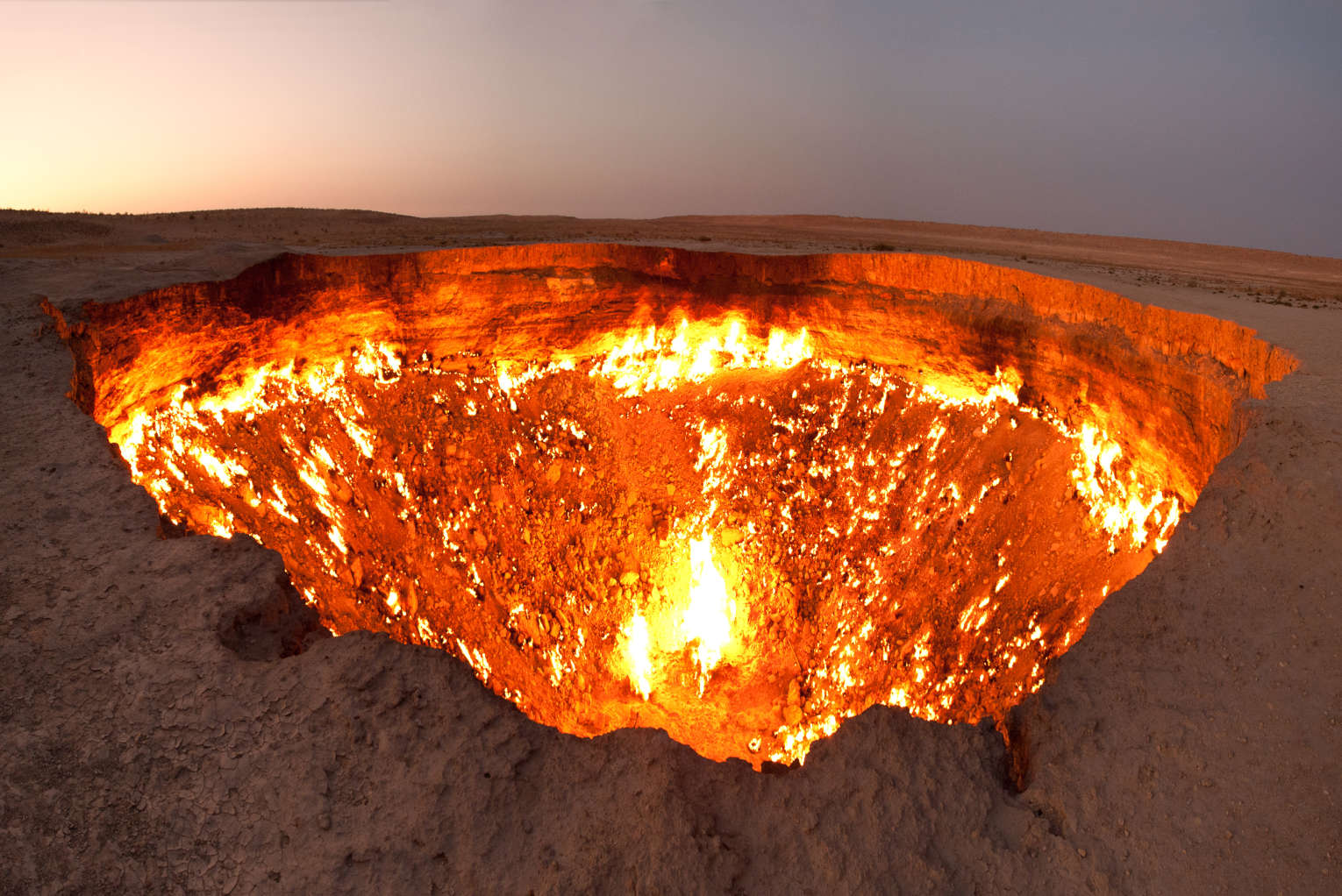


The massive Darvaza gas crater in Turkmenistan, widely known as the “Gates of Hell,” is beginning to dim after burning continuously for more than five decades. Scientists and officials say the flames have significantly weakened in recent years as nearby drilling operations redirect methane away from the crater.
The fiery crater formed in 1971 after Soviet drilling operations reportedly collapsed into a natural gas cavern beneath the Karakum Desert. Engineers ignited the leaking gas, expecting it to burn out quickly. Instead, the flames continued for decades, turning the site into one of the world’s most unusual tourist attractions.

Order Jonathan Cahn’s New Book, “The Altar of Pergamon” on Amazon.com!
According to reports highlighted by scientists at a hydrocarbon development conference as well as the New York Times, the fire has now “diminished to nearly a third of their original size,” and flames once visible for miles can now only be seen up close.
Infrared imaging showed heat intensity from the crater has dropped by more than 75% over the last several years.
Turkmen authorities continue efforts to extinguish the crater entirely. Reuters previously reported that Turkmenistan’s government has long sought to close the site over environmental and economic concerns, while researchers now believe newly drilled wells could eventually “halt the gas flow fueling the fire.”
James Lasher, a seasoned writer and editor at Charisma Media, combines faith and storytelling with a journalism background from Otterbein University and ministry experience in Guatemala and at the LA Dream Center. A Marine Corps and Air Force veteran, he is the author of The Revelation of Jesus: A Common Man’s Commentary and a contributor to Charisma magazine. For interviews and media inquiries, please contact [email protected].