
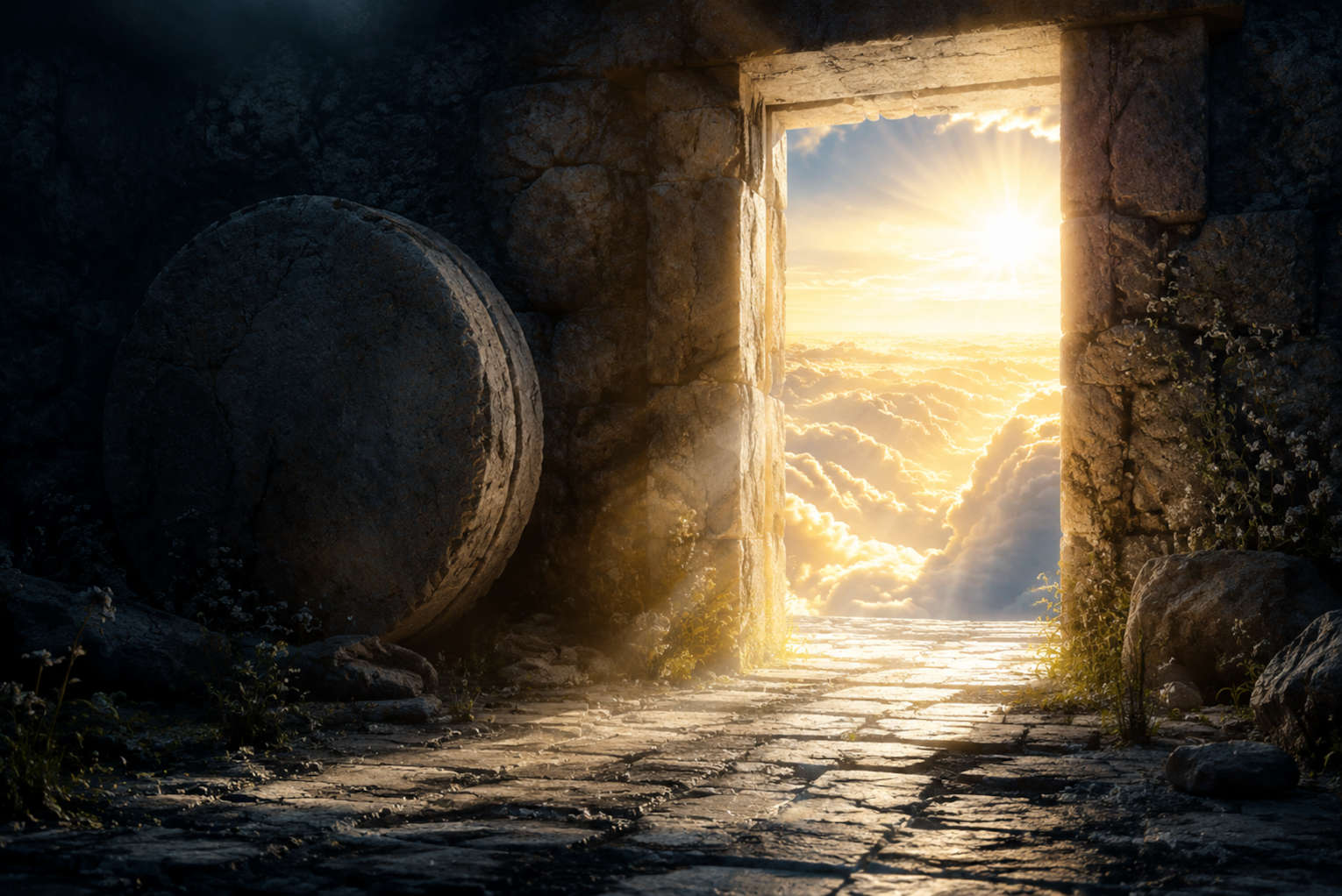
Perhaps the most asked question is: What happens after death?
We ask it beside hospital beds, at gravesides, and in quiet hours when mortality feels near. Does consciousness disappear? Does the soul dissolve into silence? Is death a wall, or a doorway?
For most of my life, I answered from Scripture. Then, in September 2019, my heart stopped because of a medical misdiagnosis and an incorrect prescription. In a moment I could not prepare for, the subject I had preached about became the realm I entered.
I died.
Yet I did not cease to exist.
I cannot identify the exact second when Earth receded and eternity opened. It was as though a switch had been thrown in a room I never knew existed. One reality faded, and another—larger, clearer, and more substantial—surrounded me.
My body had stopped, but I had not stopped.
My consciousness did not dim; it sharpened. I remained aware, alive, and unmistakably myself. I had not become a vapor or an impersonal spark. I was still me, but no longer confined to the physical body through which I had experienced earthly life.
Scripture says, “The body without the spirit is dead” (James 2:26). Death is not the extinction of the person. It is the separation of the spirit from the body.
When my spirit left my body, the familiar laws of physical existence no longer governed me. I was not dependent upon lungs for breath, eyes for sight, ears for hearing, or muscles for movement. I could see, feel, think, recognize, and move with an awareness more penetrating than the senses of flesh. Consciousness had not collapsed into darkness; it had awakened into a greater reality. Everything became breathtakingly, soberingly clear.
By metaphysical, I mean reality beyond the material world—beyond what can be weighed, photographed, or measured. I do not mean occultism. The unseen realm belongs to God.
The spirit is real, though invisible. Love cannot be placed on a scale, and thought cannot be held in the hand. The spiritual realm is not imaginary simply because natural eyes cannot see it.
Ecclesiastes says the silver cord is loosed, the golden bowl is broken, the dust returns to earth, and the spirit returns to God who gave it (Ecclesiastes 12:6–7). The vessel can no longer contain the spirit, and the person crosses into eternity.
Jesus revealed conscious existence after death in Luke 16. Lazarus was carried to comfort, while the rich man awakened in torment. The rich man could see, speak, remember, reason, and feel concern for his brothers. His body had died, but his identity and awareness remained.
Death stripped away every illusion.
He now knew that God was real, eternity was real, and earthly choices carried consequences beyond the grave. The truth he resisted in life became unavoidable in death.
Yet Scripture does not merely teach that human beings continue to exist. Yeshua gave us a deeper definition of eternal life. In His priestly prayer He said, “This is eternal life: that they may know You, the only true God, and Jesus Christ whom You have sent” (John 17:3).
Eternal life is not merely endless duration. It is knowing God.
The word know speaks of personal, relational, experiential knowledge. It is not simply believing that God exists or gathering information about Him. A person may know theology and still not know the One of whom theology speaks. Eternal life is communion with the Father through the Son—being reconciled to God, receiving His Spirit, living in His presence, and discovering His heart.
This means eternal life does not begin when a believer dies. It begins now.
Through Yeshua, we know the Father because He is the radiance of God’s glory and the exact representation of His being (Hebrews 1:3). When we receive the Son, the life of the age to come enters us. Heaven is the fullness of a relationship begun on Earth.
Heaven is eternal life without the veil.
There, God’s presence is not a distant idea. His love has weight. His holiness fills everything. Worship is alive. Joy is tangible. Nothing is decaying or moving toward death. Heaven is the greater reality from which this world receives its meaning.
Hell, by contrast, is conscious existence separated from the God for whom the soul was created. Its deepest torment is the knowledge that the soul was made for communion with God and chose life apart from Him.
So, what happens after death?
The body returns to the earth. The spirit crosses into the unseen realm, conscious and aware. Those who know God through Yeshua enter His presence and await resurrection. Those who reject His mercy enter separation and await final judgment.
But death does not have the final word. Yeshua entered the grave and rose again. He transformed death from a prison into a passage for all who belong to Him. The believer’s hope is not merely that the soul survives, but that the whole person will one day be raised, restored, and clothed with immortality.
The greatest question is not only, “What happens after death?”
It is this: Do I know the One who will meet me on the other side?
Eternal life is offered now. The door of mercy remains open. Death is not the end of your story. It
is the moment the veil is lifted—and eternity begins.
Rabbi Felix Halpern is a Messianic Jewish author, evangelist, and revivalist whose near-death experience gave him a profound glimpse into Heaven, eternity, and the purposes of God. Discover his remarkable story and the message of The Unfolding of the Scrolls at: https://linkly.link/2nr3P
