

Former Satanist Riaan Swiegelaar is sounding the alarm about what he believes Christians need to recognize about spiritual warfare, particularly as technology creates new avenues of influence for children and families.
During an appearance on the “Jesus People Podcast,” Swiegelaar joined host Ryan Miller for a wide-ranging conversation about temptation, spiritual discernment, online gaming, artificial intelligence and what Christians can do to protect their homes.
Yet Swiegelaar began with an important distinction: Christians should not approach spiritual warfare out of fear.
“We have authority. We have victory,” Swiegelaar said. “We actually don’t have to be afraid of these things.”
Drawing from his former involvement in Satanism and his subsequent conversion to Christianity, Swiegelaar argued that believers must understand their identity in Christ before attempting to confront darkness. He encouraged Christians to know Scripture, pray for discernment and ask the Holy Spirit to expose areas of compromise in their lives.
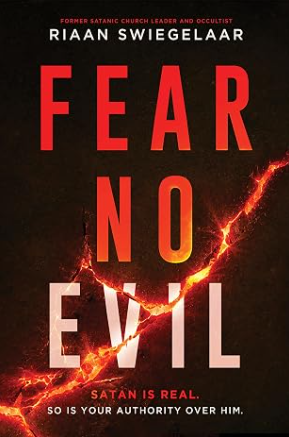
To order Riaan Swiegelaar’s new book, Fear No Evil, visit Amazon.com.
The conversation also turned toward temptation. When Miller candidly discussed recently experiencing temptation, Swiegelaar described temptation as one of the enemy’s oldest tactics, pointing back to Genesis. He stressed, however, that experiencing temptation is different from choosing to act upon it.
“So the idea to look at it is not the sin,” Swiegelaar said. “Doing it, following through on that is the sin.”
Perhaps the strongest warning came as the discussion shifted toward children and technology.
Swiegelaar alleged that individuals involved in occult networks have used online gaming environments to approach children while posing as other young people. He specifically mentioned platforms such as Minecraft and Roblox and warned parents about allowing children unrestricted communication with strangers online.
With artificial intelligence advancing rapidly, Swiegelaar believes discernment will become even more critical. He warned that increasingly realistic AI-generated images could make it hard for children to tell whether the person they believe they are interacting with online is real.
However, his message to parents was not to panic or completely remove children from the digital world.
“I’m not saying don’t let your child be online because that’s ridiculous,” Swiegelaar said. Instead, he urged parents to pray, exercise discernment and remain actively involved in what their children encounter.
Ultimately, despite a conversation filled with warnings about spiritual darkness, Swiegelaar repeatedly returned to Christ rather than fear.
“Know Scripture, know your Bible, know your authority, know your identity,” he said. “We do not have to be afraid of the devil at all.”
For Christian families navigating a rapidly changing digital world, that may be the most important takeaway of all: Stay alert, stay grounded in the Word and refuse to allow fear to become the enemy’s weapon.
You can watch the full interview here. (Editor’s note: strong themes and topics).
