
Five hundred years ago, on Oct. 31, 1517, a massive, spiritual, paradigm shift took place. Martin Luther nailed his 95 Theses to the door of the church in Wittenberg, Germany, exposing the corruption and false doctrine perpetrated by the church in that day. It was one of the most pivotal, seminal events to occur in this world since the beginning of the age of grace. The Protestant Reformation built to tsunami strength, crested over the continent of Europe, then flowed unstoppably into the rest of the world.
Did Luther’s admonitions significantly change the Roman Catholic Church? Or have the adherents continued to embrace and uphold many of the beliefs and practices he criticized? Do we still need to focus our attention on these issues, or should they be ignored to promote love and unity between Protestants and Catholics? These are extremely important questions.
This article is close to my heart, because I was raised Roman Catholic by parents who were fervent in their devotion to God. The nuns who taught in the parochial schools I attended and the priests I served under as an altar boy were some of the kindest, most humble, most self-sacrificing individuals I have ever known. They may not have understood salvation as I see it now, but they were very real in their love for God.
Tragically, though, during all my years as a Catholic, I was never taught the concept of being “born again” (the spiritual rebirth that takes places when the Son of God comes to live in the heart of a repentant and believing person). Yet Jesus promoted this experience as essential to salvation (see John 3:1-5, Eph. 3:17). Once I received this personal encounter with the true and living God, I became extremely zealous about reading the Bible. I was quite surprised when traditional Catholic beliefs I had once embraced without question began to unravel, one by one.
As a follower of Jesus, I can no longer endorse what the Scripture does not uphold. It is not my intention to be theologically fierce or rude. Quite the contrary, my heart cries out to help my Catholic brothers and sisters to find the fullness of truth.
Instead of these 13 points being nailed to some church door in a remote city, may they actually become a door—an open door of opportunity—leading to the glory of what the Bible offers to all those who open their hearts to receive:
1. The exclusivity of Roman Catholicism—The concept that the Catholic Church is the only true church cannot be true. The “church of God” is not identified by organizational membership; it is a trans-denominational organism—made up of all who have been “made alive” in Christ (receiving a “new spirit” and the indwelling of God’s Spirit—Eph. 2:1, Ezek. 36:26-27).
2. The infallibility of the pope—History proves that many popes have made incorrect, and even ungodly and corrupt, decisions in the execution of their office. No mere man is the sole vicar of Christ on earth, the chief representative of the Lord Jesus Christ in this world. Besides, no body of church leaders could ever vote someone into such a position of ecclesiastical authority. There is no biblical basis for such a practice. God sets apostles, prophets, pastors, teachers and evangelists in the church (the fivefold ministry) who represent Him and fill various levels of ministerial authority, but not one of these could boast being infallible (see Eph. 4:10-12).
3. Infant baptism—Though the Bible is very supportive of infant dedication, there is no Scriptural approval of infant baptism. The Scripture explains that the person who “believes and is baptized” will be saved (Mark 16:16). This is a clear indication that baptism should take place only after a sincere and knowledgeable conversion to Christianity takes place. Repentance is also necessary (Acts 2:38). Furthermore, the Bible never endorses the practice of sprinkling. The very word “baptism” means full immersion.
4. Confession and penance—The necessity of confession to a priest and penance is emphasized in Catholicism in dealing with the sin problem. However, the Bible teaches that we should confess our sins to God, not to some minister of the gospel. God promises, “If we confess our sins, He is faithful and just to forgive us our sins and to cleanse us from all unrighteousness” (1 John 1:9). One passage of Scripture does mention that we should confess our faults to one another and pray for one another (see James 5:16). But this does not imply that we have to appeal to fellow believers in order to obtain absolution or remission of those sins. It is simply a suggestion that we be accountable to one another and uphold one another in intercession.
It is true that Jesus told His upper room disciples (which included women), “If you forgive the sins of anyone, they are forgiven them. If you retain the sins of anyone, they are retained” (John 20:23). But this passage cannot be used to prove that remitting sins is an exclusive right of ordained priests. In fact, just prior to this ‘remitting’ promise, Jesus breathed on His disciples and said, “Receive the Holy Spirit” (John 20:22b). This implies that all those who are filled with the Holy Spirit are empowered to impart the knowledge that brings forgiveness of sins to those seeking reconciliation with God (see Acts 2, 10:44-48, 19:1-7).
The idea of doing penance robs the cross of its power. What brings forgiveness to a repentant person—repeating seven “Hail Marys” and 10 “Our Fathers” or being washed in the precious blood that the Savior shed? Jesus warned us not to use “vain repetitions” in prayer like the heathen (Matt. 6:7). We are saved by grace (unmerited love) through faith, and not by religious works or rituals (see Eph. 2:8).
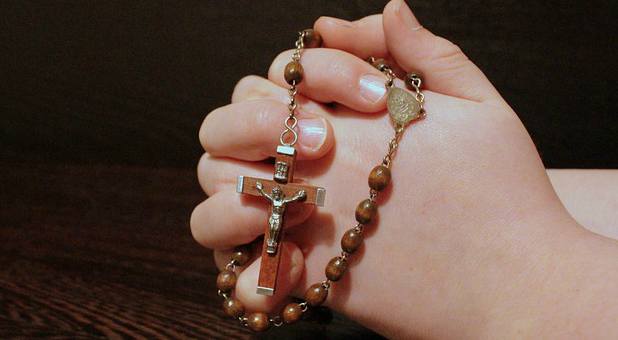
5. Confirmation—There are seven sacraments acknowledged in the Catholic Church. Confirmation is one of three considered most important, the other two being baptism and communion. It is a simple ritual. A bishop makes the sign of the cross on a worshipper’s forehead with holy anointing oil and makes the proclamation, “Be sealed with the gift of the Holy Spirit” (a reference to Eph. 1:13-14). At that time, communicants take the name of a patron saint with whom they are supposed to have a special intercessory relationship the rest of our lives. This ceremony is presented as the means by which the gifts of the Holy Spirit are awakened in a Catholic’s life, and a greater strength is imparted to witness the faith.
When I was about 10 years old, I went through confirmation. Unfortunately, it was just a ceremony. No change of character took place, no supernatural reality, no transformational encounter with the power of God. Those things only happened, many years later, after I was truly saved and born again. When I received the baptism of the Holy Spirit, I was 19 years old. During that experience, which was far greater than a mere ceremony, I spoke in tongues (the normal sign of the infilling of the Spirit in the early church, see Acts 2:1-7; 10:44-48; 19:1-7, 1 Cor. 14:2). Though quite often the baptism of the Holy Spirit comes by the laying on of hands of other believers (usually leaders), in my case, it was a spiritual encounter that came direct from God. It changed me dramatically, awakened other gifts of the Spirit in my life and brought about an ongoing awareness of the presence of God that was remarkable (see 1 Cor. 12:1-11).
6. An ecclesiastical hierarchy or priesthood—The idea of an elite priesthood, though found in the Old Testament, is no longer relevant in this New Covenant era. Since the coming of the Holy Spirit on Pentecost, every true believer fills the role of a priest. All Christians make up a “holy priesthood” and a “royal priesthood” (1 Pet. 2:5, 9; Rev. 1: 5-6). The word “priest” simply means a person who has access into the presence of God, and who acts as God’s representative to those who are separated from Him. These are privileges Jesus grants to all who are saved. No one in the early church wore ecclesiastical garments to indicate their “priesthood” calling. They wore common clothes. And so it should be now.
7. Celibacy for priests and nuns—The demand that priests be celibate is unscriptural and has been the source of unnecessary and painful personal failure in the lives of those who had a deep devotion toward God but were not graced to live a single life. Peter was married, yet he is considered the first pope. How does that work? When did such a tradition creep in? According to Paul’s letters, a pastor or bishop should be the husband of one wife, not celibate. Although some may have this “gift” of singleness to concentrate on ministry (like Paul—1 Cor. 7:7), it is not a requirement for all ministers. Furthermore, even in his day, Paul warned against certain “doctrines of devils” that would be promoted by “seducing spirits” (evil spirits that seduce the mind). Two specific false beliefs he mentioned were “forbidding to marry” and “commanding to abstain from meats” (1 Tim. 4:3 KJV).
8. Purgatory and indulgences—This intermediate, hell-like state after death is not taught in the Bible. Throughout the Word of God, only two places—heaven and hell—are described as the destiny awaiting those who die. One mysterious passage (1 Cor. 3:11-15) may be grounds for speculation, but it does not raise clear enough arguments to validate the doctrine of purgatory on its own. Catholics spend a great deal of money for the purchasing of merits (“indulgences”) so that loved ones can exit purgatory at an earlier date than their projected time of “incarceration.” However, we can never buy our way into a righteous state with money, even if we spent millions of dollars on candles and special masses. Such a doctrine is ultimately a failure to see the sufficiency of what Jesus did on Golgotha as our means of justification.
9. Sainthood—Authorities in the Catholic Church have, through the centuries, canonized certain followers of Christ who have exhibited deeper-than-normal devotion to the Lord. They alone are rightfully referred to as saints. However, according to the Bible, every born-again believer is a “saint,” not just those who have achieved an exceptional state of piety and moral excellence (see 1 Cor. 1:2; Eph. 1:1; 4:12; Col. 1:2, 12). The word “saint” means someone who has been “sanctified” (cleansed from the defilement of sin, dedicated in holiness to God and set apart to fulfill His purpose). Some may manifest “saintliness” more than others, but all true believers have inherited this status.
10. The intercession of departed saints—Catholics believe that departed saints can be petitioned in prayer. They then intercede in the behalf of the petitioner before God. This is an unbiblical practice. First, contacting the dead is strictly forbidden (see Deut. 18:11). Second, this concept is illogical. What if one million people around the globe were simultaneously petitioning Peter to intercede in their behalf? To process all these communications effectively, he (or any other saint being petitioned) would have to be omniscient and omnipresent—able to consciously process one million conversations simultaneously. These are attributes that only God can claim.
11. Devotion to Mary—The Catholic veneration of Mary is, in some extreme cases, comparable to goddess worship found in pagan religions. Only God Himself should receive our devotion and adoration. Mary is not the perpetual virgin. She had children by Joseph after she conceived of the Holy Spirit and brought forth the Lord Jesus (see Mark 3:32). She should certainly be deeply respected for the beauty of her character and faithfulness to God, but no more than that. She had to be born again and filled with the Holy Spirit in the upper room, just like the other disciples, to find salvation and completion in God. The Bible does not teach her “immaculate conception” or her “assumption” into heaven: two foundational Catholic ideas.
12. Statues and icons—God commanded from Mount Sinai that His people should never make any images of things in heaven or earth to bow down before them (see Ex. 20:4-5). In all fairness, Catholics would insist these statues and images are merely a means of remembering a certain revered personality, not objects of worship themselves (like pictures of loved ones we carry around in our wallets). However, I feel that too much sacredness, too much worshipful awe, is assigned to these icons and statues of various saints, and the Lord Himself. God is a spirit and we should worship Him in spirit and in truth.
13. Transubstantiation—This is the idea that the bread and wine in Communion literally become the body and blood of the Lord Jesus. Most Protestants believe in the beauty, power and necessity of practicing the Lord’s Supper—that it is very sacred, but only symbolic. Because Jesus was “the Word. . .made flesh,” digesting the Word into our innermost being is the ultimate act of “eating His flesh” (John 1:14). Because the Scripture teaches “life is in the blood,” partaking of the wine (or unfermented grape juice) represents “drinking in” the life-giving Spirit of God, which should be our highest goal (Lev. 17:11). Every time we celebrate Communion (which incidentally can be done just as effectively in the privacy of our own homes without an officiating minister), we are affirming that we intend to live a Word-filled, Spirit-filled life—thus “eating His flesh and drinking His blood” (see John 6:22-59). The Bible explains that as often as we eat bread and drink of the cup, we commemorate the Lord’s death until He comes back again (see 1 Cor. 11:26).
Conclusion—As a final thought, let me once again emphasize that I have the highest respect for those dedicated Christians who happen to be affiliated with the Catholic Church. In mass crusades I have conducted in India, some of my main supporters have been deeply sincere parish priests, many of whom suffered severe persecution from local Hindus because of their public endorsement of our meetings. Many Catholics are involved in the pro-life movement, and that is admirable and honorable.
So many Catholics are genuine lovers of God. I readily acknowledge that. However, Jesus explained in John 4:23 that if we are to be “true worshippers” we must worship God “in spirit and in truth.” Part of this includes embracing the right doctrine. So, please pray about these things and study them out yourself. Most importantly, if you are Catholic and have not yet been born again, find a place to pray—repent of all sin, surrender to the lordship of Jesus over your life and invite Him to come and live in your heart. You’ll find that is the key to everything else. {eoa}
Mike Shreve has traveled globally since 1971 as an evangelist with an emphasis on the deeper revelation of God’s Word, confirmed by a manifestation of God’s healing power and the prophetic. Presently, he and his wife, Elizabeth, reside in Cleveland, Tennessee. He is the author of 14 books, including the best-selling Charisma House title, 65 Promises from God for Your Child. His newest book is a study of 52 names and titles God has given His offspring, titled, Who Am I?