
A university campus is supposed to be a place where ideas can be challenged, debated and discussed.
Some critics are now saying that principle has its limits at the University of Texas at Dallas.
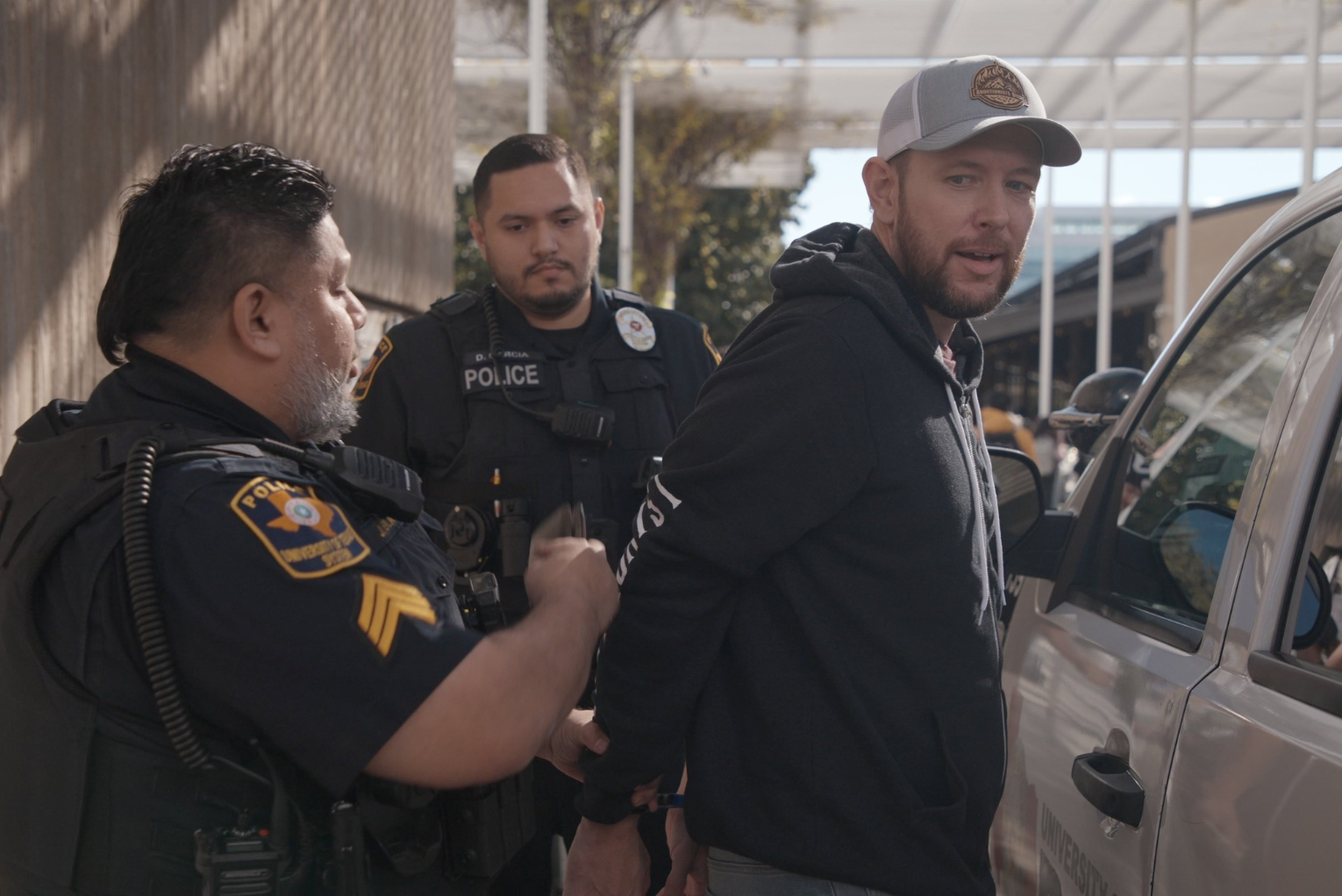
T. Russell Hunter, founder of the Christian abortion abolitionist organization Abolitionists Rising, was arrested Wednesday after a confrontation with university administrators over his discussions about abortion and Christianity with students, according to the organization.
In a statement published to X Thursday, Abolitionists Rising said Hunter had been peacefully speaking with students for approximately two and a half hours when a university administrator demanded that he leave campus.
The administrator, identified by the group as Tricia Losavio, associate dean of health and wellness initiatives, reportedly cited student complaints as the reason for ordering Hunter to leave.
However, Abolitionists Rising claimed that multiple students who were present actually told Losavio they wanted Hunter to remain. The group described the entire event as “two and a half hours of peaceful conversation.”
That apparently made little difference.
According to the organization, Losavio called police despite the students’ objections. Officers allegedly handcuffed Hunter within 90 seconds of arriving at the scene.
The group also said police refused to review its legal argument that Hunter was lawfully exercising his First Amendment rights. They added that officers declined to speak with the organization’s attorneys.
(And honestly, it’s Abolitionists Rising that often needs the police support.)
To order Jonathan Cahn’s new book, The Altar of Pergamon, visit Amazon.com.
The university’s handling of the incident raises an uncomfortable question: What good are constitutional protections for free speech if they disappear the moment someone complains about the message?
The group’s position is that Hunter was engaged in peaceful public discourse, discussing both abortion and the gospel of Christ with students who were willing to listen.
That is precisely the kind of exchange universities should be encouraging, particularly when the subject involves deeply held moral and religious convictions.
The First Amendment does not come with an exception for speech that makes people uncomfortable. Nor should the right to participate in campus discussions depend on whether the views being expressed are popular.
Abolitionists Rising made that point directly in its statement, arguing that universities should be places where students encounter challenging ideas and engage in open dialogue, even when those ideas are offensive to some.
The response was swift, with one Facebook response characterizing the incident as an example of “Religious viewpoint discrimination by the University of Texas Dallas and Police!”
There is at least some independent documentation that an arrest occurred on Wednesday.
The University of Texas at Dallas crime log lists a criminal trespass incident in the mall area of its Richardson location, occurring between 1:46 p.m. and 1:59 p.m. The incident was reported at 1:46 p.m., and its disposition is listed as “Cleared By Arrest.”
The available crime log entry does not identify the person arrested, so it does not independently establish Hunter’s identity or the circumstances surrounding the arrest. Those details come from Abolitionists Rising’s account.
The organization said Hunter remained in custody overnight while awaiting a hearing before a judge.
For an organization dedicated to ending abortion, the incident is unlikely to discourage its members from continuing their efforts to reach students with their message.
But it should prompt some serious questions about how a university handles peaceful religious expression, particularly when the speech in question challenges prevailing views.
This article originally appeared on The Western Journal and is reposted with permission.