
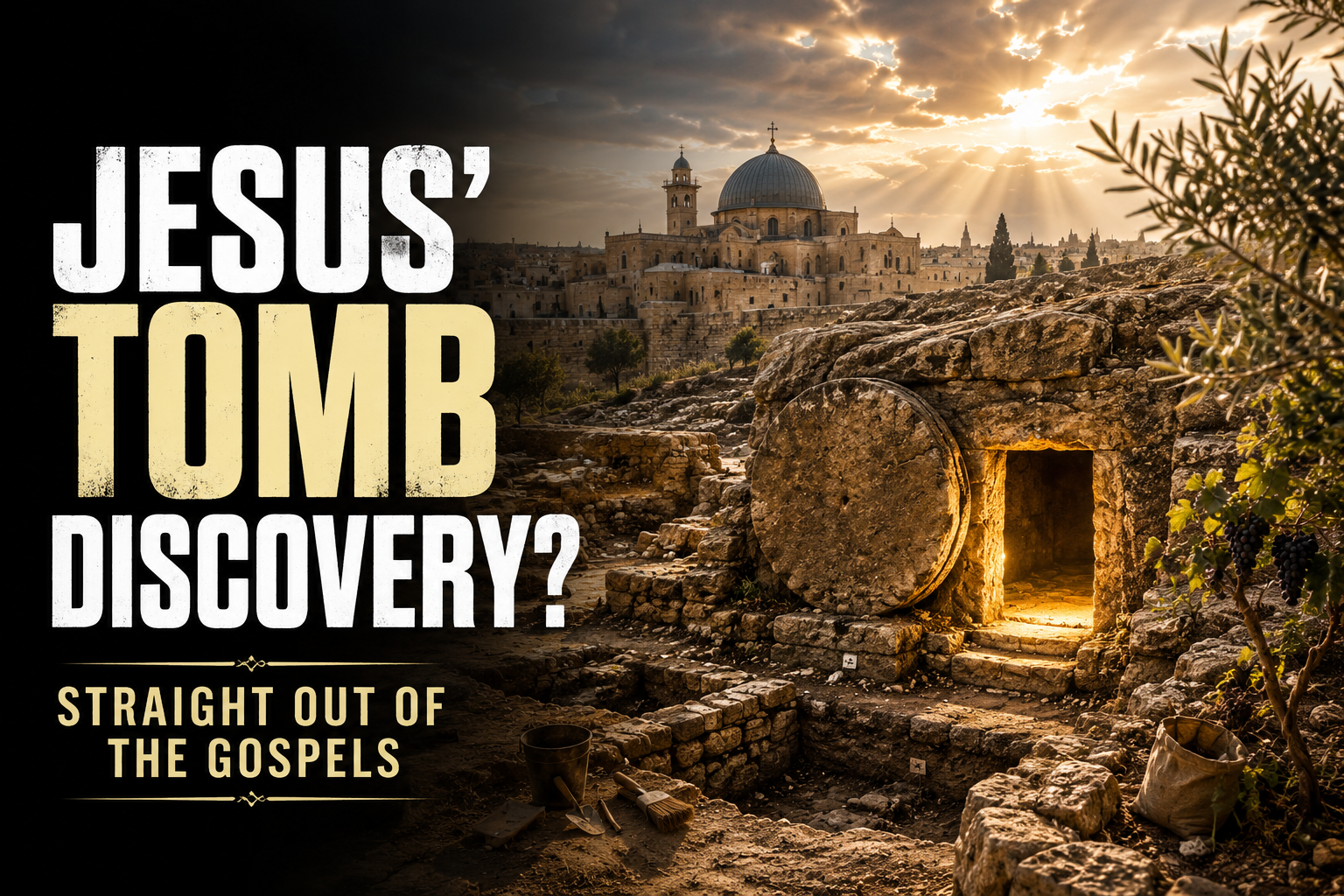
For centuries, millions of Christians have journeyed to Jerusalem to stand inside the Church of the Holy Sepulchre, believing they were near the place where Jesus Christ was crucified, buried and rose from the dead.
Now archaeology is uncovering a landscape beneath the church that looks remarkably similar to the one described in Scripture.
According to the New York Post, an Italian archaeological team working beneath the ancient church has uncovered evidence of a former quarry that eventually became a place of cultivation and burial. Researchers discovered rock-cut graves alongside areas once used for growing vegetation, which is a combination that immediately brings one particular passage of Scripture to mind.
John 19:41 places a garden at the site of Christ’s crucifixion and says a new tomb was located there.
That is striking because the archaeological evidence now shows that the area beneath the Holy Sepulchre was not simply a burial ground. It included cultivated spaces alongside tombs carved into the rock.
To order Dinesh D’Souza’s new book, The Stones Cry Out, visit Amazon.com.
The excavation, directed by Francesca Romana Stasolla of Sapienza University of Rome, began as restoration work. The team’s preliminary findings from its 2025 excavation campaign were published in the archaeological journal Liber Annuus.
Stasolla described what researchers uncovered as evidence of a “funerary landscape,” according to the Post.
The team found that the location had originally functioned as a quarry. After quarrying ceased, portions were filled with soil and repurposed for cultivation, while burial chambers were carved into the surrounding rock.
Researchers have also identified botanical evidence consistent with grapevines and olive cultivation.
Suddenly, John’s description of a garden and nearby tomb doesn’t sound like an incidental detail.
“The gospel mentions a green area between the Calvary and the tomb, and we identified these cultivated fields,” Stasolla said to The Times of Israel, according to the Post.
There is another significant geographical detail.
The quarry was located outside Jerusalem’s ancient walls during the relevant period. That fits the biblical picture of Jesus being crucified outside the city gate. Meanwhile, the discovery of graves cut into stone corresponds with the Gospel accounts describing Christ’s burial in a rock-hewn tomb.
The site’s later history adds another intriguing piece to the puzzle.
A Roman structure erected during Emperor Hadrian’s reign eventually covered part of the area. Centuries later, during the time of Emperor Constantine, Roman construction was removed, and the burial area was exposed. The tomb traditionally associated with Jesus was then distinguished from surrounding chambers and incorporated into a place of Christian worship.
Archaeological evidence shows that beneath the church lay the kind of landscape the Gospels describe: a location outside ancient Jerusalem, with cultivated ground and rock-cut tombs, all in the place generations of Christians came to identify with Christ’s death and resurrection.
Once again, as researchers dig into the ancient soil of the biblical world, the details preserved in Scripture deserve closer examination.
Abby Trivett is a writer and editor for Charisma Media and has a passion for sharing the gospel through the written word. She holds two degrees from Regent University, a B.A. in Communication with a concentration in Journalism and a Master of Arts in Journalism. She is the author of the newly released book, The Power of Suddenly: Discover How God Can Change Everything in a Moment. For interviews and media inquiries, please contact [email protected].
