
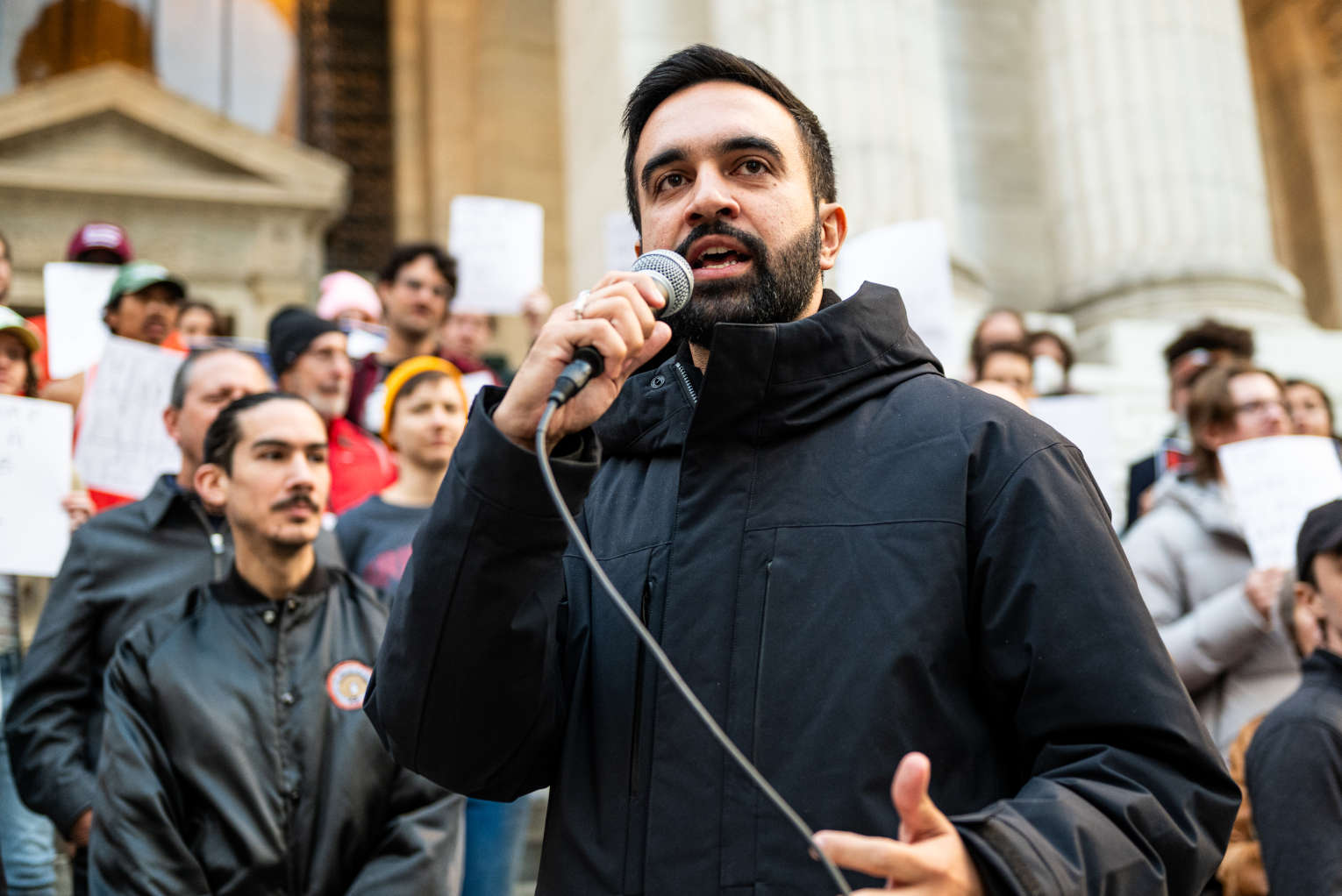
For most of the past four decades, the Democratic Socialists of America occupied the outermost edge of American political life. Founded in 1982 through the merger of two older left-wing organizations, the group spent its first 30 years as a marginal advocacy outfit with fewer members than many mid-sized city council races attract in voter turnout. Its membership hovered around 6,000.
Its influence on national politics was negligible. Its place in Democratic Party councils was nonexistent.
Tuesday night, three DSA-backed candidates won congressional primaries in New York City, ousting two sitting members of Congress in the process. The group now claims 100,000 members, holds 250 local elected offices across the country, and controls the mayoralty of America’s largest city. The transformation did not happen overnight, and it was not an accident. Understanding how it happened matters far more than arguing about whether we should be alarmed by the result.

To order Jonathan Cahn’s new book, The Altar of Pergamon, visit Amazon.com.
The turning point was Bernie Sanders. His 2016 presidential campaign introduced the language of democratic socialism to a generation of voters who had never encountered it outside a history textbook, and it sent thousands of newly radicalized young people searching for an organizational home. They found the DSA. Within a year of the 2016 election, membership had grown from 6,000 to more than 30,000. By 2018, when Alexandria Ocasio-Cortez unseated the second-most-powerful Democrat in the House in a New York primary, it had nearly tripled again. Ocasio-Cortez was a DSA member. The playbook had been written.
What happened in New York on Tuesday was that playbook executed at the next order of magnitude. Mayor Zohran Mamdani, himself a democratic socialist elected to the mayoralty of New York City just last year, endorsed three congressional challengers against Democratic incumbents. All three won. The most consequential victory came in New York’s 13th district, where Darializa Avila Chevalier, a 32-year-old community organizer and doctoral student, defeated Adriano Espaillat, a five-term incumbent and chairman of the Congressional Hispanic Caucus. Espaillat had the backing of House Minority Leader Hakeem Jeffries and the full weight of the Democratic establishment. It did not matter.
Avila Chevalier’s background warrants serious scrutiny, and voters in her district will now have the general election to conduct it. She organized with the Columbia University Apartheid Divest coalition during the 2024 campus encampments. She attended a pro-Palestinian rally in Times Square on October 8, 2023, the day after Hamas killed 1,200 Israelis in southern Israel, an event so extreme that even Representative Alexandria Ocasio-Cortez described her reaction as one of being appalled and horrified.
The CUAD group she was affiliated with posted a statement declaring ‘Death to America’ following the February 2026 Iran strikes. During a forum earlier this year, she declined to directly condemn the October 7 attacks, saying the question ignored 75 years of Palestinian occupation. Her platform calls for abolishing ICE and ending all deportations. On Tuesday morning, during a live interview on Spanish-language radio station La Mega, she abruptly removed her headphones and walked out of the studio when hosts pressed her on past social media posts. She won her race by nearly four percentage points hours later.
Democratic leaders will spend the coming days attempting to minimize what happened. Jeffries said Tuesday night that a handful of primaries would not reshape who House Democrats are as a caucus. That assessment deserves skepticism. These are not marginal seats that might flip in a general election; they are safe Democratic districts in New York City that the winning candidates will in all likelihood hold for the next decade or more, building seniority, committee assignments, and influence along the way. Mamdani, who is 34 years old, has demonstrated that his political organization can identify, recruit, fund, and deliver congressional candidates against well-funded incumbents with institutional backing. That is not a one-cycle phenomenon.
The DSA’s own history illustrates what patient, incremental organization can achieve over time. For 30 years it built chapters, cultivated candidates, and waited for a political moment capacious enough to accelerate its growth. That moment arrived in 2016 and has not closed since. The question now facing the Democratic Party is not whether the socialist left is a significant force within it, but whether the institutional center retains the will and the capacity to resist its further consolidation. Tuesday’s results suggest the answer, at least in deep-blue urban districts, is no.
Republicans would do well to pay close attention, not because Tuesday’s results threaten them directly in November, but because they clarify, with unusual precision, who the Democratic Party is becoming, and on what terms it intends to compete for national power.
This article originally appeared on American Faith and is reposted with permission.
