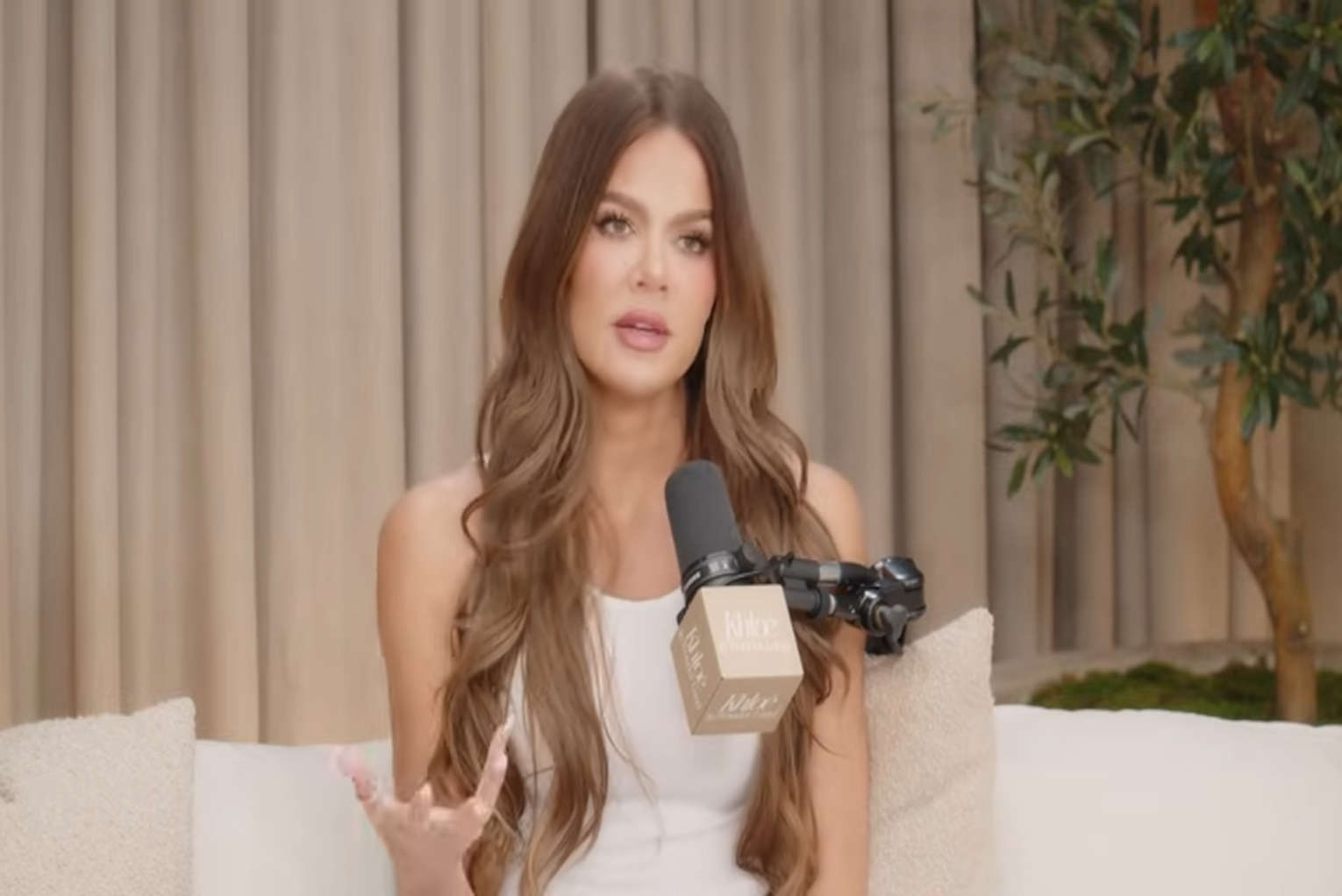

When someone from one of the most influential families in American culture begins speaking openly about Jesus Christ, it deserves attention. Khloé Kardashian’s recent podcast episode, which centered on faith, prayer and spirituality, reflects a growing hunger many people feel right now. There is a desire for meaning, stability and truth beyond what culture and media can offer.
Khloé does not speak about faith as a branding exercise. She talks about it as something deeply personal, something that has sustained her through grief, trauma and darkness. “I’m a child of God, and I believe in God and that Jesus is the Son of God,” she says. “That’s my belief system. And it’s something that gets me through every day, good or bad.”
That confession alone stands out in a cultural moment where faith is often sidelined or mocked.
Prayer as Relationship, Not Ritual
Throughout the episode, Khloé describes prayer as relational rather than formal. “Prayer can just be how I’m talking right now,” she says. “You just say, ‘Dear Heavenly Father,’ and the rest can be loose and conversational.”
She credits faith with pulling her out of despair. “Faith is the reason why I’m out of all of the dark holes I’ve been in in life,” she says. “It’s literally saved my life.”
She also speaks of gratitude in hardship and of teaching her children to pray, especially in moments of fear. “That’s my job as a mom,” she explains, describing how prayer has brought peace to her children in difficult moments.
These reflections reveal a genuine desire to know God and to pass faith on to the next generation.
Why Influence Brings Spiritual Responsibility
When a public figure speaks openly about faith, the impact reaches far beyond personal testimony. Millions listen, and many take cues from what they hear. Scripture repeatedly warns that spiritual influence comes with spiritual opposition.
The Bible teaches that deception rarely begins with outright rejection of Jesus. It often starts with minor distortions that pull believers slightly off course. The apostle Paul warned that “even Satan disguises himself as an angel of light” (2 Cor. 11:14).
Khloé’s story shows why belief alone is not enough. Faith must be rooted, taught and guarded.
Order Jonathan Cahn’s Newest Book, “The Avatar” on Amazon.com!
Where Sincerity Drifts From Scripture
Throughout the episode, Khloé blends biblical language with ideas that do not align with Scripture. She frequently refers to trusting “the universe,” saying she believes “the universe is God controlling.” The Bible draws a clear distinction between the Creator and His creation. God made the universe and rules over it. He is not synonymous with it.
She also speaks about talking to angels and to her deceased father, describing prayers to “guardian angels” for guidance. While Scripture affirms the existence of angels, it never instructs believers to pray to them or seek their direction. The Bible teaches that there is “one mediator between God and mankind, the man Christ Jesus” (1 Tim. 2:5).
Khloé also says, “There’s no wrong way to pray.” God welcomes honest prayers, including those spoken in grief or anger. Jesus Himself taught His followers how to pray and to whom to pray. Prayer is not undefined spirituality. It is communion with the Father through the Son by the Holy Spirit.
She speaks warmly of all religions as fundamentally similar and encourages exploration of every belief system. Christians are called to love all people and respect others, but Scripture does not teach that truth is interchangeable. Jesus did not present Himself as one option among many. He said, “I am the way, and the truth, and the life. No one comes to the Father except through me” (John 14:6).
The Missing Piece: Discipleship
None of these concerns negate Khloé’s sincerity. They highlight something Scripture emphasizes again and again. Sincerity is not the same as discipleship.
The Bible does not call believers merely to feel faith. It calls them to be taught, corrected and grounded in truth. Without discipleship, faith drifts toward emotion and cultural spirituality. With discipleship, faith becomes anchored in Scripture and strengthened through discernment.
Khloé herself points to the power of example when she speaks about her father. She recalls watching him read the Bible every morning, not because of what he said, but because of what he did. That is discipleship modeled through faithfulness.
A Call to Prayer and Spiritual Covering
Khloé’s openness about Jesus places her in a spiritually contested space described in Scripture. The enemy’s aim is not always to destroy faith outright, but to distort it just enough to weaken its power.
A Jesus shaped by culture rather than Scripture is not the Jesus revealed in the Word of God.
The proper response to Khloé Kardashian’s testimony is not cynicism or uncritical praise. It is prayer.
- Prayer that God would protect her from deception.
- Prayer that the Holy Spirit would lead her into truth.
- Prayer that her faith would be rooted in Scripture rather than shaped by culture.
- Prayer that mature believers would disciple and walk alongside her.
Scripture urges believers to “pray for all people” (1 Tim. 2:1). That includes public figures navigating faith under intense influence and scrutiny.
Khloé’s story reminds us of both the beauty of turning toward Jesus and the danger of walking without discipleship. It is a reminder that faith must be taught, guarded and grown.
Pray for Khloé Kardashian. Pray that her walk with Jesus deepens. Pray that she comes to know Christ not as the world redefines Him, but as He is revealed in the living and active Word of God.
To watch the full podcast episode, click here (editor’s note: mild language).
James Lasher, a seasoned writer and editor at Charisma Media, combines faith and storytelling with a background in journalism from Otterbein University and ministry experience in Guatemala and the LA Dream Center. A Marine Corps and Air Force veteran, he is the author of The Revelation of Jesus: A Common Man’s Commentary and a contributor to Charisma magazine.