
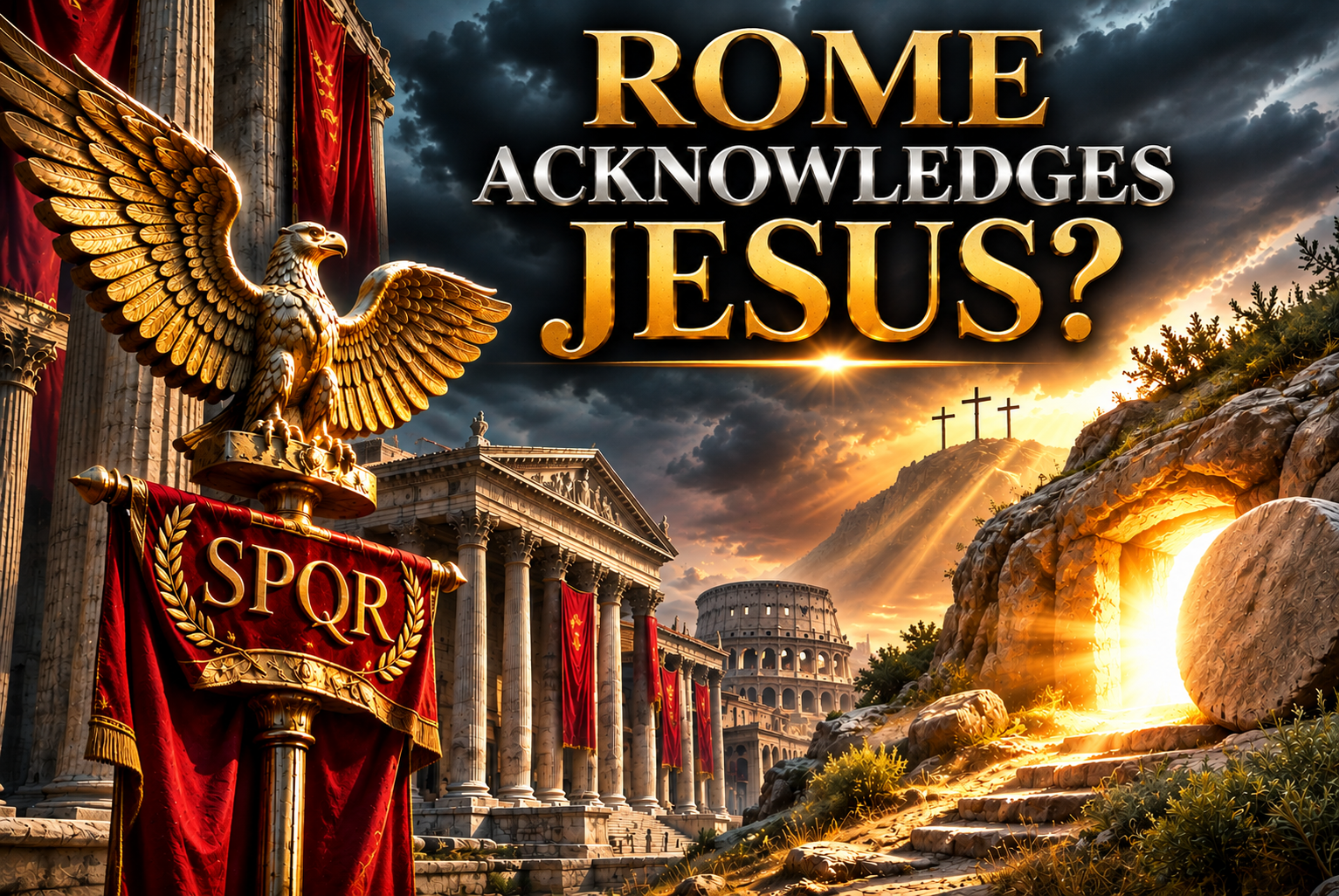
The Roman Empire sentenced Jesus Christ to death. Yet just years after His crucifixion, its own emperor may have attempted to recognize Him as divine.
A historical investigation is reigniting interest in ancient writings that suggest Emperor Tiberius brought the question of Jesus’ divinity before the Roman Senate around A.D. 35. The proposal was reportedly rejected. Still, the implications of such an event could be extraordinary for understanding Christianity’s earliest years.
Researcher Luigi Zito examined the claims in a study published in Aequitas Magazine, exploring whether the accounts reflect an actual confrontation among Rome’s highest authorities over Jesus Christ’s identity.
According to a Nov. 7 Daily Mail report, the findings suggest that the proclamation of Christ’s divinity may have reached the Roman government far sooner than many might imagine.
The story traces back to Tertullian, an early Christian writer who claimed Tiberius received reports from Palestine concerning Jesus and subsequently supported recognizing Him within Rome’s religious system.
The Senate reportedly refused.
But according to Tertullian’s Apology, Tiberius did not simply abandon the matter. The emperor allegedly maintained his favorable position toward Jesus and threatened punishment against those who accused Christians.
Tiberius ruled while Pontius Pilate governed Judea, meaning the emperor was in power when Jesus was crucified. Zito also examined the possibility that Pilate himself sent reports about Jesus to Rome.

To order Dinesh D’Souza’s New York Times bestselling book, The Stones Cry Out, visit Amazon.com.
Zito suggested that Tiberius’ reported interest in Jesus may not have been spiritual at all. Instead, the emperor may have seen recognition of Christ as a political strategy to maintain stability in a region already marked by religious tensions.
However, the possibility offers a fascinating glimpse into how quickly the claims about Jesus may have spread.
The early church was not proclaiming another political leader or religious teacher. Its message was that Jesus Christ, crucified under Roman authority, had conquered death and risen from the grave.
In Acts 1:8, Jesus declared that His followers would carry His message from Jerusalem to the ends of the earth.
Now, these ancient writings suggest that testimony of His divinity reached the heart of Roman power within years of the crucifixion. Rome may have possessed the authority to condemn Jesus to the cross, but it could not keep the message of His resurrection confined to Jerusalem.
Abby Trivett is a writer and editor for Charisma Media and has a passion for sharing the gospel through the written word. She holds two degrees from Regent University, a B.A. in Communication with a concentration in Journalism and a Master of Arts in Journalism. She is the author of the newly released book, The Power of Suddenly: Discover How God Can Change Everything in a Moment. For interviews and media inquiries, please contact [email protected]. Learn more about Abby at abbytrivett.com.
