
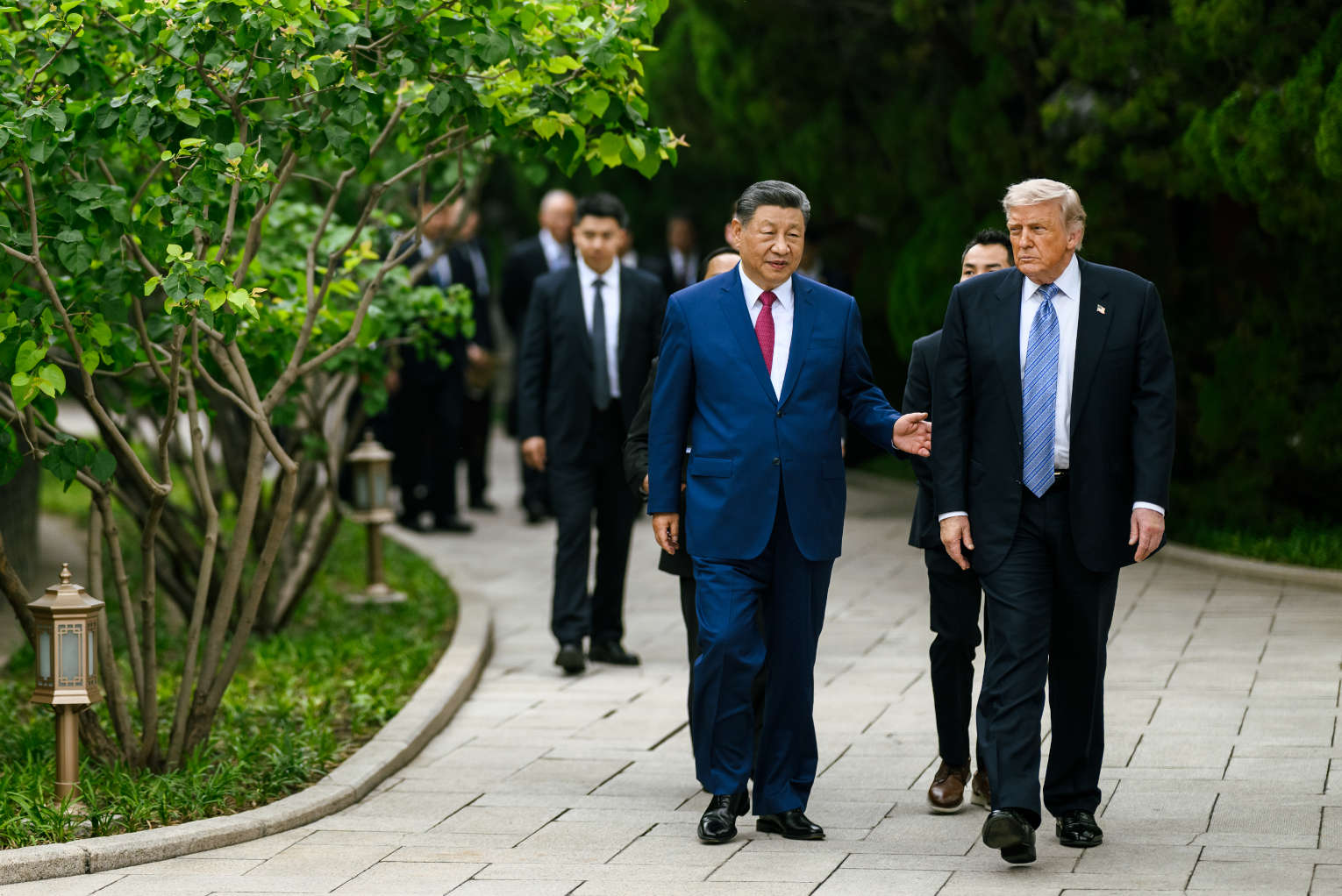
Chinese President Xi Jinping made history this week as the first Chinese leader to make two formal state visits to the United States, and he arrived with a bold proposal: send 100,000 American young people to study in his communist nation.
The invitation, announced Thursday during Xi’s visit to the White House, would unfold over the next five years through student exchange programs. It marks a significant diplomatic overture at a time when U.S.-China relations remain fraught with tension over trade, Taiwan, and national security concerns.
“I am glad to announce an invitation for 100,000 young Americans to visit China through student exchanges in the coming five years,” Xi declared during his remarks.
The Chinese president also reached back into history, invoking memories of American and Chinese soldiers fighting side-by-side during World War II. The reference appeared designed to emphasize a shared past between the two nations, even as their present relationship grows increasingly adversarial.
President Donald Trump welcomed Xi to the White House, a meeting that represented the first time the two leaders had met at that historic venue. Trump noted the significance of Xi’s visit, pointing out that no Chinese leader had ever before made two formal state visits to America.

Order Jonathan Cahn’s New Book, “The Altar of Pergamon” on Amazon.com!
The exchange program proposal raises immediate questions for American families and policymakers alike. At a time when the Chinese Communist Party faces accusations of intellectual property theft, espionage on American campuses, and systematic human rights abuses, the idea of sending tens of thousands of young Americans into that environment will likely spark debate.
For years, concerns have mounted about Chinese influence operations at American universities through Confucius Institutes and the treatment of American students and scholars in China. Several U.S. citizens have been detained in China under murky circumstances, and the State Department has previously warned travelers about arbitrary enforcement of local laws.
The proposal also comes as American universities have seen a decline in Chinese student enrollment following years of record numbers. Some analysts view Xi’s invitation as an attempt to reset cultural and educational ties that frayed during trade disputes and the COVID-19 pandemic.
Whether American parents will embrace the opportunity to send their children to study under a communist regime remains an open question. The program would presumably offer young Americans firsthand exposure to Chinese language and culture, but critics will undoubtedly ask what safeguards would protect students from propaganda efforts or surveillance by Chinese authorities.
Trump’s willingness to host Xi at the White House signals a continued effort to maintain diplomatic channels with Beijing despite ongoing disagreements. The two nations remain locked in competition across multiple fronts, from technology and trade to military posturing in the Pacific.
The student exchange proposal represents just one element of what appears to be a broader Chinese charm offensive aimed at improving relations with the new administration. How Congress and American families respond to the invitation will likely depend on whether they view it as a genuine olive branch or a calculated effort to expand Chinese influence over the next generation of American leaders.
This article originally appeared on American Faith and is reposted with permission.
