This is the 10th in a series of 12 articles adapted from my new book The Stones Cry Out: Biblical Archaeology, Prophecy and the Last Days. It’s out October 13 from Charisma Books, but you can pre-order now from Amazon by clicking on the link below.
The Bible is not a single book; it’s more like a library. It’s a collection of sacred texts compiled by different people over a couple of thousand years. For Jews, there are only the Hebrew Scriptures; for Christians, the Hebrew Scriptures are adjoined to the Christian Scriptures, the so-called New Testament. Significantly, Christianity is the only religion that incorporates the sacred text of another religion, Judaism, entirely into its own sacred canon.
Not many people know there is a considerable time gap between the Old and New Testament. The Old Testament—the Hebrew Scriptures—ends with Nehemiah around 400 B.C. Four centuries pass before the life and ministry of Jesus, which is where the New Testament begins. This gap is called the Intertestamental period.
Also, the Old Testament was originally written in ancient Hebrew—with a small portion in Aramaic—as compared to the New Testament, which was written in colloquial or koine Greek. Yet eventually Greek also became the language of the Old Testament. To see how this happened, we need a bit of history.
In the mid sixth century B.C., the Babylonian empire was routed and displaced by the Persian empire, and Cyrus the Great allowed the Jews to return to their homeland and rebuild the temple. The Persian empire endured for two centuries. Then, in the fourth century B.C., Alexander the Great defeated the Persians and inaugurated a cultural era that historians call the Hellenistic period. This is the period of Greek influence which spread throughout the Mediterranean and the Near East.
Although the Romans eventually displaced the Greeks, they preserved and indeed adopted the Greek language and culture, extending the Hellenistic era to right about the time of Jesus. No wonder the New Testament was written in the dominant language of the time, which was Greek.
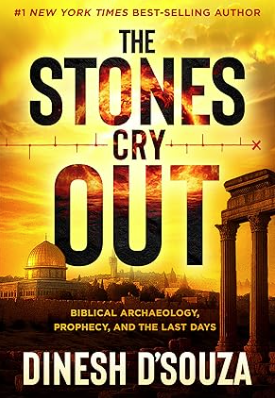
Order Dinesh D’Souza’s New Book, “The Stones Cry Out” on Amazon.com!
Remarkably, in the Hellenistic era, even the Jews adopted Greek as their language of trade and cultural communication. Rabbis whose ancestors spoke only Hebrew now spoke Greek, and in some cases knew more Greek than Hebrew.
In this Hellenistic environment, during the second and third centuries B.C., the Jewish Scriptures were translated into Greek. This famous translation was done in Alexandria, Egypt. It is known as the Septuagint. The term Septuagint means “seventy”—it supposedly reflects the number of scholars who produced the translation.
Most scholars believe that it was the Septuagint that Jesus and the apostles used and quoted from, not the original Hebrew Bible. If this is so, it means that Jesus was multilingual. His native language was Aramaic. He quite likely knew some Hebrew. And very likely he also knew Greek. It’s also worth remembering that, for Jesus, the Scriptures referred only to the Old Testament, not the New. Jesus taught out of the Jewish Bible which was the only Bible he knew.
Another key point about the Jewish Scriptures is that the Hebrew text that has come down to us through the centuries is not the original version but rather a carefully elaborated or “corrected” one, the Masoretic text, so called because it was produced by a group of Jewish scholars in the Middle Ages, the Masoretes. This has been the standard or official Hebrew Bible for the past twelve centuries.
The original text of the Hebrew Bible contained only consonants, no vowels. Evidently this was the short-hand in which ancient Hebrew was written. God’s name, for example, was spelled YHWH, not Yahweh. No vowels! Sentences too were made up of the basic elements—sort of like “Boy” “Home” “School”—leaving it to the reader to figure out that the boy left home and went to school.
The Masoretic scribes filled out the text; they supplied the missing vowels. They did this with extreme care, under the most exacting supervision, and fully aware that they were communicating divine edicts and a divinely given or inspired text. Their project was one of transmission, not innovation.
Still, the earliest complete Masoretic Hebrew bible that we have—the Leningrad Codex—dates to around 1,000 A.D. This means there is a gap of 1400 years between the end date of the Old Testament in 400 B.C. and the earliest-known fully complete Masoretic version. No surprise, skeptics and scoffers had a field day with this. They questioned the reliability of the Masoretic text, saying, in effect, who knows what changes have been made by the scribes over a period of more than a thousand years?
This type of critique was also tried with the Christian Scriptures—the New Testament—but it quickly collapsed. The reason is that very early New Testament manuscripts (or fragments of manuscripts) have been found, which together with other types of evidence clearly establish that the four gospels were written in the first century itself, only decades after the death of Christ, and within the lifetime of many who lived through Christ’s ministry and death. The other books, such as the Book of Acts and the letters of Paul, were written around the same time.
Also the sheer volume of New Testament manuscripts found across the Near East and the Mediterranean allows for easy comparison to demonstrate that—allowing for tiny copying mistakes—we have a thoroughly reliable version of these books that goes back virtually to the time when they were first written and to the events themselves that the books describe.
With many ancient texts—including some of the most famous works of Greek philosophy and literature—the copies we have date to many centuries later, and moreover, there are very few early manuscripts. Plato’s Republic was written in the fourth century B.C; we have only a handful of early copies, and those date to around 900 A.D. Even so, scholars do not doubt the authenticity of Plato’s Republic or other, similarly situated, ancient texts. The New Testament is the most comprehensively authenticated ancient text in existence; no other work comes close.
With the Old Testament, however, there was a problem in confirming the authenticity or reliability of the original text. We are talking here of the text itself, not the people named or the events described in the text. Could the text be trusted to be the one that was originally produced and venerated by the ancient Hebrews themselves? How far, if at all, had the text been modified or altered through the long reach of time?
The problem was hardly insoluble. In fact, there was a way to confirm the reliability of the Masoretic text, even though few of the nineteenth and twentieth century scoffers availed themselves of it. That way was to compare the Masoretic text with the Septuagint. Since the Greek translation of the Old Testament dated to the Hellenistic era—as least two centuries before the time of Christ—surely one could see if the Masoretes, who produced their work between the seventh and tenth centuries A.D., had made meaningful changes in the intervening period.
As it turns out, they had not.
This debate over the reliability of the Masoretic text—indeed of the Hebrew Scriptures themselves—was decisively settled with a serendipitous discovery that has been called the greatest finding in biblical archeology of the twentieth century.
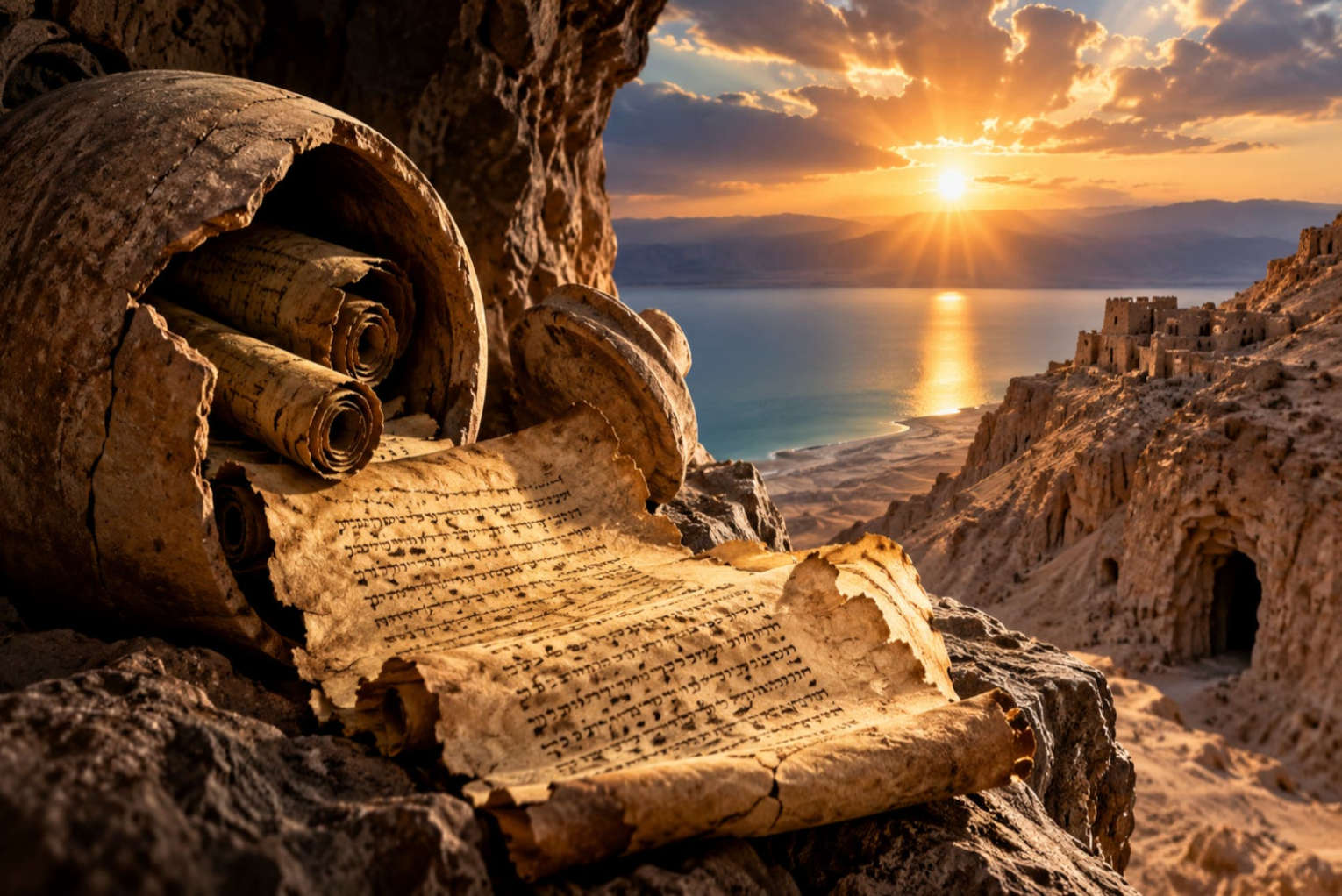
In 1947, a Bedouin shepherd boy was tending his flock along the cliffs overlooking the Dead Sea when he noticed that a solitary goat had gone off on its own. Searching for it, he climbed a cliff and saw a deep cave. He flung a stone into the cave, and heard the sound of breaking pottery. Creeping into the cave, he found several jars containing ancient scrolls.
As it turned out, the boy had stumbled upon a tiny portion of the Dead Sea Scrolls, which were stored in the caves in the area. Altogether, there are some 1100 ancient documents consisting of several intact Scrolls and thousands of fragments. Written in Hebrew, Aramaic and Greek, the scrolls were truly ancient, most dating from the third century B.C. to the first century A.D. New research dates some of the scrolls to as early as the fourth century B.C. They were more than a thousand years earlier than any existing text of the Hebrew Bible. An astounding, invaluable find!
Among the Dead Sea manuscripts were copies of all the books of the Hebrew Bible, missing only the Book of Esther. The most famous scroll, the Great Isaiah Scroll, contained the entire text of the Book of Isaiah. When this scroll was matched to the Masoretic text, scholars found they were virtually identical. The discrepancies were mostly minor errors of copying, which made no difference to the meaning or significance of the text at all.
The same was true when other books were compared. Essentially, the accuracy of the Masoretic text was firmly established by the Dead Sea Scrolls. A whole model of skeptical questioning of the Bible, from the early nineteenth century to the mid twentieth century, was discredited. The entire Old Testament was stunningly vindicated, at least in terms of its authenticity as a true and accurate replica of the original.
The Dead Sea Scrolls also contained non-biblical texts, apocryphal texts, commentaries on biblical books and sectarian documents. Some of these documents reflected the teachings of the community that lived in the area and probably stored the scrolls in jars in the nearby caves. Scholars continue to debate who precisely made up this Qumran community and what its people believed.
But the broader message of this trove of material is that there were a proliferation of Jewish sects in the first and second centuries B.C. and they engaged in vigorous internecine discussion and debate with each other. Among these groups were the Pharisees and Sadducees, two groups prominently featured in the New Testament. In a way the Dead Sea Scrolls gives us a clearer picture of the varied, disputatious religious landscape of which Jesus became a part and participant.
Born in Mumbai, India, Dinesh D’Souza came to the United States as an exchange student in 1978. After graduating from Dartmouth College, he served as a policy analyst in the Reagan White House and a scholar in two prominent think tanks, the American Enterprise Institute and the Hoover Institution at Stanford University. He is a New York Times best-selling author who has written books on politics, religion, culture, and economics— including Illiberal Education, The End of Racism, What’s So Great About America, and United States of Socialism—and three books on Christian apologetics: What’s So Great About Christianity, Life After Death, and Godforsaken. D’Souza has made eight political documentary films and produces a daily podcast called The Dinesh D’Souza Podcast, which is seen and heard by about 100,000 people daily.