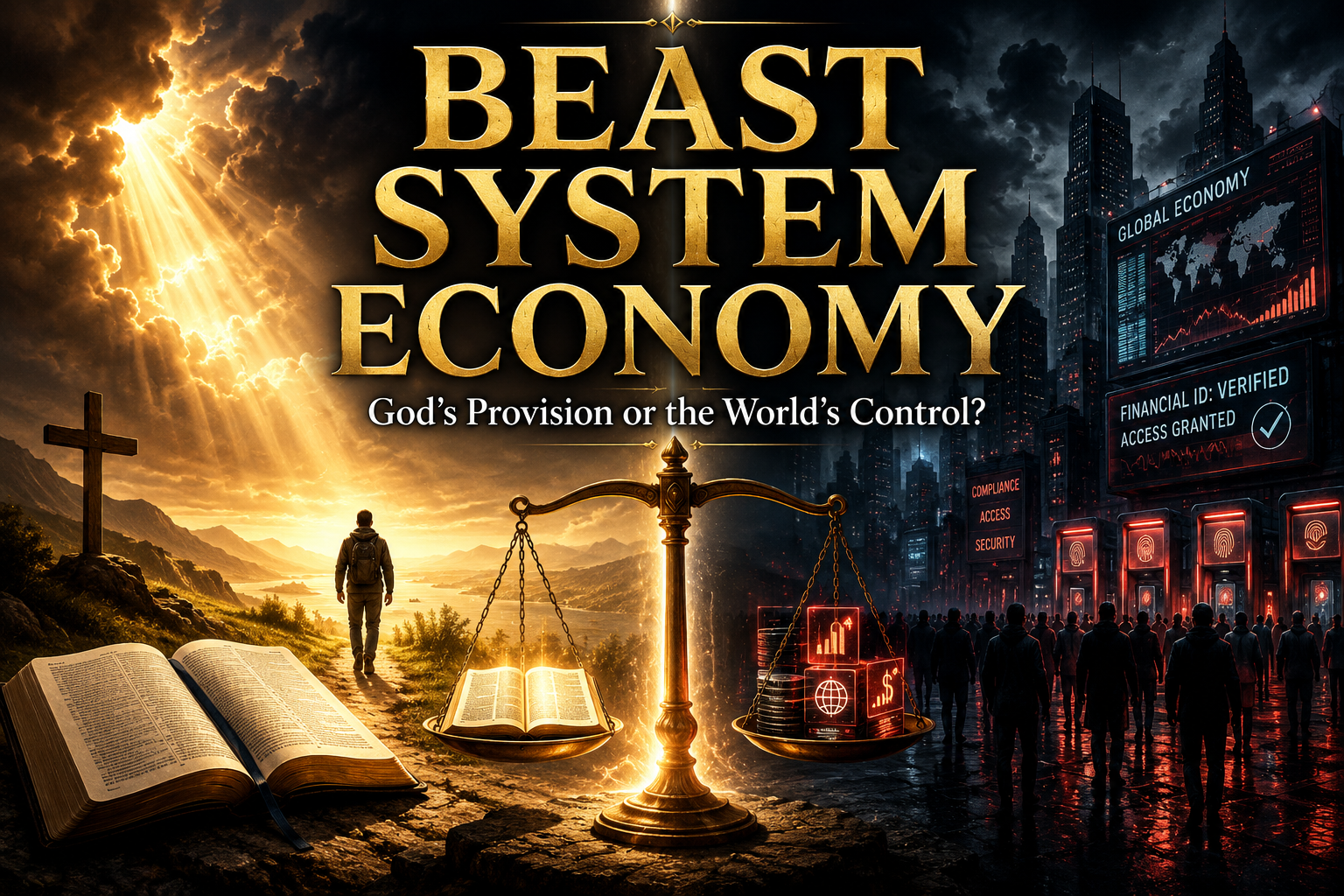


Can a believer truly trust God as Provider while still living in fear of financial lack?
That’s the question pastor, entrepreneur and author Kap Chatfield tackled during a conversation with evangelist Daniel Kolenda on The Daniel Kolenda Show. As the two discussed Chatfield’s new book, The Power to Prosper, they explored one of the church’s most debated subjects: biblical prosperity. Far from promoting the pursuit of wealth, Chatfield argued that true prosperity is rooted in complete dependence on God’s covenant provision.
“I have people ask me all the time, ‘Are you a prosperity preacher?'” Chatfield told Kolenda. “Well, I’m not a poverty preacher.”
He explained that when he studies Scripture, he doesn’t see God glorifying poverty, lack or failure. Instead, he sees biblical principles that position believers to flourish and fulfill God’s purposes.

To order Daniel Kolenda’s book, Furious, visit Amazon.com.
That conviction wasn’t always part of his life.
Raised in church, Chatfield eventually rejected Christianity after watching Bill Maher’s documentary Religulous, embracing atheism during his college years. But everything changed when a Christian friend presented the gospel not as a collection of religious rules, but as “the greatest love story ever.” The message pierced his heart, leading him to surrender his life to Christ.
Soon afterward, Chatfield said God transformed his lifelong passion for filmmaking into a Kingdom assignment.
“My core mission for my life,” he said, “is to take back media from the devil and reveal the glory of God on every glowing screen.”
Throughout the interview, Kolenda challenged Chatfield to distinguish biblical prosperity from the caricature often associated with the prosperity gospel. Rather than avoiding the difficult conversation, Chatfield repeatedly pointed back to Scripture.
He cited passages including Genesis 26, 3 John 2 and Deuteronomy 8:18, arguing that prosperity in the Bible is never presented as selfish accumulation but as God’s provision for His covenant people. Chatfield defined biblical prosperity as having more than enough to accomplish God’s assignment and enough to generously bless others.
The conversation took an even deeper turn when Kolenda asked about one of the book’s most provocative statements regarding the end times.
Chatfield warned that many Christians unknowingly place their trust in employers, salaries or financial systems rather than in God Himself.
“There are a lot of people who worship the spirit of mammon who are broke as a joke,” he said, explaining that whenever finances become the determining factor behind every decision, money has quietly assumed the place only God should occupy.
He connected that warning to the economic pressures described in Revelation, arguing that believers must learn to trust God’s Kingdom economy before their faith is tested by worldly systems. According to Chatfield, covenant provision is not simply a financial principle—it is preparation for remaining faithful in increasingly difficult days.
At the center of Chatfield’s message, however, isn’t money at all—it’s identity.
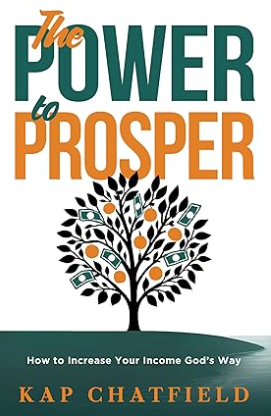
To order Kap Chatfield’s new book, The Power to Prosper, visit Amazon.com.
Recalling a powerful encounter with the Lord during worship, Chatfield said he saw Jesus not only as Savior and Shepherd, but as King seated in breathtaking glory. That revelation completely reshaped his understanding of provision.
“Nothing but prosperity exists in heaven,” he said, explaining that the experience forced him to wrestle with one defining question: “Am I this King’s son or not?“
Before concluding the interview, Kolenda and Chatfield also discussed the church’s relationship with entrepreneurs. Chatfield argued that many business leaders feel misunderstood in church despite possessing gifts that can greatly advance the Kingdom. He encouraged pastors to recognize entrepreneurs as ministry partners rather than simply financial supporters, pointing to many of Jesus’ disciples—as well as the apostle Paul—as examples of marketplace leaders whom God used powerfully. Kolenda agreed that churches become stronger when they embrace the different gifts God has placed within the body of Christ.
In a society marked by economic uncertainty and growing dependence on worldly systems, the question is no longer simply whether God desires to bless His people. The greater question is whether believers truly trust Him enough to live as though He alone is their Provider.
Abby Trivett is a writer and editor for Charisma Media and has a passion for sharing the gospel through the written word. She holds two degrees from Regent University, a B.A. in Communication with a concentration in Journalism and a Master of Arts in Journalism. She is the author of the newly released book, The Power of Suddenly: Discover How God Can Change Everything in a Moment. For interviews and media inquiries, please contact [email protected].