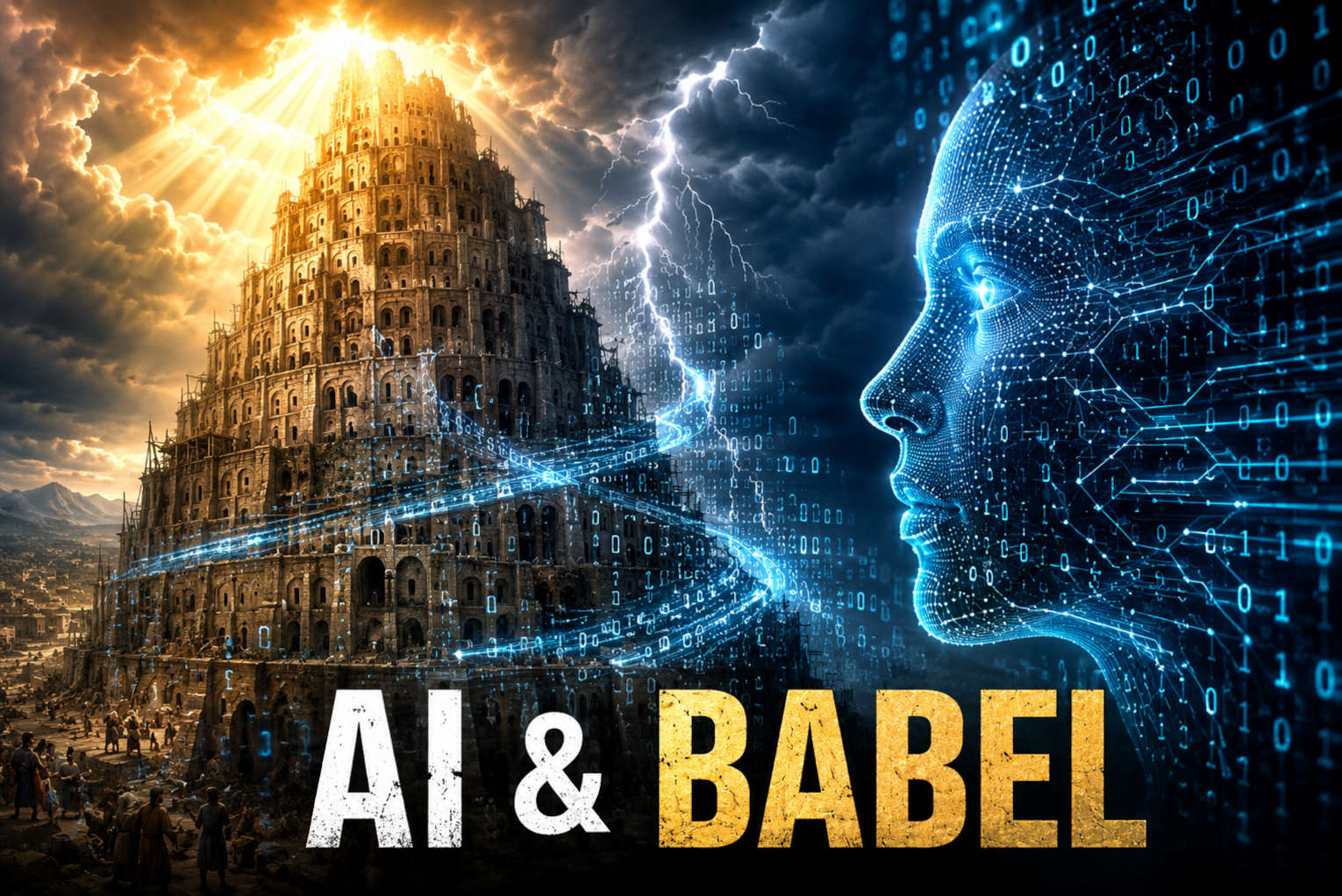


The first great technological project recorded in Scripture was never about bricks or towers. It was about mankind believing it could build a future without God (Gen. 11:1-9).
Thousands of years later, the Tower of Babel has unexpectedly found its way into one of today’s biggest debates: artificial intelligence.
That reality came into sharper focus after billionaire technology investor Peter Thiel publicly criticized Pope Leo XIV over the Vatican’s call for stronger international oversight of artificial intelligence. While the political controversy has generated headlines, it also points to a much deeper question for us: As AI rapidly reshapes our world, how do we ensure that innovation remains a servant rather than becoming a master?
According to one report from Breitbart, Thiel argued that Pope Leo’s position on AI regulation could unintentionally benefit China by slowing innovation in the United States while doing little to restrain the Chinese Communist Party.
Speaking during a panel at the Aspen Ideas Festival, Thiel said that because the pope’s message would influence Americans more than China, Leo was, “in his own view,” “working for the Chinese Communists.”
The Vatican did not respond to a request for comment, according to the report.
More than a debate about technology
The controversy centers on Pope Leo’s first encyclical, Magnifica Humanitas (“Magnificent Humanity”), which calls for greater oversight of artificial intelligence while warning against placing too much confidence in technology.
The encyclical declares that artificial intelligence “must be disarmed” and urges greater international regulation of the rapidly developing technology.
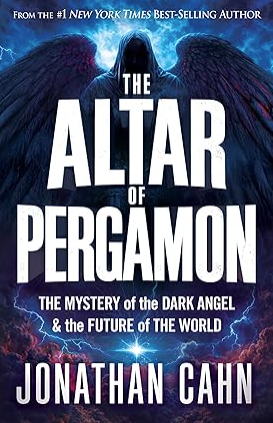
Order Jonathan Cahn’s New Book, “The Altar of Pergamon” on Amazon.com!
At the heart of the pope’s argument is a conviction that every advance in technology must remain subject to God’s design for humanity rather than redefining it. Machines may process information at astonishing speed, but they cannot bear God’s image, love their neighbor or walk in obedience to their Creator (Gen. 1:26-27).
According to the encyclical, “while AI might become smarter than any one of us, it will never be able to match the unexpected and delightful achievements of all of us — the unpredictable genius of magnificent humanity.”
Pope Leo reinforces that point by turning to one of Scripture’s clearest warnings about human pride.
The encyclical describes Babel as “an impressive feat” built with “a single language, a single technology, a single direction.”
Yet the project ultimately failed because “it was a project conceived without reference to God, supported by a uniformity that eliminated diversity and that chose homogenization over communion.”
That is why the Tower of Babel continues to speak so powerfully today. God’s judgment did not fall because people built something remarkable. It fell because they believed human achievement could replace dependence on Him. The danger was never the technology itself. It was the heart behind it (Gen. 11:4-9).
How should we respond?
Thiel’s criticism and Pope Leo’s encyclical arrive as artificial intelligence rapidly transforms nearly every area of society. Questions surrounding ethics, privacy, employment, warfare and even human identity are moving from theory into everyday life.
We may reach different conclusions about how governments should regulate AI. We may also disagree with aspects of either Thiel’s criticism or the Vatican’s proposals.
What should unite us is something far greater than politics. Every new technology presents us with the same question humanity has faced since Eden: Will we trust God’s wisdom, or will we trust our own ability to determine what is best? (Gen. 3:1-7).
That is why discernment matters. AI can become an extraordinary tool for good, but every tool reflects the heart of the one using it. Technology may amplify human potential, but it also amplifies human sin when it is detached from biblical truth (Jer. 17:9; Rom. 3:23).
As artificial intelligence continues to reshape the world around us, we are called to test every new development against Scripture rather than cultural enthusiasm or political ideology (1 Thess. 5:21; 1 John 4:1).
Our confidence has never rested in mankind’s greatest inventions. It rests in Jesus Christ, whose wisdom, truth and kingdom will endure long after every human innovation has passed away (Heb. 13:8; Rev. 11:15).
James Lasher, a seasoned writer and editor at Charisma Media, combines faith and storytelling with a journalism background from Otterbein University and ministry experience in Guatemala and at the LA Dream Center. A Marine Corps and Air Force veteran, he is the author of The Revelation of Jesus: A Common Man’s Commentary and a contributor to Charisma magazine. For interviews and media inquiries, please contact [email protected].