
A remarkable manuscript discovery is giving the world a fresh glimpse into how one of the church’s greatest theologians wrestled with one of Scripture’s most mysterious passages.
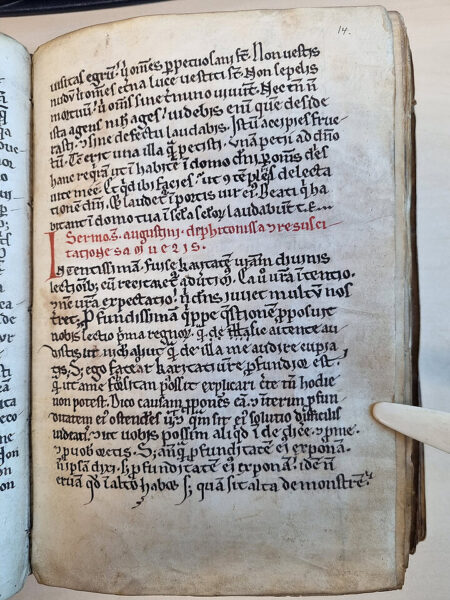
According to a report from the Daily Mail, researchers uncovered two previously unknown sermons by St. Augustine hidden within a 12th-century Latin manuscript in a Polish library. The sermons center on the account in 1 Samuel 28, when King Saul sought out the Witch of Endor after God no longer answered him.
The passage has long sparked debate because it appears to describe the prophet Samuel appearing after his death.
Professor Christian Tornau summarized the account this way: “‘Saul believes himself to be in a hopeless situation shortly before a battle against the Philistines. God does not listen to his prayers. He turns to a witch.'”
At Saul’s request, the woman “conjures up the supposed spirit of the deceased prophet Samuel,” who foretells Saul’s death.
Augustine’s Conclusion
The newly discovered sermons reveal that Augustine carefully considered whether Saul truly encountered Samuel or was the victim of some form of supernatural deception.
Ultimately, Augustine rejected the idea that the medium possessed authority over the dead.
As the report explains, Augustine argued that “the Witch of Endor held no power over the dead. If Samuel genuinely appeared, he believed it was because God allowed it, not because the medium had summoned him through magic.”

Order Dinesh D’Souza’s New Book, “The Stones Cry Out” on Amazon.com!
Rather than forcing a final conclusion, Augustine presented multiple interpretations before allowing his congregation to wrestle with the text.
Tornau explained, “‘It was not until the second sermon on the following Wednesday that the options were weighed up.'”
He added, “‘The style, humor and content also clearly indicate that the sermons in the manuscripts were actually written by Augustine.'”
Is Daniel 12:4 Unfolding Before Our Eyes?
Discoveries like this naturally raise a fascinating question.
Daniel 12:4 declares, “But you, Daniel, shut up the words and seal the book until the time of the end. Many shall run to and fro, and knowledge shall increase.”
That verse has often been associated with advances in travel, technology and human knowledge. Yet our generation has also witnessed an extraordinary number of biblical discoveries emerge from the ancient world—Dead Sea Scrolls, archaeological finds confirming biblical history, forgotten manuscripts and long-lost writings that illuminate how the early church understood Scripture.
These discoveries do not add to God’s Word or change biblical doctrine. We know Scripture is complete. They can, however, deepen our understanding of history, language and the way faithful believers throughout the centuries wrestled with difficult passages.
Whether the continuing recovery of ancient biblical texts represents part of the increase of knowledge Daniel foresaw is something we should prayerfully consider. Scripture does not explicitly identify discoveries like these as a fulfillment of Daniel 12:4. Yet they undeniably contribute to humanity’s growing understanding of the biblical world and continue drawing attention back to God’s Word thousands of years after it was written.
Augustine’s newly recovered sermons remind us that the deepest questions of Scripture have challenged God’s people for centuries. They also remind us that we are called to search the Scriptures diligently, test every interpretation against God’s Word and trust that He alone remains sovereign over life, death and the unseen realm.
James Lasher, a seasoned writer and editor at Charisma Media, combines faith and storytelling with a journalism background from Otterbein University and ministry experience in Guatemala and at the LA Dream Center. A Marine Corps and Air Force veteran, he is the author of The Revelation of Jesus: A Common Man’s Commentary and a contributor to Charisma magazine. For interviews and media inquiries, please contact [email protected].
