
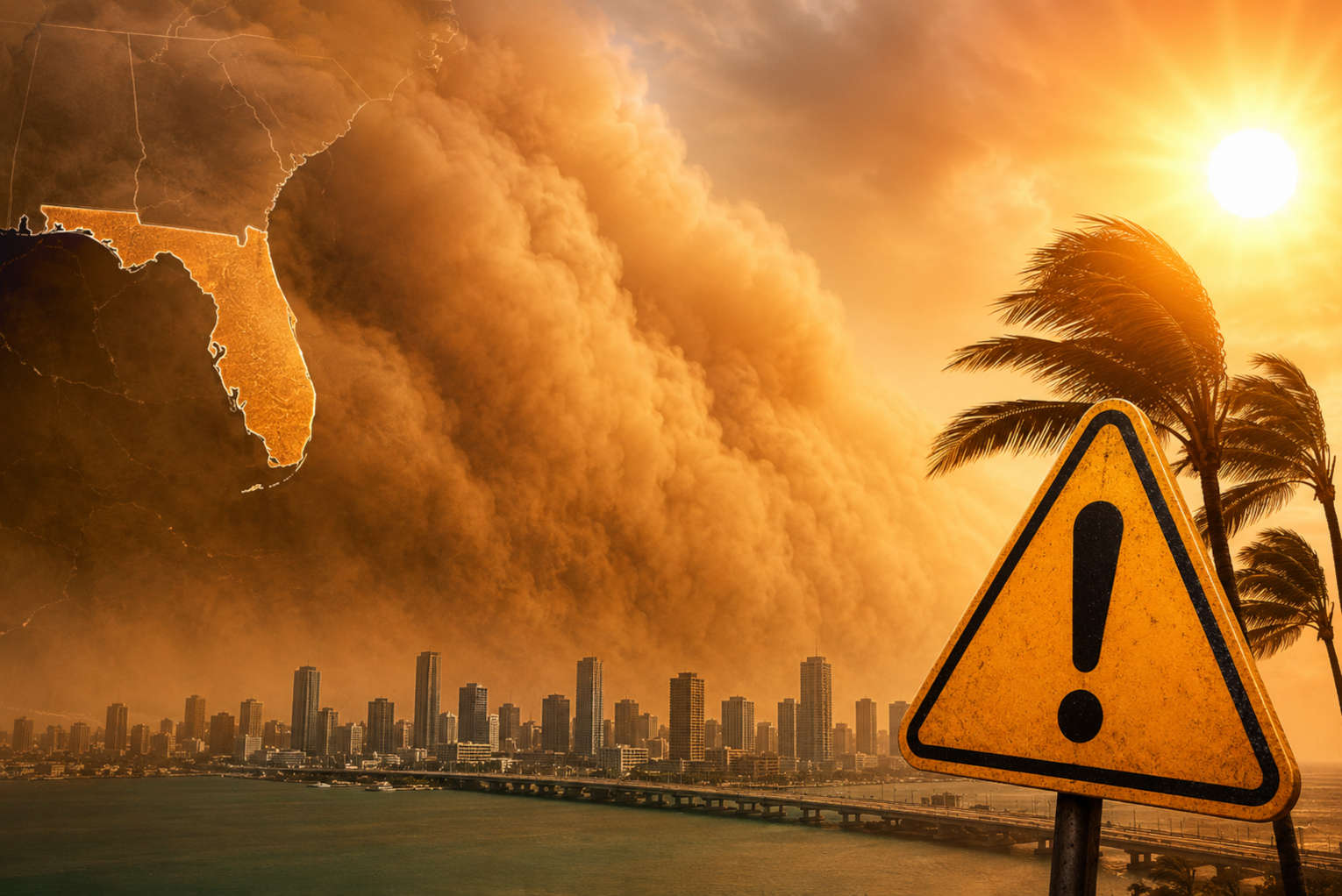
Residents across parts of Florida are being warned to prepare for hazy skies and declining air quality as a wave of dust from North Africa spreads across the region.
Forecasters say the airborne dust, carried thousands of miles across the Atlantic Ocean, is expected to become increasingly noticeable through the week. The phenomenon is bringing drier air into the Southeast, limiting thunderstorm development and adding to already oppressive heat conditions.
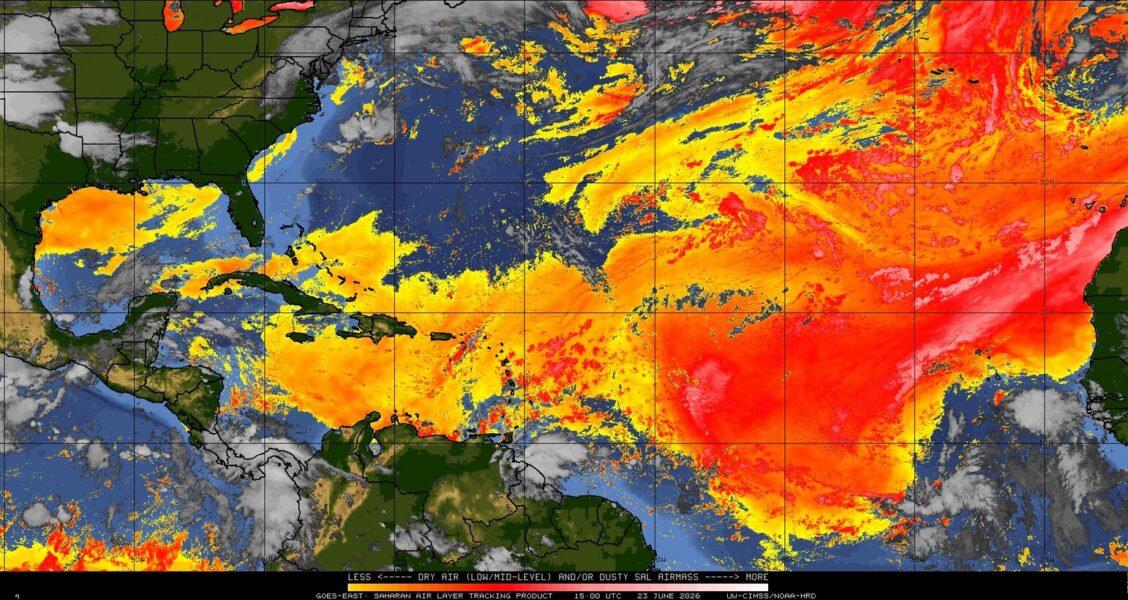
Miami-Dade County officials issued an Air Quality Alert this week as concentrations of fine particulate matter increased across portions of South Florida.
Officials warned that pollutant levels could approach or exceed thresholds considered unhealthy for some individuals, particularly those with respiratory conditions.
The dust contains microscopic particles that can travel deep into the respiratory system. According to the report, Saharan dust contains “fine particles, PM10 and especially PM2.5, minerals like quartz and feldspar, and sometimes microbes or pollutants picked up during transport.”
Health experts caution that exposure can contribute to breathing difficulties, cardiovascular stress and irritation of the eyes, nose and throat. Headaches, fatigue and allergic reactions have also been associated with elevated dust levels.

Order Jonathan Cahn’s New Book, “The Altar of Pergamon” on Amazon.com!
The arrival of the dust coincides with a stretch of dangerous summer heat. Meteorologists expect temperatures to remain in the mid-90s across parts of Florida, with heat index values potentially climbing as high as 110 degrees.
Despite the health concerns, the dust does provide one benefit during hurricane season.
The dry air associated with Saharan dust can interfere with tropical development by reducing the moisture needed for storms to organize and strengthen. Forecasters say that process may help limit tropical activity across portions of the Atlantic in the short term.
“The greatest impacts of the Sahara dust are forecast from the middle of the week into the weekend as high pressure builds and additional dust arrives from the Atlantic,” the report stated.
Saharan dust outbreaks are a regular summertime occurrence, particularly between June and August. Atmospheric wind patterns routinely carry dust from the Sahara Desert westward across the Atlantic, with some plumes traveling more than 5,000 miles before reaching the Caribbean, Gulf Coast and southeastern United States.
Forecasters expect conditions to gradually improve once additional moisture returns to the region later this week.
James Lasher, a seasoned writer and editor at Charisma Media, combines faith and storytelling with a journalism background from Otterbein University and ministry experience in Guatemala and at the LA Dream Center. A Marine Corps and Air Force veteran, he is the author of The Revelation of Jesus: A Common Man’s Commentary and a contributor to Charisma magazine. For interviews and media inquiries, please contact [email protected].
