The reality is that, in all probability, Jesus was not born on December 25th. We do not know exactly what date Yeshua was born. I guess Father did not think it was that important for us to know. The main thing is to rejoice in the fact that a Messiah has been born and given to us. We are celebrating God’s love and the fulfillment of ancient Messianic prophecy.
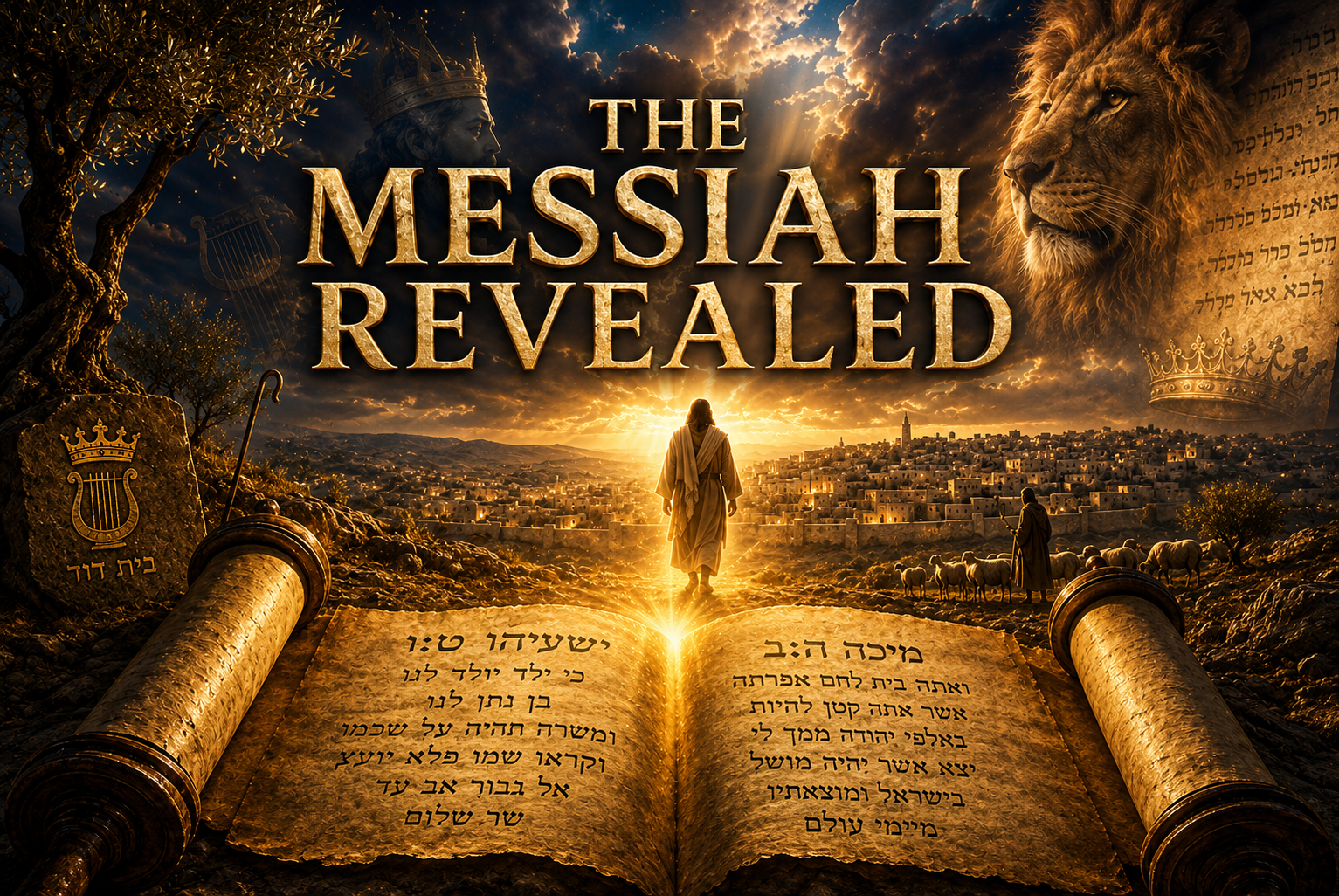
“For a Child will be born to us, a Son will be given to us; And the government will rest on His shoulders; And His name will be called Wonderful Counselor, Mighty God, Eternal Father, Prince of Peace” (Isaiah 9:6).
This scripture, from the Hebrew prophet Isaiah, highlights the importance of understanding the Jewish roots of our Christian faith. The Tanakh or Old Testament, roots and grounds us in eternal truth.
This is why the first Book in the very first verse of the New Testament tie the birth of Yeshua directly to the Old Testament.
“The record of the genealogy of Jesus the Messiah, the son of David, the son of Abraham” (Matthew 1:1).
The very first thing that Matthew does in presenting Messiah, is to bring us back to the Torah. Matthew’s priority was to establish upfront, that Jesus was spoken of and foretold in the historical writings of the Old Testament. The appearance of Jesus just did not happen out of thin air; God had been telling us for thousands of years that His Son was coming.
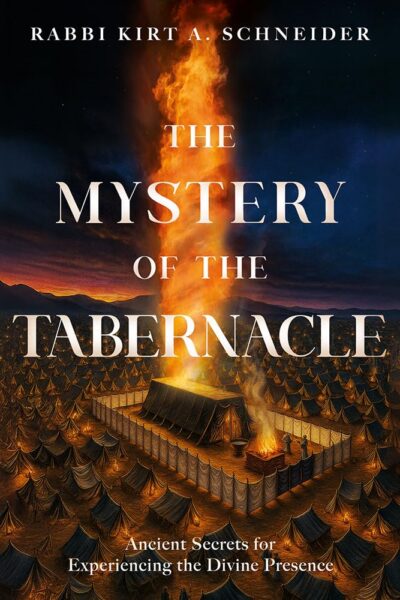
To order Rabbi Kirt Schneider’s new book, The Mystery of the Tabernacle, visit Amazon.com.
Again, the birth of Yeshua was the fulfillment of ancient Messianic prophecy that was given to many Old Testament prophets. In fact, Micah accurately prophesied by God’s Spirit where Messiah would be born hundreds of years beforehand.
“But as for you, Bethlehem Ephrathah, too little to be among the clans of Judah, From you One will come forth for Me to be ruler in Israel. His times of coming forth are from long ago, From the days of eternity” (Micah 5:2).
Two remarkable facts are clearly spelled out in this short verse of Scripture. Number one is the exact location where the Messiah would be born, Bethlehem, a place so small that no one would think anything good could come out of it. “Too little to be among the clans of Judah…” No one was expecting a King to come from such humble circumstances. And secondly, Micah prophesied that this One who would be born in this seemingly insignificant village would be divine: “His times of coming forth are from long ago, From the days of eternity.”
Remember, when the Lord sent the Prophet Samuel to Jesse’s (David’s father) home to anoint Israel’s next king? Jesse called his sons together expecting the prophet to choose Jesse’s oldest son—the big one, the tall one. But it was not him. Who was going to be the next king of Israel? The one that everyone overlooked—David the little shepherd boy that no one even had considered.
David, like Messiah, is raised up from a place of obscurity. Yeshua comes into the world from Bethlehem, a place that is so insignificant that no one logically would think the Messiah would come from there. But that is what happened.
From this hidden little village, “…One would come forth to be ruler in Israel.”
“For My thoughts are not your thoughts, Nor are your ways My ways,” declares the LORD” (Isaiah 55:8).
As a side note, I want to give you a little history and context from a Jewish perspective that I think you will enjoy learning about.
As believers, we know that Messiah is God in the flesh (John 1:1, 14). Traditional Rabbinic Jews, however, are not expecting that the Messiah will be God. In fact, Jewish people teach that there is a potential Messiah in every generation.
Furthermore, Rabbinic Judaism does not believe that Messiah will atone for the sins of the world. Rather, they believe that Messiah will lead Jewish people back to Torah observance. It is also interesting that in Rabbinic Judaism, they see within Scripture two portrayals of who the Messiah will be. On the one hand, they see a potential “Messiah Ben David”—Messiah Son of David. In this scenario, Messiah will come as a ruler and as a king. Another potential Messiah “type” religious Jews see within scripture is “Messiah Ben Joseph.” A Messiah, who like the patriarch Joseph, had to suffer in order to redeem Israel. We see this concept most profoundly in the prophetic writings of Isaiah 53.
Thus, Rabbinic Judaism’s teachings that describe who and what the Messiah will look like depend on the generation in which the Messiah is living. If the generation is a righteous generation, then Messiah will be revealed as Messiah Ben David, as a king. But if Messiah is revealed during a time when Israel is in a state of apostasy, then He will come as a suffering Messiah, Messiah son of Joseph, Messiah Ben Yosef.
In conclusion, as New Testament believers who are also rooted in the Hebrew Bible, we understand and celebrate that God sent us a Messiah, who actually is God in the flesh, who died in order to forgive our sins as we commit our lives to Him! Hallelujah! Praise the name of Yeshua.
Rabbi Schneider hosts the impactful television program — Discovering The Jewish Jesus, which is available in more than one hundred million homes in the United States and nearly two hundred nations worldwide. In 2021 he began broadcasting on radio and now airs across America. Rabbi Schneider imparts revelation of Jesus’ Jewish heritage and His fulfillment of Messianic prophecy. Questions of how the Old and New Testaments tie together, and how Yeshua completes the unfolding plan of The Almighty Yahweh, are answered with exceptional clarity. www.discoveringthejewishjesus.com/about-2/rabbi-schneider/