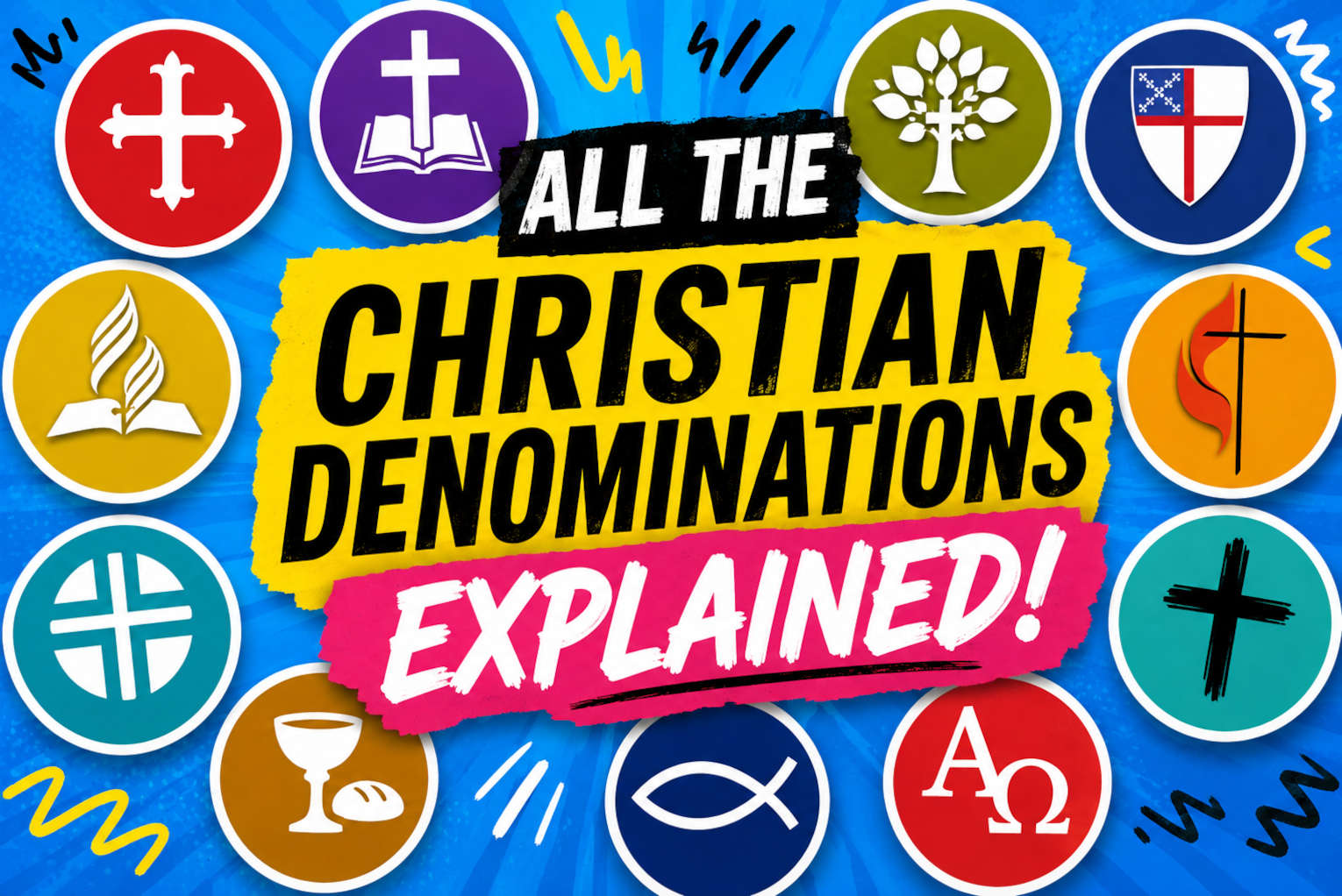


Why are there so many Christian denominations? Do the differences between Baptists, Methodists, Presbyterians, Pentecostals, Catholics and Orthodox churches actually matter? Those were the questions tackled by Pastor Josh Howerton and fellow pastors Carlos Erazo and Paul Cunningham during a recent episode of the “Live Free” podcast.
The discussion moved quickly through church history, doctrine, church governance and theological disagreements while repeatedly emphasizing one core belief shared by Christians across denominational lines: Jesus Christ is the Son of God who died and rose again.
Using the analogy of “continents, nations and states,” the pastors argued that Protestants, Roman Catholics and Eastern Orthodox believers all exist on the same broad “continent” of Christianity because they affirm the historic creeds surrounding Jesus Christ.
At the same time, the hosts stressed that denominations exist because Christians have long disagreed on important secondary doctrines and church practices.
To help listeners understand those distinctions, they laid out five major categories that separate denominations from one another.
5 Major Categories That Separate Christian Denominations
- Authority
One of the biggest denominational questions centers on authority: Who or what governs the church? Protestants generally believe Scripture alone is the final authority, while Catholics place church tradition and papal authority alongside Scripture. Episcopalian, Anglican and Orthodox churches also place greater emphasis on historic tradition and church leadership structures.
- Salvation
Different denominations also approach salvation differently. While most Christian groups affirm salvation through Jesus Christ, disagreements arise over issues such as baptismal regeneration, predestination, free will, eternal security and whether salvation can be lost.
- Sacraments and Ordinances
Churches differ sharply on baptism and communion. Baptists typically view communion as symbolic and practice believer’s baptism only, while Catholics and Lutherans believe Christ is truly present in communion in different ways. Catholics, Orthodox and many Presbyterians also practice infant baptism.
- Church Government
Another dividing line is how churches are governed. Baptist churches emphasize local church autonomy, Presbyterians are elder-led, while Episcopal and Anglican churches operate under bishops who oversee groups of churches.
- Distinct Beliefs and Characteristics
Certain denominations also develop around unique theological emphases or spiritual practices. Pentecostals emphasize spiritual gifts, healing and speaking in tongues, while Methodists historically focused heavily on sanctification and holy living. Presbyterians emphasize God’s sovereignty and covenant theology.
Order Jonathan Cahn’s New Book, “The Altar of Pergamon” on Amazon.com!
What Sets These Christian Denominations Apart?
- Baptists
- Emerged from the English separatist and Puritan movements in the 1600s.
- Strongly emphasize “Scripture alone” as the church’s highest authority.
- Believe in local church autonomy rather than outside denominational control.
- Practice believer’s baptism by immersion only.
- Typically hold a symbolic view of communion.
- Tend to favor “low church” worship styles focused on preaching rather than liturgy.
- Episcopalian and Anglican Churches
- Developed from the Church of England.
- Governed through bishops rather than autonomous churches.
- Blend Protestant theology with highly liturgical worship styles similar to Catholicism.
- Emphasize Scripture, tradition and reason together.
- Practice infant baptism.
- Methodists
- Began as a revival movement under John and Charles Wesley in the 1700s.
- Focus heavily on sanctification and holy living.
- Historically emphasized structured discipleship and spiritual accountability.
- Tend to emphasize free will more strongly than Reformed traditions.
- Some holiness branches teach the doctrine of “Christian perfection.”
- Pentecostal and Charismatic Churches
- Grew out of the holiness movement and the Azusa Street Revival.
- Emphasize the ongoing work and power of the Holy Spirit.
- Commonly teach spirit baptism as a separate experience after salvation.
- Place strong emphasis on healing, miracles and speaking in tongues.
- Were described by the hosts as the fastest-growing movement in church history.
- Lutherans
- Trace their roots to Protestant Reformer Martin Luther.
- Strongly emphasize salvation by grace through faith.
- Distinguish between “law” and “gospel” theology.
- Practice infant baptism.
- Believe Christ is truly present in communion.
- Presbyterians and Reformed Churches
- Influenced heavily by John Calvin and Scottish Presbyterianism.
- Govern churches through groups of elders and larger governing presbyteries.
- Emphasize God’s sovereignty and predestination.
- Strongly focus on covenant theology.
- Roman Catholics
- Believe church tradition and papal authority function alongside Scripture.
- Teach that sacraments mediate God’s grace.
- Believe communion becomes Christ’s literal body and blood.
- Practice veneration of Mary and the saints.
- Teach purgatory as a place of purification before entering heaven.
- Eastern Orthodox Churches
- Split from Roman Catholicism roughly 1,000 years ago.
- Place strong emphasis on mystery, liturgy and spiritual union with God.
- Teach “theosis,” or growing into deeper union with God.
The podcast continued with a defense of denominations themselves. Rather than viewing denominations as proof Christianity is hopelessly divided, the hosts argued denominations can actually preserve unity by allowing believers with differing secondary convictions to worship separately while remaining united around the Gospel of Jesus Christ.
“How do you keep people with strong differences of opinion moving in the same direction and towards the same mission?” Howerton asked. “What you do is you create little sub-state boundaries.”
The hosts stressed that Christians should divide over core Gospel truths, but not over every secondary disagreement. They closed the episode with a prayer celebrating the death and resurrection of Jesus Christ as the central hope shared by believers across denominational lines.
James Lasher, a seasoned writer and editor at Charisma Media, combines faith and storytelling with a journalism background from Otterbein University and ministry experience in Guatemala and at the LA Dream Center. A Marine Corps and Air Force veteran, he is the author of The Revelation of Jesus: A Common Man’s Commentary and a contributor to Charisma magazine. For interviews and media inquiries, please contact [email protected].