North Korea and the Global Crisis Facing Christians
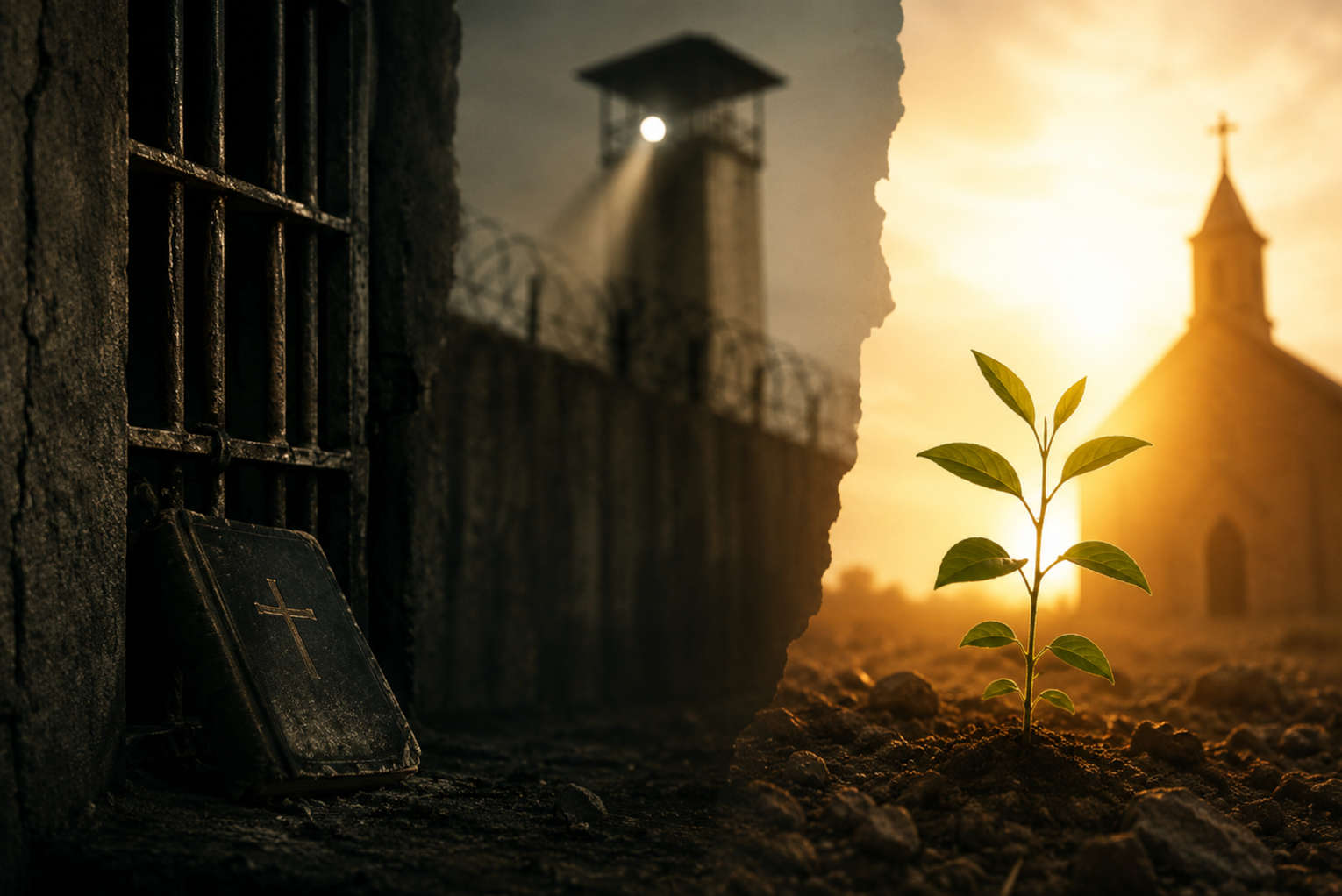
A Bible in North Korea can reportedly become a death sentence. Not just for the person holding it, but for entire families.
According to Ryan Brown, the CEO of Open Doors, Christians discovered with Scripture in North Korea can disappear into prison camps “never to be heard of, never to be seen again.”
Yet the church there continues to grow.
That reality sat at the center of Brown’s recent conversation with Allie Beth Stuckey on her podcast Relatable, where the two discussed the exploding persecution crisis facing Christians across the globe and the astonishing resilience of believers living in some of the world’s darkest places.
“The country that has been on the top the majority of those years has been North Korea,” Brown said while discussing Open Doors’ World Watch List. “To be identified as a Christian, to be found as a Christian, is the equivalent of a death sentence in this area.”
Brown explained that persecution comes in different forms. Some Christians experience what he called a “smash” style of persecution involving violence, murder, church bombings and imprisonment. Others endure a “squeeze” form of persecution where believers are economically and socially isolated until life becomes unbearable.
But Brown said persecuted Christians around the world consistently ask for the same thing.
“They’re not necessarily asking that we take their persecution away,” he said. “They’re not asking that they be removed. What they are asking is that we not forget them in their persecution.”

Order Jonathan Cahn’s New Book, “The Altar of Pergamon” on Amazon.com!
Syria, Yemen, Africa and Mexico
That persecution now stretches across vast portions of the globe.
In Syria, Brown said the collapse of the Assad regime and the instability that followed dramatically worsened conditions for Christians. Open Doors reported a major increase in church attacks and Christian deaths after extremist groups moved into the power vacuum.
“This year there were 27 that were killed because of their faith,” Brown said. “Twenty-two of those were killed in a specific church bombing that was just an absolute horrific event.”
Brown said Syria’s Christian population has dwindled to roughly 300,000 believers after years of violence and instability.
In Yemen, Christians face another kind of suffering. Civil war, famine and humanitarian collapse have devastated the nation, while believers are often denied aid because of their faith.
“Christians have an incredible vulnerability,” Brown said. “They experience all those types of things, but you add their faith component on top of that and it’s a difficult, difficult situation.”
Meanwhile, in Nigeria and across large portions of Africa, Brown said Islamic extremism continues driving violent attacks against Christians as Christianity rapidly expands throughout the continent.
“The church is advancing in Africa,” Brown said. “The growth of Christianity is seen as a threat.”
One of the interview’s most surprising revelations involved Mexico, a nation many Americans associate with tourism rather than Christian persecution.
Brown described pastors being threatened by cartels, communities cutting off water and electricity to converts and believers being denied access to schools and jobs because of their faith.
“The Christian church is bad for business,” Brown said of cartel-controlled regions. “Young men are not getting drafted into the ranks of the cartel.”
He recounted the story of Pastor Alberto, a Mexican believer who was imprisoned twice after converting to Christianity. His community cut off utilities to his home and barred his children from attending school.
At first, Alberto wanted to retaliate violently.
“If you’re coming swinging at me, I’m going to come back swinging at you,” Brown recalled him saying.
But after studying the teachings of Jesus, Alberto chose another path.
“He began to respond in love,” Brown said.
Over time, the pastor’s persecutors began converting to Christianity themselves. The church expanded into neighboring communities and eventually launched a bakery business that now helps fund church planting efforts across the region.
Persecution Is Growing, but So Is the Church
Brown repeatedly returned to one central truth throughout the conversation: persecution often strengthens the church rather than destroying it.
One story from Sudan especially illustrated that point.
Brown described meeting a Christian convert who had been imprisoned in a tiny dark cell after leaving Islam for Christianity. The man was ostracized by his family and community before eventually being jailed for preaching the gospel.
At times, Brown said, the believer was locked in spaces too small to lie down in. Other times he sat in total darkness.
Yet the man described the experience in astonishing terms.
“I would not have chosen these experiences, but I am thankful for them,” the Sudanese Christian told Brown.
“When I was in the darkness of that cell, the light of Christ was burning for me brighter in ways than I had ever experienced before.”
Then came the line that visibly impacted Stuckey during the interview.
“He said, ‘I went into prison as a kitten, but I came out as a lion.’”
That same courage exists even in North Korea, where Open Doors estimates there may still be hundreds of thousands of underground Christians.
Brown said some North Korean believers who escape the country eventually choose to return after recovering physically and spiritually in safe houses outside the nation.
“They’ve instead taken a posture of, ‘How can I be equipped so that I can go back and continue to share the gospel?’” Brown said.
Stuckey noted that oppressive governments throughout history consistently view Christianity as a threat because believers ultimately answer to God rather than the state.
“Christians speak truth, they kill us, the church grows,” she said. “You would think eventually we would be extinguished, but the gates of hell can’t prevail against it.”
Brown agreed.
“The things that this world would most seek to do to destroy the church,” he said, “even those things bend their knee to Christ and His purposes.”
As Christians around the world continue facing imprisonment, violence, discrimination and death for their faith, Brown urged believers in safer nations not to look away.
The persecuted church, he said, does not want pity.
It wants solidarity.
“Our brothers and sisters most ask for prayer,” Brown said. “Not to end their persecution, not to pull them out from persecution, but to pray and be present with them in that.”
Let us pray for our brothers and sisters suffering around the world today. May God strengthen believers hiding in underground churches, sitting in prison cells, worshipping under threat and enduring unimaginable hardship for the name of Jesus Christ. May the Holy Spirit give them courage, peace and endurance. May the church around the world refuse to forget them. And may the light of Christ continue shining in even the darkest nations on Earth.
James Lasher, a seasoned writer and editor at Charisma Media, combines faith and storytelling with a journalism background from Otterbein University and ministry experience in Guatemala and at the LA Dream Center. A Marine Corps and Air Force veteran, he is the author of The Revelation of Jesus: A Common Man’s Commentary and a contributor to Charisma magazine. For interviews and media inquiries, please contact [email protected].