
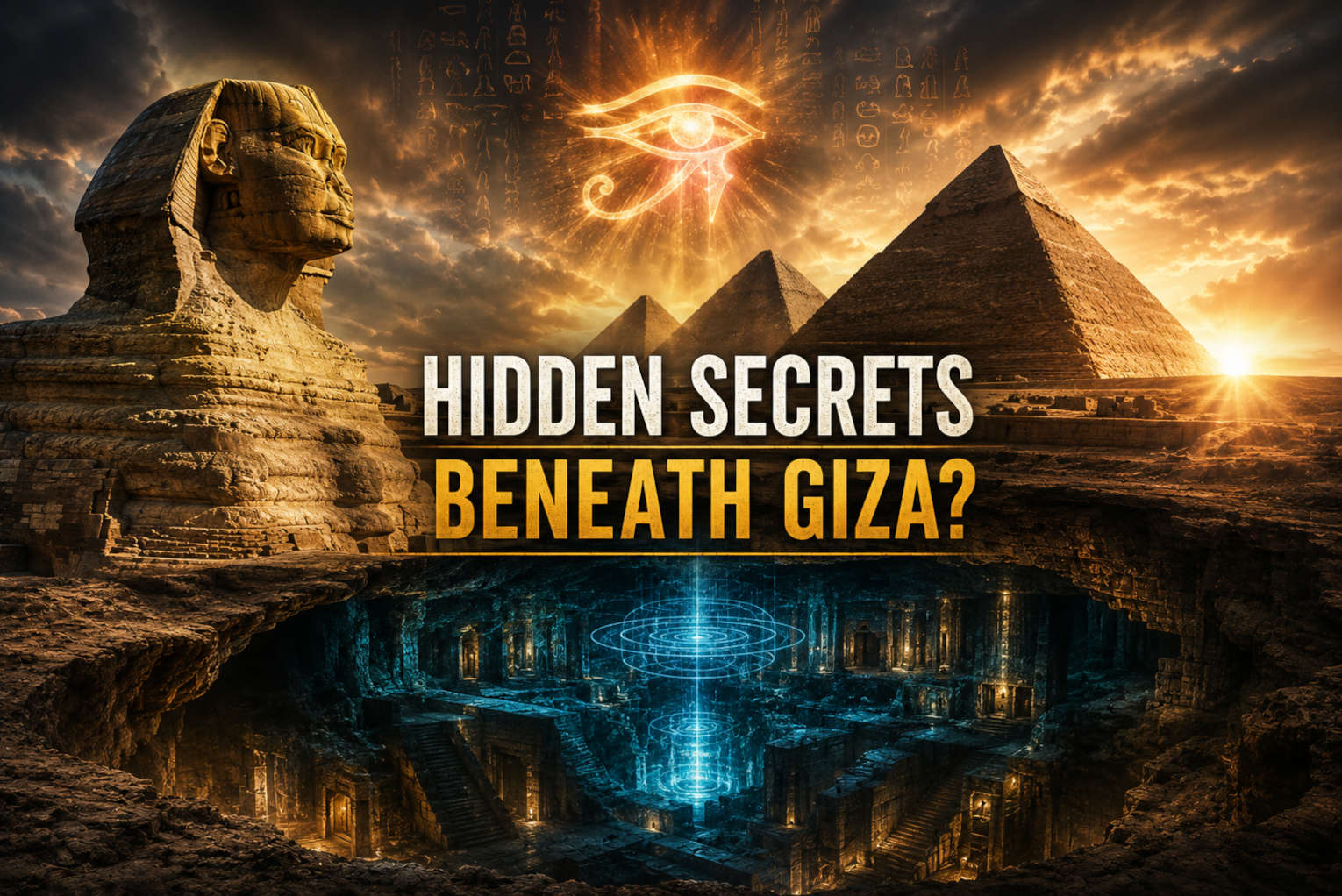
A resurfaced Cold War-era CIA document is reigniting worldwide fascination with one of archaeology’s oldest mysteries: what may lie beneath the Great Sphinx of Giza.
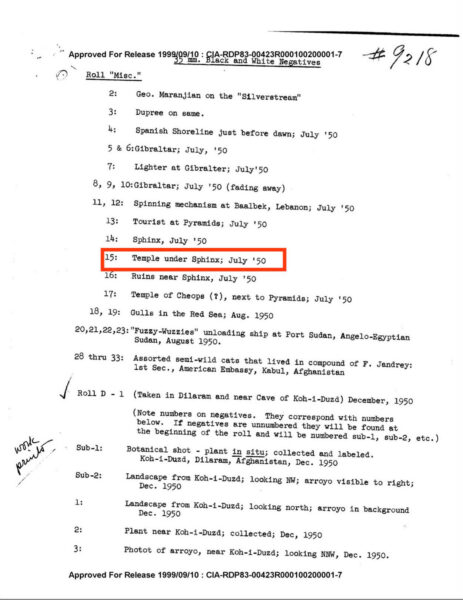
The renewed attention comes after a 1952 CIA archival document referenced a “Temple under Sphinx” while cataloging photographic negatives from Egypt. The document itself appears to be a routine inventory rather than an intelligence briefing, but the unusual wording has fueled fresh speculation surrounding the legendary “Hall of Records,” a supposed hidden archive linked to ancient Egyptian lore.
The mystery has only intensified amid recent claims from researchers using synthetic aperture radar, or SAR, technology to scan beneath the pyramids and surrounding Giza Plateau.
According to recent reports, Italian and Scottish researchers studying the Pyramid of Khafre claimed radar imaging revealed “massive vertical shafts, spiral staircases” and interconnected underground structures deep beneath Giza.
The researchers suggested the findings could point to a vast subterranean network beneath the pyramids and even raised the possibility that the legendary Hall of Records could be connected to the site.

Order Dinesh D’Souza’s New Book, “The End of Time” on Amazon.com!
Interest in hidden chambers beneath Giza is not new. In the 1990s, seismic studies and ground-penetrating radar detected underground anomalies near the Sphinx, though mainstream archaeologists disputed claims they represented artificial chambers.
The Hall of Records legend is most closely tied to Edgar Cayce, who claimed in the 1930s that a hidden chamber beneath the Sphinx contained ancient records from Atlantis and lost civilizations.
Not everyone is convinced the new radar claims are credible.
Veteran Egyptologist Zahi Hawass has repeatedly rejected theories about a hidden underground city beneath Giza. According to AFP Fact Check, experts criticized the recent SAR claims as exaggerated and lacking scientific validation.
Hawass previously stated that the Sphinx had been thoroughly excavated and said, “Nothing like a Hall of Records has been found in or near the Sphinx.”
Still, legitimate scientific studies continue uncovering new anomalies around Giza using non-invasive technologies. Researchers involved with the ScanPyramids project previously confirmed the existence of a massive “Big Void” inside the Great Pyramid using muon imaging technology.
Other recent studies identified possible air-filled voids and hidden structures beneath parts of the Giza complex, adding to the growing sense that the ancient plateau may still hold undiscovered secrets.
For now, no mainstream archaeological authority has confirmed the existence of a hidden city, the Hall of Records or a buried temple beneath the Sphinx. But with advancing imaging technology and renewed global interest, the mysteries beneath the sands of Giza are drawing more attention than they have in decades.
What lies beneath these ancient monuments remains uncertain. Yet after centuries of speculation, the age of unanswered mystery surrounding the pyramids and Sphinx may finally be approaching a turning point.
James Lasher, a seasoned writer and editor at Charisma Media, combines faith and storytelling with a journalism background from Otterbein University and ministry experience in Guatemala and at the LA Dream Center. A Marine Corps and Air Force veteran, he is the author of The Revelation of Jesus: A Common Man’s Commentary and a contributor to Charisma magazine. For interviews and media inquiries, please contact [email protected].
