

For years, many of us have warned that government-assisted suicide programs would never stop at so-called “compassionate” end-of-life care. Once a culture starts treating death as a solution, it inevitably begins offering death before healing, before hope and before fighting for life itself.
Now another deeply troubling story out of Canada is putting those warnings front and center.
According to People, 84-year-old Miriam Lancaster said she arrived at Vancouver General Hospital in severe pain, only to have a doctor allegedly bring up Canada’s Medical Assistance in Dying program, known as MAiD, before she had even undergone testing.
“All I knew was that I was in an emergency ward and was approached by a doctor, which I was expecting,” Lancaster told the Western Standard, as reported by People. “And the first thing the doctor did was ask about MAiD.”
Think about that for a moment.
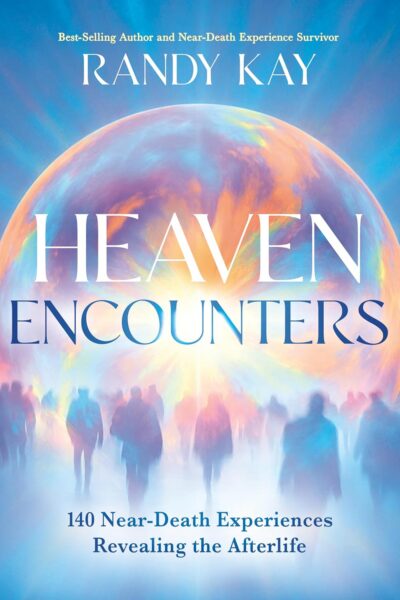
Order Randy Kay’s New Book, “Heaven Encounters” on Amazon.com!
An elderly woman arrives frightened and hurting. She is looking for answers. Looking for treatment. Looking for help. Instead, according to her testimony, death is introduced almost immediately as an option.
This is exactly what critics of euthanasia programs have feared for years. Once a nation normalizes assisted death, it slowly begins reshaping the entire medical system around the idea that some lives are simply too expensive, too painful or too burdensome to continue.
Lancaster’s daughter, Jordan Weaver, said the injury turned out to be a hairline pelvic fracture caused by osteoporosis, something that was completely treatable. Her mother recovered fully without surgery.
In fact, Lancaster went on to travel internationally, climb a volcano in Guatemala, take cooking classes in Mexico and even play piano with a jazz ensemble in Havana.
That is the part of this story nobody should overlook.
The woman a doctor allegedly introduced to assisted death is still alive. Still thriving. Still experiencing joy, purpose and adventure.
“I was taken aback. That was the last thing on my mind, I just wanted to find out why I was in pain — I did not want to die,” Lancaster later said in a video clip shared online.
I met an 84-year-old woman who was offered euthanasia at a Canadian hospital practically upon arrival.
— Amanda Achtman (@AmandaAchtman) March 18, 2026
Miriam didn’t want to die. She recovered well and travelled to Cuba, Mexico, and Guatemala.
Stop offering death to people who have adventures to lead! pic.twitter.com/ZjEfSaKmix
Her words cut through all the sanitized political language surrounding MAiD. This is not mercy. This is not compassion. This is a culture increasingly conditioned to see death as a medical treatment.
We have watched this progression happen in real time across Canada and parts of Europe. First it is presented as a rare option for the terminally ill. Then eligibility expands. Then psychological suffering becomes grounds for euthanasia. Then people struggling with disabilities, poverty or depression begin surfacing in horrifying testimonies about being steered toward assisted death instead of genuine care.
Now an elderly woman says death was suggested while doctors were still trying to determine why she was hurting.
That should terrify every person who values human dignity.
Scripture teaches us that life is sacred because it is given by God. We are not disposable. We are not inconveniences to be eliminated when suffering enters the picture. Compassion means caring for people, comforting people and helping carry burdens together. It does not mean quietly offering death to the vulnerable.
The most chilling part of stories like this is how ordinary the language has become. Weaver recalled the alleged conversation sounding almost casual, saying MAiD was presented as something that could “end the pain forever.”
That is how a death culture advances. Not always with force. Sometimes with soft voices, clinical language and appeals to comfort.
Lancaster survived. She recovered. She lived.
And her story is another warning flare exposing what programs like MAiD ultimately become when societies abandon the God-given value of human life.
James Lasher, a seasoned writer and editor at Charisma Media, combines faith and storytelling with a journalism background from Otterbein University and ministry experience in Guatemala and at the LA Dream Center. A Marine Corps and Air Force veteran, he is the author of The Revelation of Jesus: A Common Man’s Commentary and a contributor to Charisma magazine. For interviews and media inquiries, please contact [email protected].
